Dr. Ashley Benne
Rue Four
From A Surgeon to Startup: How Ashley is Changing how Medical Practices Operate
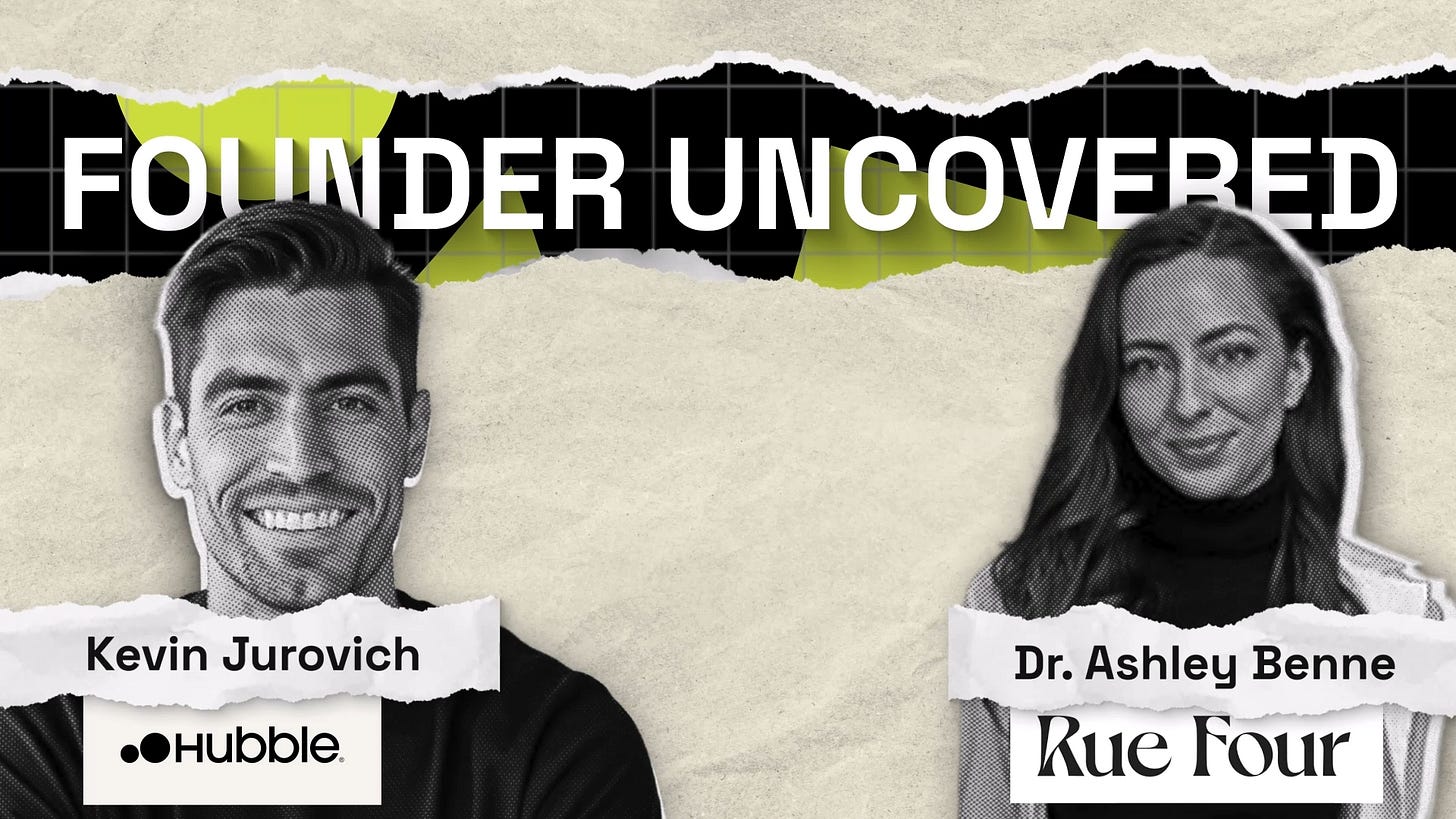
Dr. Ashley Benne built her entire identity around becoming a surgeon, achieved it, and then chose to walk away from it completely. The piece centers on what it actually takes to shed a hard-won identity and start over from scratch, including sleeping on couches, being thrown out of offices, and learning an entirely new language of business while still fluent in the old one.
The Identity You Have to Leave Behind
Most people work their whole lives toward a goal. Fewer actually reach it. And almost none of them walk away from it once they do.
Ashley, co-founder and CEO of Rue Four, spent her entire childhood pointing toward medicine. Her mother’s side of the family is full of pediatric and prenatal surgeons. By the time she was eight years old, she was handing out Tic-Tacs to neighbors and telling them she was curing them. That was not a hobby. That was a preview. She went on to practice reconstructive hand and burn surgery, completing one of the most demanding professional paths available to anyone in any field.
Then she left.
What made her go was not dissatisfaction with medicine. It was a recurring frustration that the tools available to doctors were failing them in basic, fixable ways. Fragmented systems, paper charts, and workflows that had no business existing in a modern clinical setting. Ashley was wasting time on infrastructure, not patients.
“I always felt like what I was doing could be a lot more efficient,” she said. “That was the first thing that showed me.”
She started small: a no-code app, something closer to a well-organized spreadsheet with a cleaner interface. She shared it with colleagues. They used it. And then she started wondering whether the problem was big enough to build a real company around.
Meet Rue Four, and the Sister Who Co-Founded It
Rue Four is building an operations platform for medical practices. The company connects clinical workflows to the financial and administrative systems doctors rely on, creating what Ashley describes as a single front door for communication between teams that rarely share the same information. The target customer is a surgeon or practice owner who is moving fast, has no patience for friction, and would rather focus on patients than toggle between five disconnected tools.
The company she built to solve this problem was co-founded by her sister, Jessica de Mier, who came from a journalism career that included time at CNN. The two of them grew up moving across continents, including stints in Germany, California, Mexico, and Spain, and their closeness as siblings traces directly to that peripatetic childhood. When you keep changing schools and cities, you hold onto whoever stays constant.
Jessica is the growth engine and Ashley executes. “Jessica’s a little bit more of a visionary and a dreamer,” Ashley said, “and that balances out someone like me, who gets really deep in the details.” Their roles do not overlap much, which is part of why the partnership works.
When investors first learned they were siblings, reactions were mixed. Typically, investors were already 20 conversations deep into due diligence. “I mentioned it down the line,” she said. She believes their relationship is one of their biggest superpowers.
Getting Kicked Out on Fifth Avenue
The first serious test of whether any of this was real came when Ashley stopped building for herself and started trying to sell to others.
She was in New York, working out of a “WeWork” on 18th Street, and she needed early customers. So she went to get them the only way available to her: walking up and down Fifth Avenue in the cold, knocking on doors at plastic surgery practices. “Nine out of 10 times I got kicked out,” she said. Surgeons were in surgery. The front desks had no idea who she was. Nobody was interested in whatever a stranger was selling from the street.
She tried paying for lunch-and-learns to get five minutes of a surgeon’s attention. She tried booking patient appointments. She did whatever it took to get face time because cold emails and calls were getting her nowhere.
What eventually worked was credibility. Once a practice realized she had actually been a surgeon, the dynamic shifted. She walked into a plastic surgery office on the Upper East Side, pitched the founding surgeon on the product, and walked out with her first angel check: $50,000. He had first tried to hire her. When she made clear she was going to start the company, he invested instead.
“For any founder,” she said, “the first time you find a paying customer or someone who believes in what you’re doing, that was enough for me.”
Two months later she left medicine entirely.
That transition was not clean. She had no apartment in New York. She was sleeping on friends’ couches while launching a product and learning a profession she had never trained for. The financial language, the operational language, the venture language: all of it was new. She had spent years mastering how to mend a broken bone. Now she was figuring out what an engineering manager actually does.
“Ask me two years ago,” she said, “I would have never thought I would be doing this.”
What Building Actually Looks Like
The early mistakes were predictable in retrospect but painful in the moment. Hiring moved faster than judgment. The initial go-to-market approach created friction that only became visible after repeated failure to grow past it. “I was approaching it from the wrong side,” she said. “I realized I was going to bang my head against the wall a million times.”
The correction required slowing down, interrogating the assumptions baked into the product, and reframing who it was actually for and how it was being sold. Rather than treating the pivot as a failure, she used it to fuel her initial assumptions. The learning-from-mistakes posture she developed in medicine, where the stakes of overconfidence are permanent, carried directly into how she runs the company. “Surgeons, you’re always kind of learning with what’s happening,” she said. “You never grow out of imposter syndrome in the clinic, and it keeps you very humble.”
On hiring, she has landed on a framework that several of her peers recommended: take your time bringing people in, and move fast when something is not working. When evaluating whether someone belongs on the team, she asks a simple question: Knowing everything she now knows about this person, would she hire them again? If the answer is not a confident "yes," she treats it as her answer.
Her broader philosophy for navigating decisions she does not yet know how to make is equally direct. When she needed to build out an engineering team, she cold-messaged Uber's former chief technology officer on LinkedIn. He responded. One conversation led to introductions, and some of those introductions became the engineers now leading Rue Four’s technical team, people who came from Uber and DoorDash. “One of them ended up leading our team,” she said.
That approach, asking people who have already done the thing, has become her primary operating system. She calls friends with companies when deals start going sideways. She reaches out to people she has never met when she hits a question she cannot answer alone.
“You’re only as smart as what you know,” she said. “The ability to just ask people has 10x’d anything I could have done by myself.”
This is a meaningful shift from the culture she trained in. “The motto in the clinic was, at the end, you’re always alone,” she said. In a tech company, that kind of isolation is a liability.
Where Rue Four Goes From Here
In 2026, Ashley’s focus is on building the team that can carry the product to the next stage. Rue Four has onboarded hundreds of clinics and is continuing to grow. The engineering team is expanding. The product roadmap includes Agentic workflows, AI forecasting and streamlining supply chain built specifically for clinical operations, capabilities that did not exist in a form that worked for the people who needed them most.
The vision is to make modern operational infrastructure available to every medical practice, a category that has historically received less attention from technology builders than its size and complexity warranted. Ashley sees AI as the accelerant that makes this moment different from what came before.
But the North Star she returns to is simpler than any roadmap. “When I have a doctor get on the platform for the first time and say, you’ve changed my day-to-day,” she said, “that’s what makes me so bullish on the decisions we're making.”
She built her first career around the idea that one person with the right training could help one patient at a time. She left that career when she realized the math could be better. The identity she shed to get here was not a sacrifice. It was a trade: one kind of impact for another, larger kind, scaled through software instead of surgery.
This season is supported by Perkins Coie. Perkins Coie is a leading international law firm known for providing high-value, strategic solutions. The Emerging Companies and Venture Capital team counsels startups and the investors backing them, supporting clients from formation through exit. In the past three years, clients have raised more than $23 billion in private markets between the pre-seed and growth stages. Perkins Coie combines tailored counsel with sector experience, so when it’s time to accelerate, whether for the next financing round, a strategic deal, or going public, your team is ready. To learn more, visit perkinscoie.com
More from Uncovered Media





Read the full transcript
0:00 One of the biggest things I've learned in starting a company is you can't start a company alone. So I think that surgeons go through life for doctors. I remember the motto in the clinic that I was at was "at the end you're always alone" and it's like surgeons you're
0:15 just lonely people. It's like that's the culture that you have. The culture in a tech company is everyone works on everything. Everyone helps each other out and for myself it's like the only way that I've learned is calling out my friends who have companies and saying what do I do? And it's like I think not being
0:30 shy about that you don't know something is the most important thing. So I was like how do I hire an engineering team? Who should I even hire? What's an engineering manager? What's an I see? Like how should I grow the next person? What kind of person am I looking for? How do I build out a sales playbook? What book should I read? It's like really just asking a million
0:48 questions to the right people. We are the music makers and we are the dreamers of dreams. Come along. I'm Kevin Jervitch. Welcome to Found Air and Covered. The show about those
1:06 brave enough to dream big and bold enough to swim away from the safety of the shore. Here we dive into the origin moments before the noise, before the spotlight, back when it was just a vision, a hunch , and a founder crazy enough to chase it. For all the dreamers listening, this is
1:25 where your story begins. Ashley did what so few people ever do. She became a surgeon. After years of training, discipline, commitment to a path she had imagined herself at since childhood.
1:40 But once she was inside the system, she began to see a different problem up close. Doctors were spending way too much time navigating all the tools, some of the outdated workflows, operational friction that pulled them away from the thing that mattered most, which was patient care. That
1:58 frustration first hand became the foundation for roof four. The company Ashley now co-leads with her sister. Love that. In this conversation, Ashley talks about what it looks like to walk away from that hard one identity, start from scratches of founder, sell software door to door
2:16 in New York in the wintertime, and build conviction one customer at a time. It's a conversation about perseverance, humility, and the unique perspective that comes from having lived the problem before trying to solve it. Before we jump in, a quick thank you to our sponsor Perkins Cooey.
2:34 This episode is brought to you by Perkins Cooey. Building a company means making high stakes decisions early, often, and under pressure. Perkins Cooey advises founders and growth stage companies through the moments that matter most from formation and fundraising all the way
2:53 through scaling and beyond. We're grateful for their support of VC and founder and cover. Now, here 's my conversation with Ashley. It's definitely not every day that I interview a doctor like let alone a surgeon that's became a founder. I guess I was thinking about this. I always think like
3:11 , what's a good first question? I was like, how insane is this that somebody became a surgeon and then decided to become a founder? These are two of the most high stakes professions that anybody can choose. I'm like, how does somebody fall into this? How does
3:26 somebody decide to do this? I think about this a lot. Both of these professions, I feel like are people who decide to like high amounts of suffering. If you have gone through residency, you go through medical school, and then you decide to start a company, it's
3:43 kind of like the same thing. It is the ability, I think, to get up every single day, actually go and work non-stop, and it kind of feels like the exact same thing. You're just non-stop, you're barely sleeping, and you're working all the time. But that is like an analogy, I think, that is
4:01 very close to residency and actually building the company. It's having done both of those. I have a lot of empathy for you. Your road is way harder than mine. I was in finance prior to starting a company, and I basically spent five years building this book of
4:18 business, and then eventually I had to sell that to start a company, but becoming a doctor and then a surgeon, that is years. Not only is that a financial commitment, that's your life, that 's you, that's your identity. How was that decision to eventually move away from this
4:36 and be like, you know what? Or was there an aha moment along the way that you said, you know what? I'm going to start a company. I'm going to take off this gown, and I'm going to go sell stuff toward a door. I think the thing that kind of just was throughout the whole thing, I wanted to be a doctor since I was like eight years old. My mom, the whole
4:53 side of the family, they're all pediatric surgeons, they're all prenatal surgeons. It was like, that was the only thing I wanted to do growing up. So I'd give everyone like tic-tacs and tell them I was curing them with my pills. And so there was never really like another option for me. I think it was like a very clear path that no matter what, I wanted to be a doctor and specifically I
5:10 wanted to be a surgeon. And so I think I got to the point of where I had been like practicing for a while. I was doing reconstructive hand and burn surgery. And it was incredible, but like I think one of the biggest things in the clinic and in practice was the amount of time that I spent on
5:27 like just doing things that were not made for doctors. So whether it's like paperwork or like talking to people, just a bunch of fragmented systems, like anything from the way that you'd see, you know, patient information or the way that you're actually charting something on like a piece
5:42 of paper. And so I felt like every time I was doing that, there had to be like a better way. And I've always been somebody that is very interested in like tools and like new things. I love like processes, I love organization. I'm like a very pretty type A person. So like, I always
5:59 felt like what I was doing could be a lot more efficient. That was like the first thing that showed me was like, most of the people I knew weren't in medicine. And so whether it was like my co -founder now or just a lot of my friends, I was seeing what they were doing and the tools they were using. And it felt very archaic, very backwards, that we didn't have that in the
6:18 hospital or the clinics that I was working at. I think that was the first thing that was like, it was less than a not-ha movement. It was more of a like, what can I build to alleviate my pain? And then seeing that it helped me, how can I give this to other people? And then that just kind of catapulted into what
6:33 we have today. And like, I think the biggest thing was, we had very early on, it was like, I guess I can get a little bit into like the origin story. And I'll let you, you ask your questions. But so I was struggling with a couple of things at the clinic. And
6:48 like, I ended up building this like, it was just like a no-code app. It was something that helped me organize some of the things that I had. And it was like an Excel spreadsheet, but it just looked cool. And it was like helped me organize things. And that was like the initial product, like that was the MVP that
7:03 I started like giving to people. And that's kind of like what turned into what do we have today. But it was less so of a like, you know, I'm going to go out and build this company and more. So I think that I can have a bigger impact and a bigger change in scaling. Ruford just building
7:18 a software that I can just with like one patient. Wow. And you don't know this, but I actually just got out of surgery. I had an Achilles tendon tear. Thank God for surgeons because I just started to walk again. And yeah, incredible. You know, like, as you go through this,
7:36 though, like, it's one thing you start passing out this tool and it's like helpful. It's one thing to do this. It's a whole nother thing to be like, like you literally said, since we were five years old, you wanted to be this thing. And like you, you became it. And it's not just a regular thing that
7:52 you became, right? This is like the point, point zero, one percent of the profession. At some point, as you're passing out this tool, when was it like, Oh my gosh, I'm actually going to go do this other thing, this business, and maybe leave all of this hard work and identity behind.
8:11 Because that's very, very scary for people to do. Yeah. I think like the biggest trigger for me was I wasn't sure whether or not people would actually want like what I was building. I know it was solving my own problem. And you know, some of my colleagues problems, but I think the biggest thing was
8:27 will like a mass scale of people actually like want this. Am I making a big enough of an impact in what we're doing? And very early on, I was selling the software door to door . So like, I was here in New York. That's kind of how I was getting distribution. I was knocking on other, you know, doctor's doors. So like, I used to sell medical devices. I saw
8:45 that. This is like my first job out of college talking to a surgeon. A surgeon is like the rock star in the room, right? And so that was you going from that to selling stuff door to door. Was that like a crazy home building process? It was. I got kicked out a lot of doctor's
9:03 offices. People don't know who you are. You're just coming back and you're selling them some software. They don't have any time. They're super busy. And it's really hard. I think early on to actually get like your message across of what it is that you're doing. And you're so early, you barely know it yourself. So you're going to someone you're being like, Hey, I can help you. And they don't really
9:19 want to give you the time of day. So I think, you know, as they knew who I was and like building something for the industry, they're like, you know what, I'll listen to you. But there was countless times where I was like, you know, it was like negative five degrees. I was wearing like my jacket , walking up and down
9:34 Fifth Avenue and like Fifth Avenue, New York is like plastics avenues. And you 'd have all these like clinics that I could go to. And I would just knock on their doors, walk inside and be like, Hey, I'm building a tool that's going to save you some time. Do you think that your surgeon has some time to chat? I'd say not out of 10 times I got kicked out. And they would
9:51 say, you know what, he's not here. He's in surgery. We can't really help you. And I'd be like, okay , thank you. You can't really say much else to that. Right. I started like paying them like lunch and learns to like have them actually pay attention to me. So I could buy some other time. I would even go like and like
10:07 try and book like patient appointments, like anything to do to like get in front of them. Because, you know, just calling or emailing someone like it doesn't work. And also, yeah , you've been bonded by everything, right? Like people like me that I was an orthopedic sale. So I was like all these little implants. I was selling Striker was selling Johnson and
10:24 Johnson was selling like, did you drop? Hey, I'm also a surgeon. And then if you did, did they believe you? I did. I did once they actually said like, this might be interesting for us. And then they were like, well, you know, we haven't heard much about you. And I'd be like, well, it's because I started
10:39 the company and, you know, my background is a surgeon. And then I think that was the first one I walked into. It was kind of a random plastic surgery office on the Upper East Side. And I pitched the surgeon there on the, on the idea and on the profit product. And he like had me
10:56 in his office, and I kind of walked him through it. And he became one of our first annual investors. And so he ended up saying, you know what, like, I love this first, you try to hire me. And then he was like, okay, I get it. You're not leaving this company. And I was still working in clinic at the time. So he's like, you know what, I want to like, I believe in listen, and I
11:13 want to put some money. He gave $50,000. And like, I think that was the first thing that showed me it's not just me, but like, there's somebody else that believes in what we're doing. That's a third party. It's not my co-founder. It's not myself, not my family. It's like actually someone who's going to give us some money for what we're doing. And I think for like any founder, the first
11:30 time you find a paying customer or someone like who believes in what you're doing, that was like enough for me to say like, okay, I think I'm going to leave what I'm doing. And I ended up two months later, thought like started the company in September and December. I left medicine and
11:45 just decided to go all in on the company because I think that was like one of the bigger things that actually showed me. People are willing to pay for something that barely exist. And given at the time, I was selling software out of like a we work on 18th Street. That was like the first time that I really felt like,
12:01 you know, this is something that I think that I really want to do. Yeah, I love that story. I've started a couple companies and I would say the latest one that I've started was the only successful one. That signal, because I had the same exact thing, that signal when you're sharing what you're doing with a customer, right? And
12:19 then they purchase it. And then they say, hey, are you raising money for this? Like, I want to invest. If you can get this signal in our first check or one of the first checks was from Uber's first investor. And it was the same thing, we onboarded him as an expert. And then at
12:34 the very end of the call, he's like, are you guys raising money for this thing? He ended up, you know, sending 50k. And the more touch points you get like this, I always talk about like, how do you build conviction for your thing? When you don't, you know, it solves a problem for you. But is there other people out there that give a damn? And the more touch points and data
12:52 points you have like this, it just builds that conviction that you know what, like, maybe there is something here, like maybe this is bigger than just a methane. So that's a beautiful story. Okay, so then you, you get that check? Did you go out to dinner when you got that 50k? Because
13:07 that's like a, that's a nice first angel check. That's pretty good size. You know, I think back in the day, it was, it was really tough. I was like doing a bunch of things at the time. I, that's one thing I need to learn to celebrate a little bit more . But like, I was already like so focused and working so hard. I was like, okay, this is,
13:24 and given like, I was kind of like broke at the time. So I was like, okay, we have this check. We're going to be able to like move forward. I can like, you know, do a couple of, I mean, the first thing I did is called my co-founder. And like, she knew that this was like kind of going on. And I was like, okay, we like have this now. And I think we have enough to like fully focus on
13:39 this. And so, that was like the big thing for us, just knowing that like, we could actually hire a couple of people to like help us build out the software and the MVP, given like, we both don't have technical backgrounds. So it was like a very, a very quick, very excited thing.
13:54 But I also know the amount of, first of all, how much money it takes and the amount of work it takes to actually build something like this. So it felt like a little hooray and then like quickly get back to work. So yeah, now very excited that I think it, it showed me for the most part more
14:11 than the money, it was like, this is something that I'm really like, I want to build and that I want to see through, and that there's enough conviction behind it, that if I'm going to leave a medical career and I'm going to leave what I wanted to do my whole life to go build out this company, it needs to be worth it. And I think that's been like the, the red line between
14:29 the people that we hired coming, like getting the company together, our investors, anything, it's like, they need to see enough conviction and I need to see enough conviction in what we're doing to be able to like grow this and make it bigger than myself. Because like, just because I know something and sometimes they're not the best storyteller, doesn't mean that everyone else does.
14:47 I think this is actually speaking of storytelling because I think like on a founding team, you want to have a great storyteller. I was doing a little recon, we talked about your co-founder. Is it true that your co-founder is actually your sister? Yes, it's my sister. Yes, Jessica is my sister and my co-founder.
15:04 Amazing. And she came from CNN and was, so I'm sure she told like all kinds of stories like being in front of the camera with a microphone, right? Is she the kind of story teller of the two? Jessica's definitely the storyteller of the two. We were very different as
15:19 people. Jessica's background was as a journalist. She was the first one to live in New York. She was living here in, in Spring Street. So we're in Soho right now. And I remember coming to visit her in like 2017 in the middle of my boards. And she would show me the CNN office and we'd kind of walk around,
15:34 show me New York. And we were both like, this is where we kind of want to come back to. And this is what we want to do. And we both took very different paths. But she was always kind of in front of the camera, telling the stories, making them bigger than life, a lot of, you know, about startups. I think she was the one that really gave that push and like the
15:50 startup bug of what it is that we can do. And so she ended up working at a data privacy company, trying to start her own thing in healthcare. And I always said, I remember, I was like, I'll never leave being a doctor. It just didn't feel like that was like what I should do, especially because like I saw so many
16:05 other companies that were building in the healthcare space, but I didn't feel like, you know, they were making big enough of an impact. It was like, it was like a lot of companies just doing the same thing. I feel like it had to be something really special and also starting with Jessica and starting with my sister has been very different, right? You have like a built-in partner
16:23 , someone you trust 100%. And yes, Jessica is very much the storyteller. She actually started a podcast. That was how we first started, right with the company. We were like, this is how we're going to, you know, get distribution. It's how we got our second angel investor. And so we were like, you know,
16:38 just how do we tell the story of what we're doing? And how do we distribute this to other people? Because that's what she enjoys doing. But now she's my co-founder at the company. Do you love her more than when you started this with her? Or does she get on
16:53 your nerves more? Or how's that relationship going? So just and I lived together for a while. That wasn't enough. It was like, after this question. No, I mean, when we lived together, it was like, we're living together. We're working together. Most of our, we have a lot of mutual friends.
17:09 So it was like, we just were nonstop 24/7 together. And like growing up, we moved around a lot. So we, it was always just Jessica and I. So like, we moved to Germany. We were in California. We were in Mexico. We were in Spain. And like, every time we moved and went to a new school,
17:24 we became very close because it was just always like her and I. And so I think going from that into like actually starting a company together, the biggest thing has like, the biggest thing has just been, it's been really awesome to work together. But it's also somebody that,
17:39 no matter, I think like what the fights or disagreements are, what's kind of going on. You always know that they, what they want is like for the company and for you. And so it's like building a very, not just like family, I feel like building a company that's just families, like sometimes you can like let things go. But just building two people who
17:58 really like are on the same page about what they're doing. So there's, there's definitely interesting dynamics. I would say some of our people don't even know we were siblings when we started the company. But we look alike as well. We're not too far apart. So it always comes
18:13 out. What's one thing, because I'm sure Jessica, her name is Jessica. Yeah, he's going to listen to this. What's one thing that you appreciate about her, not just being your sister, but like one thing that since you guys have been co-founders, you're like, I love that about her. Like,
18:28 I love that attribute about her as a person and as a co-founder. What's one thing? I think that Jessica's a little bit more of like a visionary and a dreamer and like makes us think bigger than life. I think that's always one of the most important things to have because starting a company is really tough. And so like every day you're really deep in it and
18:47 like you get lost in the detail and you're focusing on everything that's going wrong and you know people are quitting and you're firing people and the software is crashing and you're launching to new clinics. It's like always something's going on. And then having kind of that zoom out perspective versus like my zoom in is
19:03 something that's important to have as a balance. I think so like really appreciate that when you know I'm looking at the bigger pictures of things. It really like balances that out. You can really just get lost in like the day to day. So it goes beyond I think to someone being like a
19:18 sister or in the company, but it's really like also I can call her about anything and I know it's like 100% safe. So after five, do you keep it like not business or is it just always business now? If you ask her, she tells you it's always business. It is not true. But no, let
19:35 's just talk about personal things. No, we do have our our our offs where we're just like you know what let's let's go have we have some founder dinners. We just have like our normal dinners. We we travel a lot together. We just do a lot. So I think a lot of our conversations revolve around the company just
19:50 because it's you know what we what we do so much. But even in the office, it's like you know we'll steal away sometimes to like talk about other stuff while we're building the company together. But it's it's you know I think a very interesting dynamic if you can find someone that is so different to you that you don't really work on anything together because
20:09 you're very focused on like two different kinds of things. Yet you come together to build something. I think it just becomes difficult when like two people are working on the same thing. But Jessica and I are so fundamentally different as people and the way we think about problems. It's been cool seeing her perspective in the way that she approaches things
20:24 versus how I do. That's beautiful. Have you as you go out and raise money, right? You guys are venture back now. Have you ran into any investors like a bokeying at that idea? I hear less and less about siblings, but I know when it comes to like husband and wife founders, sometimes people
20:43 look at this as like not a red flag, but it's a it's an additional risk. Did you sense this in any of these investor conversations or are they looking at this as more of a positive? I think times have like changed. I think people now look at like sibling
20:58 relationships as more of a positive. But I don't think that we had we did have some investors definitely that were like you guys are siblings. You know what what does this you know what does this mean for the company? Is this too close? And like you said, I've heard a lot about like people who are actually married. I think for us specifically, that wasn't that big of a deal with
21:16 something that was seen a little bit more as positive. But to be honest, like it's not something that I mentioned very early on. I mentioned it way down the line. So I'm like, already when people know what the company does, they've met me. They've you know, gone like 20 steps in. I'm like, oh, by
21:31 the way, my co-founders, my sister. And so I don't know if that was part of it. That's funny. I actually think I think there's more pros and cons. It's like you've lived with this person. You've been through so many things. You talked about all the
21:46 cities you already moved to and lived with like, I, I love, I think like people often over index early on, when it comes to a founder, it's like, Oh, for me, I'm a storyteller. I need to partner and have a co-founder that's just a CTO. And I think that does matter. But I always
22:05 like to say, I think the trust is the number one important thing with a co-founder. And it's literally like, do I want to go grab a meal with this person at the end of the day? Do I want to talk to them? Do I enjoy their perspective? Like all of these things are maybe even more important than the
22:20 fact that they can code and I can't. Yeah. And I think it's like, can this person inspire me? Are they there for the long run? Can I spend 24/7 with this person? And as a sibling, I don't think you can with anyone. I only have one sister, but I know that, you know, not everyone would want to find a company with their sibling. So sometimes they
22:37 're like, you know, I am in New York, I commend you for it. And you know, if it was me, I wish I could. And some people are like, I would never in a million years. So there's a fine line also between like, what is a business and what is not business? But I think being able to separate those two is really helpful in the company and just both be able to focus on like different things. I mean,
22:55 I also feel like a lot of companies, there's some people that'll come to her with like problems or there's some, you know, customers or investors who will want to speak to her because she sees it in a different way. And then there's some people who come to me because of what I like, what I think and how I'm going to do that. So I think we both it's like a yin
23:11 and a yin that goes very well together versus like two similar personalities, you wouldn't really know where to go. So I think that's something that has helped us like grow as a team. Did you ever sit back and just think it's kind of crazy like what Ashley's life was like two years ago and
23:26 like the thing that they're doing and now all of a sudden we get into 2026 and we're thinking about our goals. And it's like, holy cow, like my life is completely different. 100% I was living in Germany for a long time. So I was in Munich. I moved to New York about like two years ago.
23:44 And so I'm really from California, but I just moved around a lot and ended up coming back here two years ago. And that already was like a big move, but it was like the move happened at the same time starting the company, leaving medicine and like leaving medicine is like leaving your
23:59 personality. You build like yourself up to be a doctor and then it's gone. And then you have like a small crisis of like what am I doing. So it was like I think so much change and a little amount of time was really cool to see. But like when I moved to New York, I was living at like my friend
24:16 's couches like the whole time because it's like I couldn't get an apartment and I was like moving around and it's like so much chaos. And I think like asked me two years ago, never, I would have never thought that I would be like, you know, doing this, living on people's couches, launching out products,
24:31 knocking on people's doors. It, yeah, now I feel like I can do a lot more than I would have done then. And also just the amount that you kind of learn every single day, it was like, you know, I knew that I was trying to solve how we can help doctors, doctors save time.
24:47 But to the amount of how we solve it now, and now we like bring together not just doctors, but finance ops teams, we build a bridge, like we're building a communication tool between these systems. Now I've like understood what I was missing before, which is I've understood
25:02 the medical language, but now I've learned the financial language, the operational language , the VC language, it's like just building that communication tool is I think something that has been so valuable because I went from just knowing like what, you know, a surgery is what is, how do I stitch someone together? How do I mend a broken bone to like, you know, how do
25:21 we actually provide like financial analysis? How do we build an AI tool for, you know, forecasting inventory? How do we bridge all the problems that I saw before through a tool that just breeds communication and like a single front door for people? So it was like, I think it's been like
25:39 from the founding journey just across like the product journey. It's been really exciting to go back and really understand what the problems are and how we're like solving for them. Yes, I love it. That's beautiful. Speaking of problems, what's like one massive mistake that
25:56 you've made on this short journey when you're like looking back, because at the end of the day, for any founder out there, like you launch something, usually like the very, very first version of your product, it doesn't work very well. And the first time you're a CEO of a
26:11 company or a founder, it's like the amount of mistakes that I've made over the past eight years, I'll take my stack against anybody's stack. Is there one sort of mistake looking back like oh I almost thought that was the end. Or have you been lucky to avoid this or.
26:26 No, I think we've definitely like I think mistakes are always part of it. I always try to do mistakes one and send like learn from them. I think that like any sort of mistake is the most important thing because you always learn from everything that happens as long as it's not of course going to crash the company. I think hiring has been one of the biggest things it's like really knowing to
26:44 hire the right people. Early on you know you just kind of like want to hire because you're growing the company. Looking back there might have been like decisions that I made that might have not like brought on the same people. Same thing when you like approach the product or what we were building.
26:59 We took a certain perspective as to like how we thought it was going to go into the market and like I think that this is the idea. And we realized we were having so much friction to grow. It was like we were approaching it from the wrong side and like I think that was a mistake very early on that we realized it's like we can keep doing what
27:15 we're doing. But I think I'm going to bang my head against the wall a million times. So it's like try let's try and learn from what we did and like solve it from a different way. But I honestly think building a company is just like making mistakes every day and learning from them. There's so many that they compile and you just try to not make it the one that
27:34 's going to like you know turn the lights off. That's the fact which is why people say this all the time but it's like pick a business that you truly actually have passion for. Because there's going to be mistakes there's going to be long days like think about for Ashley what she just said.
27:49 Imagine Ashley at a dinner party being like hey what do you do? She gets to tell everyone I'm a surgeon right like what an awesome thing to tell somebody. When she starts a company it's completely different right and it's like now you 're almost like the low person on the totem pole. Most people aren't willing to be seen as beginners again.
28:08 And like when I hear you say this story like I'm very proud of you because I've kind of gone through that metamorphist a couple times. It's not easy to do it and then having the courage to like start something brand new and say you know what I'm going to bet on myself. I don't care about all this schooling and the identity and everything that I've
28:27 built up to this point I'm going to literally like start from scratch and start again so that's pretty cool. If you think about like in 2026. I don't know if you already did your company goals. I did some personal goals I did some company goals I'm a big goal setter person
28:43 . What do you feel like is the mission or like the goals of the company this year ? What are you most excited about accomplishing and what is 2026 look like? That's a really good question. I think it's something that you like think about all the time and being so
29:00 early it's kind of crazy because it's like so many things can change with just like one partnership or you change one thing or you hire one person. It's like I think when you grow to like series B and C it's like you've kind of done a lot of things and we always think really big at the company. I think we always have a huge vision and it's just to like make processes work
29:18 for you know all medical practices all doctors all their people and their teams . So it's just taking on the entire medical industry and it's like it's so hard to you know look at it and be like okay that's not our focus. We actually really just care about getting to our next raise and really just
29:33 care about getting on our next customer. So it's like you have to look at both sides of this because we want to dream so big about where we're going and what we're doing. Jessica for the big dreams. We're the big dreams and the big visions. And I think that for 2026 it's really a big thing for us has just been like
29:52 getting the best team together. So that's been like my core focus right now. We've been focusing a lot just on like growth. We you know onboarded hundreds of clinics were onboarding hundreds more just having the capacity to like build out a really strong engineering team.
30:07 I think that is we're mostly engineers by we not me. Our team is mostly engineers so it's like everything that we do we focus on building out an incredible engineering team and product. And the biggest motivator behind that is because when I was in the clinic all
30:22 the tools that I had were not great. You're coming into a very legacy industry and I think like today you see a lot of people working in healthcare. It was never the case. No one really cared. It's like an overlooked industry. And so doctors always had to go with like whatever it is that we had which is mostly Excel spreadsheets. And now people have taken like an interest and like especially with like AI for
30:40 building in healthcare. And I think that like for me the biggest thing is building like a consumer grade or like building something that is very easy to use for an industry that never had it is like really rewarding. And when I like have a doctor get on board and say like this is awesome or you
30:56 've changed my life. Like that's enough goals for me for 2026 to like we made it. It's really like the customer feedback what it is that they tell us and how they want to work with us which is doctors and surgeons are super opinionated. They don't have a lot of time. If you're wasting one second from them you'll
31:13 hear from it. So like they'll get on a call and be like this took me one second too long. Because you get direct user feedback and you know it's not just you know you learn very quickly the learning curves very steep. You're a customer. I don't want to say that they're finicky but I don't know
31:28 the adjective to use for them. They would not be the easiest of customers. I would assume. All right. Is that true? Definitely not. I can say it because I was one of them. We're not easy people to please. I think doctors are perfectionists especially
31:45 surgeons. You a lot of time have people come in and it's funny that they're so opinion ated about software today. When you look at the software and the tools that they're using you're like you 're coming from a sticky note. So like anything besides a sticky note is great. But I think that they're used to being so quick in the surgical field that that
32:04 's exactly what they want as a tool. And I think they see us as an early stage company that they can we can solve their problems. And so they're so opinionated and give us so much feedback because like we actually see these people being able to like help what we do. So it's not just like and I think that's the biggest thing like I don't come in
32:21 and say hey we build you know procurement orchestration. We're not just a layer that gives communication like we can actually help what it is that you're doing today to help you save time and just focus on your patients. And so I think that for them is a lot bigger and they want to work with us
32:36 versus saying like you know here's just a software and this is what we do. I can tell when I talk to somebody when like they're living out their passion and I totally see this video. So I know you're going to continue to be successful. When you think back on your founder journey and even your journey you know
32:55 prior as a surgeon. What sort of one single attribute would you say you know what why I was able to accomplish these things is because of X. What do you attribute that to. I don't know if it's like one single thing I think for me is just perseverance.
33:11 It's like no matter what I am the person that like gets up in the morning and just is comes into the office or works from home. I mean I work seven days a week it's like I'm always work and like you said it 's my passion so it doesn't feel like work.
33:26 So anything that I do I'm thinking about already like the next thing that I'm going to do. And just not working on it when I feel like it because a lot of times you don't feel like it you're really tired. Things are going you know poor you know whether it's you just lost a huge
33:42 contract or somebody told you know or you didn't get like the person that you wanted. Every day you get like new information and you have to filter a lot of it out but I think just saying like okay if I stick this out long enough maybe the next good thing is going to come. And then that actually happens like that's enough to like get you to the next
33:57 thing. So I think perseverance and that's probably the most important thing just to keep going if you actually really care about what you're doing. I can current I call this the time in the desert it's like we're all in the desert for so long in the beginning and the ones that make it it's not that
34:15 they didn't have to be in the desert where it sucked and things weren't working . They just had to stay in it long enough and have enough perseverance to eventually find their way out right. In closing what is one or two I don't know do are you an old school paperback
34:31 or are you an audible person or do you not read books at all because you're too busy. I do I do I read a lot of sales books actually I like your typical art I also read a lot of just like negotiator books I do read a lot of books.
34:47 I think that what are what are like two or three recommendations of like all these are must reads. I have like some old school sales books that that I was reading they are. I also give them to our sales teams the complex sales cycle.
35:10 I think it's called hope is not a strategy and one of my friends gave it to me. He has his own company and like one of the biggest things I've learned in starting a company is you can't start a company alone. So like I think that surgeons go through life or doctors I remember the motto
35:29 in the clinic that I was at was at the end you're always alone and it's like surgeons you're just lonely people it's like that's the culture that you have. The culture in a tech company is everyone works on everything everyone helps each other out and for myself it's like the only way that I've learned is
35:44 calling up my friends who have companies and saying what do I do. And it's like I think not being shy about that you don't know something is the most important thing so I was like how do I hire an engineering team who should I even hire what's an engineering manager what's an I see like how should I
35:59 grow the next person what kind of person am I looking for how do I build out a sales playbook what book should I read it's like really just asking a million questions to the right people. And I think yeah how did not been like for my friends and you know for my co- founder who can actually answer these things and even our investors it's like
36:17 you don't learn them on your own. It's like always find somebody that I guess really like a specialist in what they do and then kind of get this information together that's that's been I think the most important thing even over talking to customers and you know reading books and doing anything it's like talk to people have done it before
36:35 and learn from them. And so it's like it's always a learning game. That sounded like a Hubble commercial literally my company that was beautiful. I'm sorry yeah it's really talking to people I'm like I'll call it my friend Alex and be like hey I'm about to do this contract I think it's going wrong
36:52 what would you do. And he's like back in the day I did this I'm like okay awesome I'm like Felix I don't know what to do I'm over here I'll be like you know Tony I'm fundraising I'm about to have this term sheet where should I go. And it's like having those people in your corner who have been through it before it's like I think it's 10x anything that I could have done by myself.
37:10 Because at the end of the day you're only as smart as like what you know and so the ability to like actually just ask people like I will cold LinkedIn outreach to anyone that I think that like will give me some sort of insight just to learn about what they have to say. So you asked for me humble enough though to approach these people and I think a
37:29 lot of people feel especially in our industry as founders, which I think is the reason why imposter syndrome is so high. We all feel like we have to have it all figured out we're supposed to be the smartest person in the room. The reality is to anybody listening any founder out there almost no founders I
37:47 've ever talked to have it all figured out. The ones that can be humble enough to ask questions people want to help whether it's friends whether it's investors whether it's other founders whether it's introductions whether it's advice. Anybody who's started a company they want to help someone who is either
38:04 starting that similar thing or mine's them of them 10 years ago people want to help. But it takes that mindset that you have right it takes that mindset to say hey I don't have it all figured out here's what I'm trying to do. How do I do it right and they'll be the first to step in but who does for you
38:19 for taking that first step because that's the important part. I think people just think that like people are going to ignore me and I think it happens a lot. I remember I was trying a higher engineering team like we had an outsourced one and like I reached out to like the former CTO of Uber and I was like hey cold
38:34 LinkedIn him and was just like I don't really know who I should hire. You know do you have like 10 minutes to hop on and just give me some advice like whom I'm looking for. And he's like you know I'm super busy. He got back to me and he's like you know what let's hop on. Yeah it's one. I just called LinkedIn him and I just said we just we just
38:50 raised we just raised our round from KP and I was like hey I like I need to grow the engine team. I think a lot of people think it's like it's something I heard while we were fundraising it's like this person's not going to be able to grow the kind of team that she needs to build the product that she wants. Like people just don't have that technical background and so like I heard that
39:08 a lot it was you know this these people coming in if you have a great CTO or if you have someone who's in the field. It's like I think our investors took a huge bet on on me and on the company that like I knew the problem well enough because I come from the industry. It was definitely not because of our technical chops. And so like when I
39:24 reached out to do on I was like. And don't exactly know who who's my like who do I reach out to? Where do I start? And he's like hey here's a couple people in New York. I think that's what you should talk to. And it's like one of them ended up leading our team. They're like over door to people. It's like you know those kind of things. It's
39:42 always how we've like grown as a company. I was just asking for help and you know I think being a surgeon humbles you because every time you go into surgery you have like someone's life in your hand. And so you can never go in there and be too cocky and be like you know I know what I'm doing because at any second something can happen.
39:58 And you're not just losing a sales or a deal or you know you're not having an unhappy customer. It's like somebody's you know the consequences are a lot bigger. So it's like I think imposter syndrome in clinic is one of the biggest things. You never grow out of it. And so it definitely it keeps you very humble and and you're always you're kind
40:14 of always learning with what's happening. But yeah. Ashley, I'm excited to see you continue to rise and watch the company . And I know just in talking to you you have a bunch of superpowers as a founder . You're smart. You work hard. You have grit. You're humble. And you kind of know
40:31 what you know and you're okay to admit the things that you don't know. Right. And I think like that is a superpower in and of itself. And so yeah. Thanks for coming on. I'm excited to watch the company grow and just see the impact that you and the company continue to have. I'm super excited. I really appreciate you for for having me on. I love what
40:51 you guys are doing and all these kind of conversations. It's you know, Anthony was on there. It's I think how people learn. And so I love listening to what he did. It was like the thing that I was like, okay, Matt, I want to be on this. I want to talk to. And I think stories are always interesting. But it's like
41:06 really learning that other people were kind of there and in that same place. Can I ask you a question? Of course. How did you get into medical device sales? So this is a good question. We're going to end with you asking me a question. I
41:21 love this. So I was playing football, actually. I was in the NFL for three years. Prior to the NFL, I didn't grow up poor, but I didn't grow up rich. And when I was playing in the NFL, it was like the first time I actually got like good
41:36 money. And so when that stopped and I realized like, oh, there's this other life that I really wasn't around a ton growing up, I was like, I want to maintain that. Like, I want to be able to have that sort of same lifestyle. And I think like any typical 23, 24 year old kid, you're just like, I want to make money.
41:55 Right? And so this idea of medical device, you could get in it. It's sales. I'm good in sales. I'm good at talking to people. It's orthopedics. So like all of these doctors, usually our sports fans are doing sports surgeries. It felt like a natural progression. And then for most people out there, like
42:13 after you graduate college and you think you want to do something, once you actually do it for a year or two, then that's usually when you find out. So I was in the OR every day for a year. And I just realized, I was like, you know, I don't really want to be wearing these scrubs. I don't want to be like driving these implants, like door to door. Like you
42:30 were talking about like, it's not easy to sell into surgeons that are using your tools every day. So I did that for a year and eventually transitioned into finance. And yeah, that was my journey in the medical device. But I made it a year, I think like,
42:45 maybe this is old school thinking. It probably is outdated, but I still respect it. Like, give something a shot for a year. You know, you absolutely hate it. And you just know like this is not for me. Give something a shot for a year. Because then you usually feel like you went through all four seasons and you
43:03 can confidently say, okay, I'm ready for the next chapter. That's, yeah, try something for a year. I think that's been like my biggest selling point whenever we try to hire someone. I'm like, try, take a chance, because like everyone's like, you know, risk adverse. But I think if you try anything, just like new food and you don't like it, I'm
43:20 fine with it. You can't just say, I don't like to do something. But it's very interesting. I think going from your background from like the medical device sale site to the finance side. But you've been on both sides like me now. Yeah. And on the hiring side, we'll throw one more thing in. One thing that I
43:38 found with engineers is it's hard to hire. And sometimes it's even harder to fire, right? Because it just doesn't feel good. Like you, when we get to fire somebody, it's almost like it's your responsibility. Like, either it's not just on them. Like, it's on you as the
43:55 leader. Maybe you aren't clear. Maybe they were lazy. But one thing that we institute is like, it's almost like, we don't call it probation. But it's like, hey, let's try this for two months. Right. So we give them salary for two months. And then at the end of the two months, we kind of have this post mortem, just to like check in, see how they're doing.
44:12 If they're not meeting expectations, it's like a clean, easy goodbye. And if they are, they stay on the thing. And I always like to say, after two months, just ask yourself this question. Knowing everything that I know about this person and working together with them
44:28 every day for the last two months, would I hire them again? And if you can't unequivocally say like, yes, then my name may make a change. For sure. And I think that's one of the biggest things I also learned from my friend. Every time I had a tough decision to make, or I was like, you know, I
44:45 don't know, like, sit on things. It's all about speed. So like, we just like, you know, break things. We're just like, we're going to move forward. Let's make a quick decision. He's like, everything that's a two- way door, make it. So like, take your time to hire, but fire fast, make sure you know who you're working with. But if it's a two-way door, and it's like, not something that's going to be
45:01 like one way, just make a decision, move forward and do that. And that's been one of the things that I take with me in every call, decision, everything that I do. I was like, is this a two-way door? And if it's yes, it's like, make a decision and go. Because I think the biggest thing to like, kill any deal or momentum in company, even with people, is like,
45:18 taking too long to make a decision. And that's something that's really hard. Like, when you're building the company , everything feels like, you know, it's a bigger decision. But even with people, I think I usually use, like, gut feeling. But like, when I'm looking to someone's not a great fit for the company, and I really just don't think they should be here. It's like, you know, like you said
45:35 , would I hire this person again? And usually, that's your... That's your biggest answer. Well, you are destined for greatness, young lady. From a surgeon to a venture back founder, partnering with your sister to co-
45:50 found this business, this is exciting. I'm excited to watch your journey. And yeah, if you ever need any introductions on the West Coast with doctors, I know a bunch of them. I was in that profession, like we talked about for a year . And yeah, I'd be happy to help. I appreciate it. I love what you guys are building, getting kind of the word
46:09 out and all of this. And it's really been great talking to you. I am excited to catch up with you and tell you where we are, what we're doing. And yeah, no, I'm excited for this one to come out to. I love it. Nice to meet you, Ash.
46:24 All right. Thanks so much, Kevin. Bye. Okay. Bye. Thanks for listening to Founder Uncovered. If you found this conversation helpful, please follow the show notes so you don't miss out on next episodes. We also have a newsletter where we profile early stage founders sharing
46:41 tactical advice you can use right now. You can find the link in the show notes. One conversation can change everything. I'll see you next time. Perkins Cooey is a leading international law firm known for providing high-
46:57 value strategic solutions. The emerging companies and venture capital team councils startups and the investors who backed them, supporting clients from formation to exit. In the past three years, clients have raised more than $23 billion, with a B in
47:14 private markets between pre-seed and growth stages. Perkins Cooey combines tailored counsel with sector experience. So when it's time to accelerate, whether for the next financing round, a strategic deal, or even going public, your team is ready.
47:30 To learn more, visit PerkinsCooey.com.
Transcript generated automatically; it may contain errors.
Originally published on Founder Uncovered · By Kevin Jurovich