Rachel Stern
Govtech Ventures
“Most VCs see state and local government as slow, fragmented and unglamorous. I see 80% margins, near-zero churn, and acquirers actively pay”
The short version
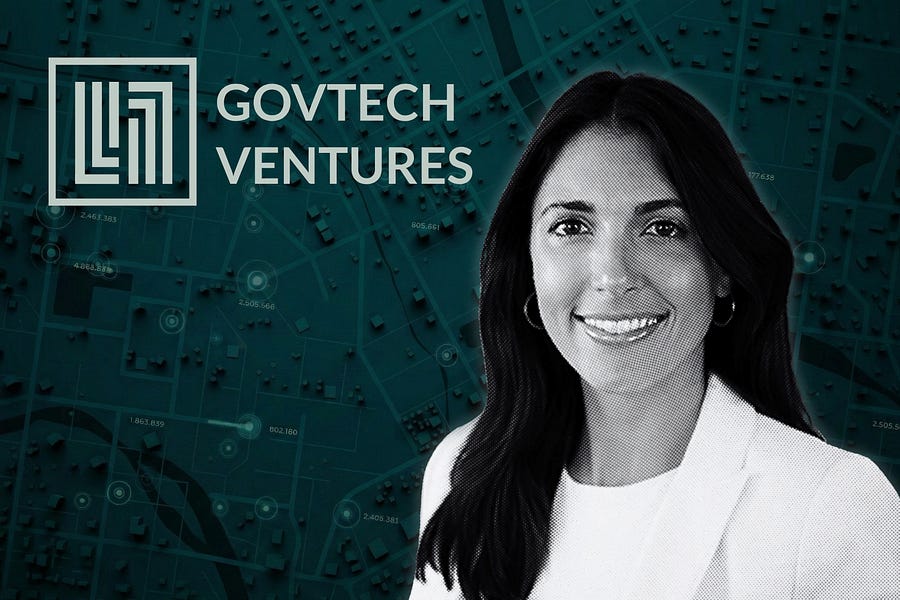
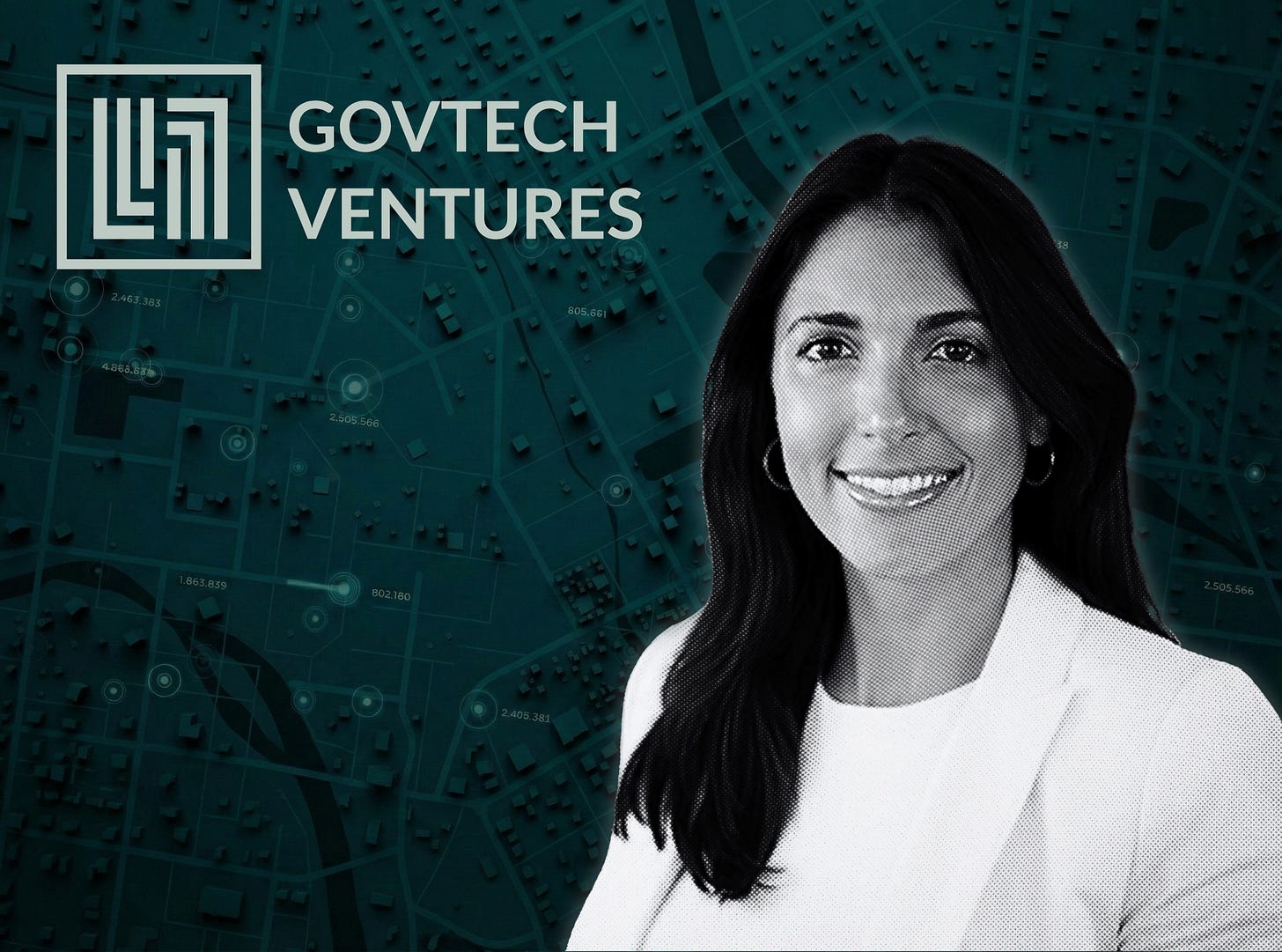
Rachel Stern is the solo GP of GovTech Ventures, a $15 million fund investing in pre-seed and seed startups selling to state and local governments. She avoids federal and defense contracting, instead targeting companies with 80% margins and net revenue retention above 100%, and gives founders the option to build billion-dollar companies or sell earlier for $50-500 million. Her thesis rests on the idea that government technology adoption is slow but extremely sticky once integrated, making durability the key competitive advantage.
- Rachel Stern founded GovTech Ventures in late 2025 as a $15 million solo-GP fund investing in pre-seed and seed companies selling to state and local governments.
- She avoids the Department of Defense and federal government entirely, arguing state and local governments operate on different buying cycles tied to one-to-five-year election terms rather than a 50-year horizon.
- Her investment thesis targets companies with 80% margins and net revenue retention exceeding 100%, since government customers rarely churn once a technology is integrated.
- Rachel gives founders 'optionality,' meaning there is no pressure to build a unicorn; a founder can sell for $50 million to $500 million within a few years instead.
- She cites Cox Media's $1.8 billion acquisition of OpenGov as evidence that large incumbents now pay double-digit multiples for GovTech startups with under $10 million in ARR.
- Rachel advises founders to have at least 50 conversations with potential government customers before building a product, and looks for three pilots or one solid contract as early traction.
Connect with Rachel
https://www.linkedin.com/in/rachelstern/
VC Uncovered’s View
Most venture capital is a race for velocity. Rachel Stern’s work is a study in friction.
At GovTech Ventures, the risk is not that a company fails to find a market; the risk is that the founder lacks the endurance to survive the procurement cycle. In the state and local government sectors, growth is not measured in viral loops or weekly active users. It is measured in the legislative sessions, committee hearings, and the slow, deliberate movement of municipal budgets. Rachel is betting on the “sticky” reality of infrastructure.
Rachel does not view government technology as a subset of defense or federal contracting. She believes that framing ignores the five thousand cities and three thousand counties that manage the actual mechanics of American life. Capital in this space is not a tool for blitz-scaling. It is a strategic input designed to navigate the distance between a pilot program and a multi-year contract. In a market where adoption lags by nearly a decade, Rachel believes durability is the only true competitive advantage.
The Uncovered Profile: Rachel’s Ideal State
The setting is Napa, California, where the light is soft, and the pace is intentionally analog. Rachel is in the kitchen; the air is filled with the scent of fresh vegetables being prepped for a dinner for 10. Her husband is chilling a bottle of champagne, waiting for the precise moment to pour. At her feet, two large, aging doodles are asleep, undisturbed by the music playing in the background. This is a scene defined by hospitality and conversation. There is no performative networking here; there is only the quiet satisfaction of sharing a meal with people she loves, far removed from the theater of the boardroom.
The Geometry of the State Capital
Rachel Stern spent 15 years operating in the fractured landscape of state and local government before she decided to formalize her expertise into a fund. She did not arrive at this niche by accident. She previously founded a firm that transformed a network of state-level lobbyists into a strategic asset for category-defining companies. When Zoom, Lyft, and Square needed to navigate complex regulatory environments, they hired Rachel. She has seen, firsthand, the power of a state to create or destroy a market.
The launch of GovTech Ventures in late 2025 was a response to a specific hole in the venture ecosystem. While billions of dollars flowed into “frontier tech” and federal defense contracts, the mundane systems that manage trash pickup, school funding, and streetlights remained underserved. Rachel is raising a $15 million Fund to address this gap. She is a solo GP focusing on pre-seed and seed stages. She closed the first portion of the fund in December; a second close followed in April.
The logic of her investment thesis is rooted in the customer's “stickiness.” Once a technology is integrated into a government workflow, the churn is remarkably low. Rachel targets companies selling products to state and local governments, where the total addressable market is limited, but retention is nearly absolute. She looks for 80% margins and net revenue retention exceeding 100%. In this corner of the market, a company does not need to be a “unicorn” to be a success.
The Logic of the Lead
Rachel maintains a contrarian stance on federal contracting. She avoids the Department of Defense and the federal government entirely, viewing those markets as governed by fundamentally different buying mechanics. The federal government operates on a 50-year horizon of global dominance. State and local governments operate on one to five-year election cycles. They are concerned with the city’s immediate functionality.
This distinction shapes her fund’s architecture. Because the sales cycle in GovTech can range from six to 18 months, the capital must be patient. Rachel provides her founders with what she calls “optionality.”
“As an investor, I would love to invest in another billion-dollar company; I’ve done that, and I have that track record. But what I’m looking for now is a conversation with my startups that says my goal is to give you the optionality to sell at any point you want. There is no unicorn pressure. If you want to build a billion-dollar company, I will do my best to enable that. But if you want to build a $50 million, $100 million, or $500 million company and sell in the next three years, we can do that too. There are different decisions those companies have to make early.”
The exit environment in GovTech has shifted significantly over the last four years. Large incumbents, such as Cox Media, which acquired OpenGov for $1.8 billion, are actively looking to buy innovation. They are often willing to pay double-digit multiples for startups with less than $10 million in annual recurring revenue. For Rachel’s LPs, many of whom are existing GovTech founders and family offices, this model provides a faster return on invested capital than traditional venture funds.
Capital as Culture
Rachel describes herself as a hands-on investor. She does not merely write checks; she “beats up slide decks” and coaches founders on the nuances of go-to-market strategy. She often spends a month working with a founder before committing to an investment to ensure they are coachable. This is a requirement born of experience. The mistakes in GovTech are expensive and time-consuming; a founder who cannot hear strategic feedback will rarely survive the bureaucracy of a state capital.
Her advice to founders is rooted in a specific metric: 50 conversations. Rachel believes that a founder must talk to at least 50 potential government customers before building a product. She is looking for the “grit” required to navigate systems that are not designed to be navigated. In her view, early traction is defined by three pilots or one solid contract. Once that repeatable motion is found, Rachel uses her network of LPs to help the founder scale from one contract to 20.
This people-to-people approach is a departure from traditional B2B SaaS, where scale is often driven by marketing spend. In government, people buy from people they know. Success in one city often creates a network effect, with neighboring municipalities seeking the same solution. A happy government customer is a founder’s best salesperson; they want to tell their peers about systems that actually work.
The Messy Middle of the AI Era
Rachel has lived through three major cycles of government innovation: the cloud adoption of 2011, the mass digitization of the pandemic, and the current AI era. She is skeptical of “pure AI plays” in the current market. She believes government data is currently too messy for AI to be transformative on its own. Much of the critical data remains trapped in filing cabinets, legacy Microsoft 2003 systems, or analog forms.
“Bad data in, bad data out,” is her guiding principle. She is currently focused on the “messy middle”: companies that help governments digitize analog data sets to prepare for an AI future. She prefers traditional SaaS platforms with integrated AI functionality over speculative AI tools. While governments are eager to keep pace with the private sector, they will always require a “human in the loop.” They cannot simply automate their way out of their workforces.
Rachel also monitors the growing tension between federal and state regulations. While the federal government attempts to prevent states from passing anti-competitive AI legislation, states like Colorado and New Jersey are already moving forward with their own rules. This regulatory vacuum creates a challenge for founders; they are often unsure what they are legally allowed to sell. Rachel’s role is to help them navigate this friction while ensuring their tools remain secure and constituent data remains protected.
The Aesthetic of Durability
Rachel Stern’s work is entirely focused on the tangible. She values the durability of the systems that keep a city running. Her measure of success is not just the financial return for her LPs, but the increased visibility of state and local markets. She wants constituents and investors to pay more attention to the city councils and state senates that dictate daily life.
“Our day-to-day lives are impacted by state and local decisions in a much more profound way than anything happening in Congress. When’s the last time you thought about your city council or who is going to be in your state Senate? We have a level of control over those processes as constituents that we simply don’t have at the federal level. Success for me is getting people to think about those markets as a user, because these are the places where our lives are most directly impacted.” Her personal tools reflect this blend of the digital and the physical. She uses a mix of AI models such as Gemini, ChatGPT, and Claude, to refine her weekly video series on GovTech go-to-market strategies. She finds that bouncing ideas between models helps her maintain her own voice. At home, she is a proponent of Tesla’s Full Self-Drive technology, viewing it as a profound shift in how we interact with our environment.
Ultimately, Rachel is looking for a specific type of person: someone who wants to transform a legacy system that is slow and paper-based. She admires the patience required to work in a market that lags the enterprise by a decade. For Rachel, the work is about more than technology; it is about the grit required to make government function better for the people it serves.
More from Uncovered Media





Questions this answers
What is GovTech Ventures and who runs it?
GovTech Ventures is a $15 million fund founded by Rachel Stern in late 2025, where she serves as solo GP investing in pre-seed and seed startups that sell to state and local governments.
Why does Rachel Stern avoid federal and defense contracting?
She views federal and defense buying mechanics as fundamentally different, driven by a 50-year horizon of global dominance, whereas state and local governments operate on one-to-five-year election cycles focused on immediate city functionality.
What financial metrics does Rachel Stern look for in GovTech startups?
She targets companies with 80% margins and net revenue retention exceeding 100%, reflecting the near-zero churn typical once a technology is integrated into a government workflow.
How does GovTech Ventures approach exits differently than traditional VC?
Rachel gives founders optionality to sell at any point rather than forcing a unicorn outcome, citing acquisitions like Cox Media's $1.8 billion purchase of OpenGov as evidence that incumbents pay double-digit multiples for startups with under $10 million in ARR.
What does Rachel Stern think about AI in government technology?
She is skeptical of pure AI plays because government data is often messy or trapped in legacy systems and filing cabinets, and she prefers traditional SaaS platforms with integrated AI that keep a human in the loop.
Originally published on VC Uncovered · By Sean Lindy