Samantha Klingelhofer
Infinity Ventures
“Grit and adaptability matter more than the idea or market timing... Ideas change, founders don't.”
The short version
Samantha Klingelhofer of Infinity Ventures explains her athlete-inspired investment philosophy, prioritizing founder grit, adaptability, and relationships over market timing or the initial idea. She argues that early-stage investing is like a marriage between founders and investors, and that capital efficiency, not blank checks, drives the most transformative companies. Her approach reflects a founder-first framework: people first, market second, idea third.
- Samantha Klingelhofer believes grit and adaptability matter more than the idea or market timing, because ideas change but founders don't.
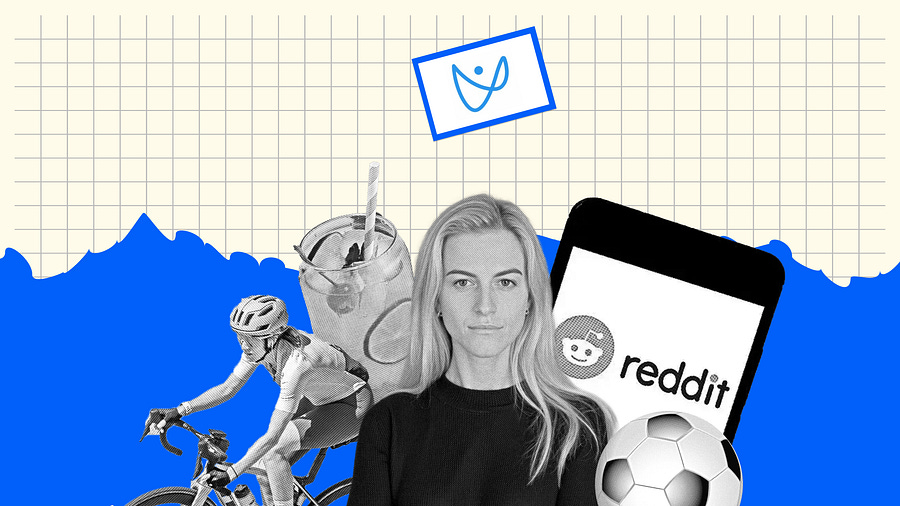
- She looks for 'athlete-like' qualities in founders, drawing on her own background as a soccer player and professional cyclist, including adaptability, execution under pressure, and relentless focus.
- Her investment framework prioritizes founders first, market second, and idea third, since most startups pivot before finding real product-market fit.
- She describes an early-stage investment as a marriage, arguing the personal relationship between founders and investors is one of VC's most overlooked but critical success factors.
- Klingelhofer challenges the 'more capital is better' narrative, citing Airbnb's bootstrapped cereal-box origins as an example of constraints driving innovation.
- She was inspired to pursue venture capital after forming a genuine relationship with a founder during a private equity deal at an Israeli-based healthtech company, which she says set her firm apart from other capital sources.

Connect with Samantha
samantha@infinityvc.capital
https://www.linkedin.com/in/sklingelhofer/
VC Uncovered's View
Samantha Klingelhofer brings an athlete's mindset to investing. Her approach recognizes that raw talent alone doesn't build exceptional companies, just as championship teams aren’t just about the right draft picks.

While established funds might evaluate companies primarily through the lens of market size or traction metrics, Samantha looks for the "athlete-like" qualities in founders: adaptability, execution under pressure, and that relentless obsession with improvement that separates good from great. What makes Samantha part of the new wave of venture capitalists we champion is her emphasis on relationships and founder qualities that transcend any business idea.

This relationship-first philosophy directly challenges the traditional VC playbook that often treats entrepreneurs as interchangeable vehicles for capital deployment. It's exactly the kind of nimble, forward-thinking approach the VC Uncovered manifesto advocates—venture capital that rolls up its sleeves, builds genuine connections, and understands that the founders themselves, not just their pitch decks, are the true differentiators.

Perhaps most refreshingly, Samantha isn't afraid to challenge the "more capital is better" narrative that has dominated venture for years. Her conviction that constraints often drive the most transformative innovation represents the bold thinking needed to reshape VC's future, one that values founder resilience and capital efficiency over blank checks and blitzscaling.
Meet Samantha
Q: If you could be anywhere, eating, drinking, and reading whatever you like most, where would you be and what would those things be?
A: In the Rockies, eating a ribeye, drinking a Shirley Temple, and reading Reddit threads on conspiracies.

Key Quotes
"Grit and adaptability matter more than the idea or market timing... Ideas change, founders don't—the ability to adapt, persist, and recognize new opportunities is what separates great entrepreneurs from the rest."
"What separates good from great athletes is relentless discipline in execution and an obsession with winning, which I believe are traits that translate to exceptional founders."
“An early-stage investment is a marriage—we stay together through the good and the bad. The personal relationship between founders and investors is often overlooked, yet it's one of the most critical success factors.”
"My mom taught me to be an owner, even when you aren't. She's spent the last 30+ years at the same company—working her way from an entry-level position to CEO."
"We've seemed to have lost the script a bit—more capital isn't better. The least amount of capital possible to get to the biggest outcome possible is the goal."
Original Responses (Lightly Edited for Clarity and Flow)
Background and Personal Journey

Experiences Shaping My Investment Approach
I've always been an athlete. I grew up playing soccer and played in college, and now channel my hyper-competitive personality into professional cycling. Performing in sports requires a lot of things that building a great business also does—preparation, discipline, adaptability, resilience, teamwork, leadership, etc. Winning in sports isn't just about raw talent, just like how a good idea in the right market at the right time does not mean you're going to build a big company.
I gravitate towards founders who demonstrate 'athlete-like' qualities—they adapt and iterate quickly, execute under pressure, push through discomfort, and maintain a relentless (almost obsessive) focus on growing every day. What separates good from great athletes is relentless discipline in execution and an obsession with winning: traits that translate to exceptional founders.
Influences on My Worldview
Growing up, both of my parents worked full-time. When my mom started to take off in her career, my dad quit his job to drive us to school and practice, cook dinner, etc. Unfortunately, this dynamic is uncommon—I was the only one of my friends who arrived at school with my dad (and don't get me wrong, I loved it). Having a working mother (and a very successful one) has had the biggest impact on me, both professionally and personally. She balanced running a public company with being a supportive, present, and fun mom, which refutes the common narrative that a working mother can't do or have it all.
My mom taught me to be an owner, even when you aren't. She's spent the last 30+ years at the same company, working her way from an entry-level position to CEO. She always told me to treat everyone you meet and make every decision like you have a massive personal stake in the outcome because, in a way, you do. She instilled in me accountability, integrity, taking ownership, and a bit of 'fake-it-til-you-make-it.' In VC, feedback cycles are extremely long—every hour spent does not yield immediate returns, making this ownership mindset critical. Internally, if you don't take initiative, it won't get done. Externally, if you don't act, someone else will, and they'll win the opportunity instead.
Moment Inspiring Venture Capital Career
When you're a non-Partner at a private equity firm, you don't build relationships with founders and/or CEOs. You meet and evaluate them as part of diligence, but it's surface level, then you hand them off to your platform or operating team who spends the most time with them. There is hardly ever a personal connection, at least at the very junior level. You also don't get to meet these founders at the outset—when a PE firm comes into play, these are often fully mature businesses no longer run by the founder.
We invested in an Israeli-based healthtech company at the private equity firm I worked at before Infinity. The Partner I worked with on the deal gave me a lot of leash, and I ended up forming a very genuine relationship with the CEO and Founder. We had a lot in common on a personal level, and I was in awe of the business she built, the loyalty and admiration of her team, and how she could balance all of it and be a mom to 3 kids. The deal was competitive, but we ended up investing, which I attributed to the relationship my partner and I had formed with her. She valued it a lot, and it set us apart from all the other sources of capital out there. The working relationship we had with her for the next year or so before we left the firm was awesome, and I enjoyed working with her more than anything else—it energized me in a way no other parts of the job had.
This is when I realized that I wanted a job where building relationships is critical. It's where I spike, and it's what makes me excited to do my job every day.
Philosophy and Insights
Unconventional Belief
Grit and adaptability matter more than the idea or market timing. You can have a great idea, the technical know-how, and the right talent in the right market at the right time to build your vision, but still fail to build an enduring company.
Failures and setbacks are inevitable, and uncertainty is the name of the game. Persistence and relentless focus on success are critical factors, especially because most ideas change. Many very successful tech companies started with a different idea or in a different market. Slack was originally a gaming company; Shopify was a snowboard shop; Twitter was a podcasting platform; YouTube was a dating site. Ideas change, founders don't—the ability to adapt, persist, and recognize new opportunities is what separates great entrepreneurs from the rest.
Values When Working with Founders
Founder(s) first, market second, idea third.
Founder(s): We back people, not companies. We want individuals who are obsessed with the problem they're tackling, able to adapt and evolve, and relentless on progress and success.
Market: However, even the best founder can't out-execute or outwork a fundamentally 'bad' market. The market needs to be disruptable enough for that founder to find opportunity.
Idea: Finally, most startups pivot before finding real product-market fit. The idea at the seed stage is often just a starting hypothesis. How a founding team navigates uncertainty and executes through challenges is the biggest driver of success. Integrity and trust also matter a lot.
An early-stage investment is a marriage—we stay together through the good and the bad. The personal relationship between founders and investors is often overlooked, yet it's one of VC’s most critical success factors. Both sides should genuinely respect and enjoy working together, knowing they can be transparent and are aligned and in it for the long haul.
Measuring Success Beyond Returns
The quality of the relationships I build and the reputation I carry are the most important things to me. I want to be known as a person with high integrity, extreme loyalty, and a deep commitment to the founders I back. I also want to see those founders have a lot of success. I hope that if I successfully do the first, the second will follow.
Trends and Future Vision
Misconception About VCs
More capital isn't better. The least amount of capital possible to get to the biggest outcome possible is the goal. If you don't need money, don't take it. If you do, then go for it, but don't take more than you need: growing too fast can also break a company.
Some of the most transformative companies were built because the founders did not have unlimited resources and had to be scrappy. Airbnb is a great example—they bootstrapped by selling custom cereal during the 2008 election, using their constraints to drive innovation. Once they raised VC money, they remained disciplined. Venture money is a tool to enable innovation, not overwhelm it.
Improving the VC Ecosystem
Easy: more women holding investing seats and founding companies. The status quo is just one big missed opportunity right now. This isn't going to happen overnight, and it needs to happen naturally, with help from everyone, and in small ways to begin.
I am the only female investor at my firm, but I never really think about my gender when I'm with the team. That's because the guys I work with have created a really awesome environment where my ideas and my contribution are all that matter, not my gender. This makes a real difference—I feel supported and mentored, which will give me longevity in the industry, and I feel genuinely compelled to attract more women to the industry and our firm. It's a flywheel, and it starts with the things we say and the tone that all of us, both men and women, set every day.
I believe in hiring, supporting, and backing the best talent: hard stop.
However, we all need to make sure that talent has an at-bat to begin with. It'll take time, but it'll get better, and the VC ecosystem will be better for it.
More from Uncovered Media


Questions this answers
What is Samantha Klingelhofer's investment philosophy at Infinity Ventures?
She prioritizes founders first, market second, and idea third, believing grit and adaptability matter more than the idea or market timing because founders' ability to adapt and persist is what separates great entrepreneurs from the rest.
Why does Samantha Klingelhofer compare founders to athletes?
As a former college soccer player and current professional cyclist, she sees parallels between sports and startups: both require preparation, discipline, adaptability, resilience, and an obsession with improvement, not just raw talent.
Does Samantha Klingelhofer think more venture capital is always better?
No, she believes more capital isn't better and that the goal is the least amount of capital possible to get to the biggest outcome, citing Airbnb's bootstrapped, scrappy origins as an example of constraints driving innovation.
What led Samantha Klingelhofer to pursue a career in venture capital?
While at a private equity firm, she formed a genuine relationship with the founder and CEO of an Israeli-based healthtech company during a competitive deal, and realized that building relationships with founders was what energized her most in her work.
How does Samantha Klingelhofer describe the founder-investor relationship?
She describes an early-stage investment as a marriage, saying investors and founders stay together through the good and the bad, and that this personal relationship is often overlooked but is one of VC's most critical success factors.
Originally published on VC Uncovered · By Drew Glover