Uncovered Originals 7.10.26
This week: the fight for control of attention, infrastructure, and enterprise AI.
The short version
This Uncovered Originals roundup covers three stories about who controls the scarce layer beneath hype: streamers competing for World Cup rights to build subscription habits, Ashton Kutcher leaving Sound Ventures to build around AI infrastructure like power and data centers, and Palantir challenging token-based AI pricing as enterprises demand measurable ROI. The piece argues that leverage is shifting from products to the infrastructure, attention, and data layers underneath them. It also touches on how Uncovered uses Instagram for distribution and Substack as core publishing infrastructure.
- Netflix, Disney, YouTube, Amazon, and Apple are all competing for World Cup rights because live sports drive habit and retention better than movies or shows, but rights moving behind a streaming wall risks losing casual fans.
- Ashton Kutcher is leaving Sound Ventures to build around AI infrastructure, energy, and deep tech, signaling that AI investment opportunity is shifting from models to power generation, data centers, chips, cooling, and grid resilience.
- Palantir argues that AI spending must increase revenue, reduce costs, or measurably boost productivity, or enterprise AI budgets built on token-based pricing become vulnerable to cuts.
- Alternatives to token-based AI pricing include fixed-fee or seat-based contracts, open-source models run in private environments, internally built AI systems using proprietary data, and outcome-based pricing tied to completed work.
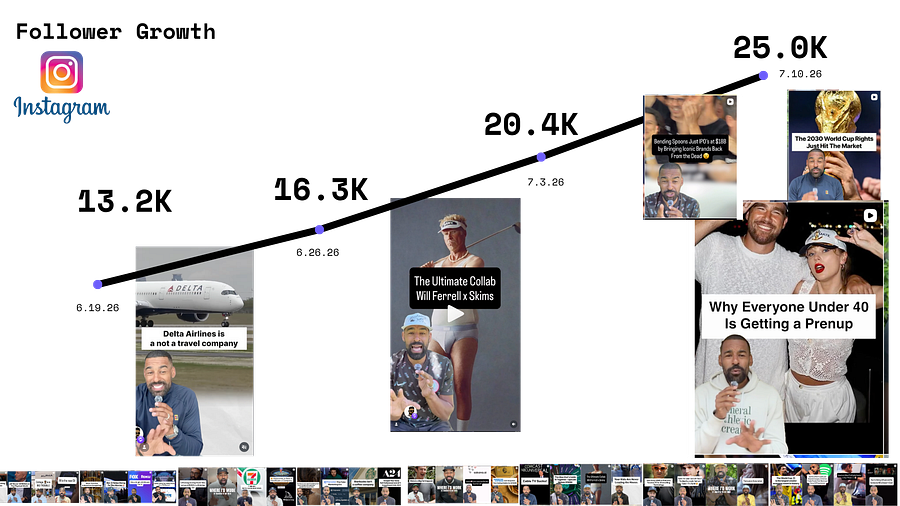
- Uncovered uses Instagram to reach CEOs, founders, investors, athletes, and operators by letting ideas travel first, rather than relying on LinkedIn's emphasis on documented proximity to rooms and events.
- Uncovered uses Substack as core infrastructure to organize and distribute seven distinct newsletters, valuing it for its publishing workflow, discovery layer, and archive, not just as a writing tool.
The companies that win the next decade may not be the ones with the best product. They may be the ones that control the scarce layer underneath it. In media, that scarce layer is live attention, which is why every streamer wants the World Cup. In AI, it is power, chips, cooling, and data centers, which is why Ashton Kutcher is leaving a successful AI fund to build around infrastructure. In enterprise software, it is data ownership and workflow control, which is why Palantir is attacking the token-based AI model. Different stories, same question: who owns the leverage when the hype cycle ends?
World Cup Rights
Live attention is the last subscription moat. The World Cup is not valuable because people watch one match. It is valuable because people reorganize their lives around the next one. That is why Netflix, Disney, YouTube, Amazon, and Apple all want in. Movies drive trial. Shows drive binge behavior. Sports drive habit, urgency, and retention. But readers surfaced the real tension: if the rights move behind a streaming wall, casual fans may not follow. The winner will not just be buying soccer. They will be betting they can turn a global cultural moment into a subscription relationship that lasts after the final whistle.
Ashton Kutcher / AI Infrastructure
The next AI trade is not the model. It is what the model runs on. Ashton Kutcher leaving Sound Ventures to build around infrastructure, energy, and deep tech is a signal that the AI opportunity is moving down the stack. The first wave rewarded the companies building intelligence. The next wave may reward the companies building power generation, data centers, chips, cooling, and grid resilience. Readers immediately connected the dots to water usage, grid strain, and the physical constraints of AI. That is the deeper point. AI is no longer just a software story. It is becoming an industrial story.
Palantir / Token Pricing
Enterprise AI is about to face the CFO test. Palantir’s argument cuts through the noise: if AI does not increase revenue, reduce costs, or make teams measurably more productive, the budget is vulnerable. Token-based pricing made sense when companies were experimenting. It gets harder to defend when enterprises are spending real money while moving data and workflows into someone else’s ecosystem. One reader asked the right question: what options do companies have beyond the token model? That may become one of the defining enterprise AI debates of the next year.
What options do companies have beyond token-based AI pricing? The alternatives are still early, but the direction is clear. Enterprise buyers are going to push AI vendors away from pure usage pricing and toward models that connect more directly to value. Some will negotiate fixed-fee or seat-based contracts so costs are predictable. Some will use open-source models inside private environments to keep data and workflows under their own control. Some will build internal AI systems around their proprietary data. Others will demand outcome-based pricing where vendors get paid for completed work, not endless token consumption. The bigger shift is that “we use AI” will no longer be enough. AI spend has to prove it increases revenue, cuts costs, improves productivity, or compounds a company’s own advantage.
DREAM IN PUBLIC
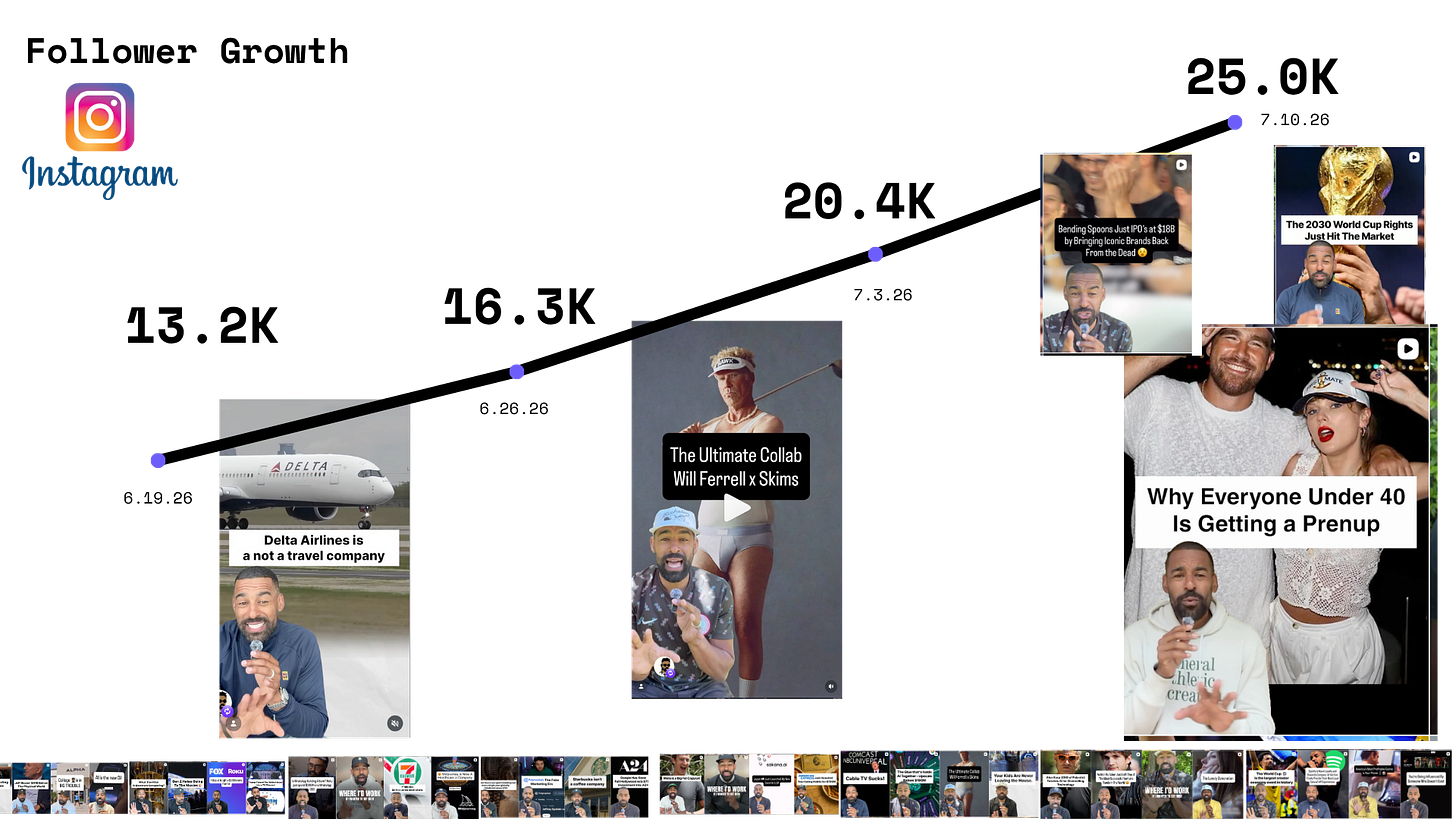
The content is starting to open doors without asking permission. This week reinforced one of the biggest lessons from building Drew’s Instagram: the right platform does not just distribute ideas. It creates access. LinkedIn still has value, but it increasingly rewards documented proximity: the conference photo, the founder selfie, the room you were invited into. Instagram has been different. Drew’s videos are reaching CEOs, founders, investors, athletes, entertainers, and operators because the idea travels first. That changes the creator equation. The goal is not to prove you were in the right room. It is to make the insight strong enough that the room finds you. Follow us on Insta: @glovejones.
THE KEEP
The best publishing tools do not just help you send. They help you compound. It feels a little meta to feature Substack in a Substack newsletter, but it has become real infrastructure for Uncovered. We now use it to organize and distribute seven different newsletters to distinct audiences, each with its own voice, category, and community. The value is not just that it is easy to write, format, embed videos, feature podcasts, and publish quickly. It is that Substack gives each property a clean home while still benefiting from a built-in discovery layer. For a media company trying to turn ideas into audience, Substack is not just a CMS. It is distribution, archive, community, and publishing workflow in one place.
What is one tool your team uses that feels more like infrastructure than software? Reply with your pick.

Every industry, every business model, there is a larger opportunity hiding inside of it. We’re here to help you find them. Follow Uncovered for more tech and AI news.
Questions this answers
Why do streamers like Netflix, Disney, and Amazon want World Cup rights?
Live sports like the World Cup create habit, urgency, and retention because people reorganize their lives around matches, unlike movies which drive trial or shows which drive binge behavior, according to the article.
Why is Ashton Kutcher leaving Sound Ventures to focus on AI infrastructure?
The article frames his move as a signal that the AI opportunity is shifting down the stack, from building intelligence to building the power generation, data centers, chips, cooling, and grid resilience that AI runs on.
What is Palantir's argument against token-based AI pricing?
Palantir argues that if AI does not increase revenue, reduce costs, or make teams measurably more productive, the budget behind it is vulnerable, making token-based pricing hard to defend once enterprises are spending real money.
What options do companies have beyond token-based AI pricing?
According to the article, companies can negotiate fixed-fee or seat-based contracts, use open-source models in private environments, build internal AI systems around proprietary data, or demand outcome-based pricing tied to completed work rather than token consumption.
How does Uncovered use Substack and Instagram in its own operations?
Uncovered uses Substack to organize and distribute seven distinct newsletters with a built-in discovery layer, and uses Instagram to reach CEOs, founders, investors, and operators by letting ideas travel on their own rather than relying on documented proximity like LinkedIn does.
Originally published on The Week · By Brandy Whalen