Uncovered Originals 7.17.26
Stripe wants PayPal. Yann LeCun wants world models. Consumers want a better buzz.
The short version
This roundup covers three shifts: Stripe and Advent reportedly offered $53 billion to buy PayPal, a deal that would combine Stripe's business payment rail with PayPal's consumer wallet and trust layer. Alcohol has lost $830 billion in cultural and market value as consumers shift toward low-dose THC, functional beverages, and no-alcohol drinks that promise more controlled effects. Yann LeCun, Meta's former Chief AI Scientist, reportedly raised $1.03 billion at a $3.5 billion valuation for AMI Labs to build AI world models focused on cause and effect rather than next-word prediction.
- Stripe and Advent reportedly made a $53 billion offer to buy PayPal, a private company attempting to acquire a public S&P 500 company.
- Stripe controls developer and business payment infrastructure while PayPal controls consumer trust, stored credentials, and Venmo, making the combined company a potential gatekeeper for AI agents making purchases.
- Alcohol has lost $830 billion in cultural and market value as Gen Z drinks less and more Americans cut back, driving growth in low-dose THC, functional beverages, and nootropics.
- The alcohol alternatives shift is about consumers wanting predictable, controlled effects like relaxation, focus, or better sleep rather than becoming sober or wellness purists.
- Yann LeCun, Meta's former Chief AI Scientist, reportedly raised $1.03 billion at a $3.5 billion valuation for his new company AMI Labs to build AI world models.
- LeCun's world models aim to give AI an understanding of cause and effect, similar to how children understand that objects fall or glass breaks before they can explain it in words.

Stripe / PayPal
The Story: Stripe and Advent reportedly made a $53 billion offer to buy PayPal, which would be one of the most aggressive fintech deals ever attempted. A private company trying to acquire a public S&P 500 company is not normal. It is a statement of intent.
The Real Story: Stripe is not just buying payments volume. It is buying the consumer relationship it never built. Stripe owns developers, businesses, and internet payment infrastructure. PayPal owns consumer trust, stored credentials, checkout behavior, and Venmo. In a world where AI agents start making purchases on our behalf, the valuable layer is not just payment processing. It is identity, wallet, trust, and permission.
The Shift: If Stripe owns the business rail and PayPal owns the consumer wallet, the combined company does not just process payments. It controls the door to internet commerce. That is why the monopoly question matters.
Alcohol Alternatives / Precision Mood
The Story: Alcohol has lost massive cultural and market value($830B) over the last few years, while low-dose THC, functional beverages, nootropics, and no-alcohol drinks are growing fast. Gen Z is drinking less, more Americans are cutting back, and the old default of alcohol as the social lubricant is starting to crack.
The Real Story: This is not about people suddenly becoming wellness purists. It is about consumers wanting the upside of intoxication without the chaos of alcohol. The old product was a blunt instrument: drink, hope the buzz lands right, deal with the consequences tomorrow. The new category is selling a more controlled promise: relax, focus, socialize, sleep, recover, and know roughly what you signed up for.
The Shift: We are not entering the sober era. We are entering the precision era. Consumers still want the feeling, but they want control, predictability, better sleep, and fewer tradeoffs. Comment STACK on Drew’s post and get his preferred products for precision.
Yann LeCun / World Models
The Story: Yann LeCun, Meta’s former Chief AI Scientist, reportedly raised $1.03 billion at a $3.5 billion valuation for AMI Labs. His new company is betting that the next frontier in AI is not better text prediction. It is world models.
The Real Story: Most AI systems are trained to predict the next word. LeCun’s argument is that language is only part of intelligence. Before children can explain the world, they understand it. They know objects fall, glass breaks, people react, and actions have consequences. A world model tries to give AI that same deeper layer: not “what word comes next?” but “what happens next?”
The Shift: The last decade taught AI to talk. The next decade may teach AI to understand cause and effect. That moves AI from chatbot to decision infrastructure for the physical world.
DREAM IN PUBLIC
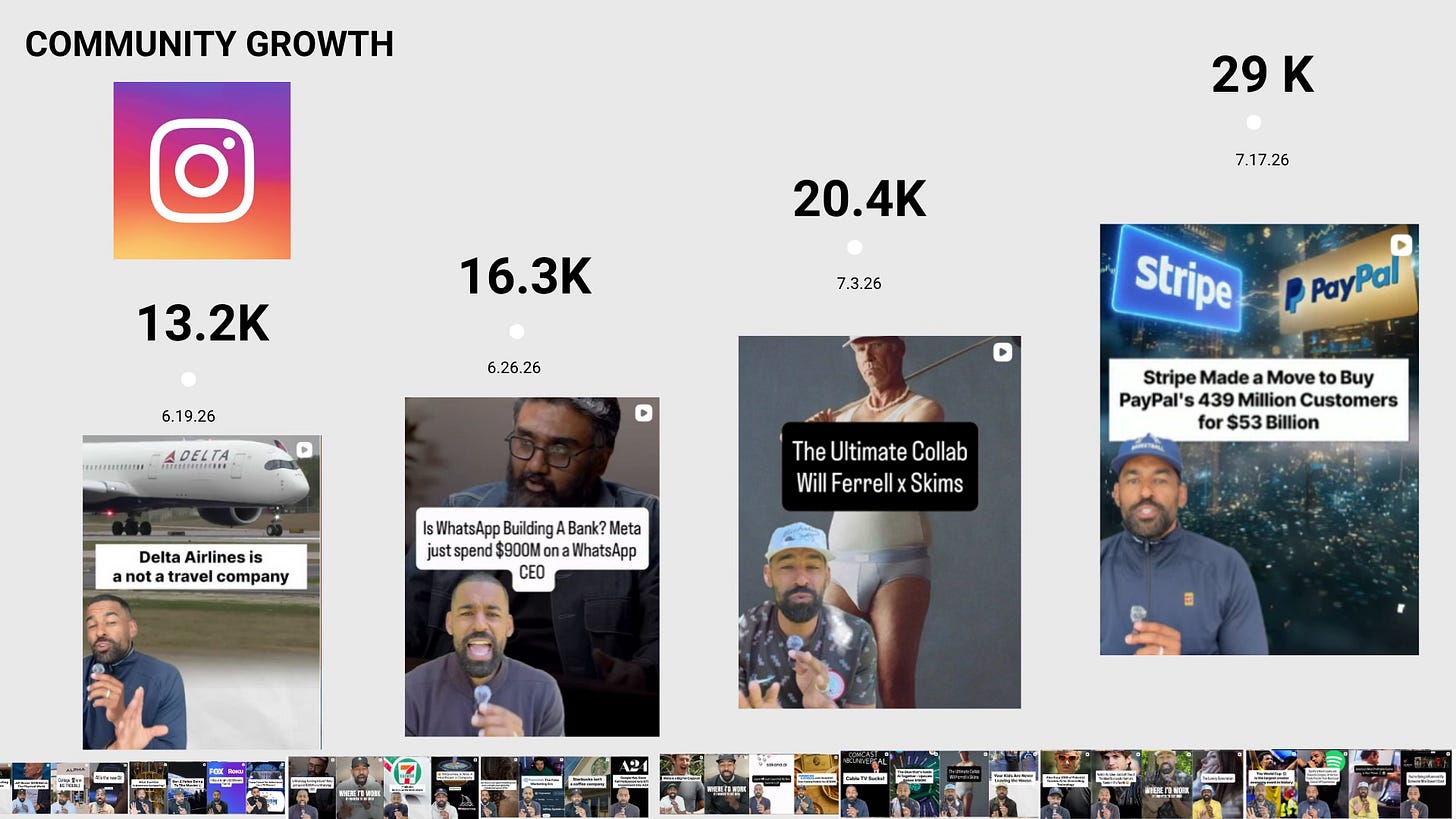
Growth is forcing us to build more deliberately. Drew’s Instagram keeps expanding, but the bigger learning is that distribution only works if the system underneath can keep up. A small team can move fast for a while on instinct, but consistency requires control: clear workflows, shared visibility, tighter handoffs, and fewer things living in someone’s head. That is the real behind-the-scenes shift this week. The audience is growing, but so is the need to turn momentum into a repeatable machine. Follow us on Insta: @glovejones.
THE KEEP
The best tools do not make small teams look bigger. They make small teams move cleaner. Uncovered is a team of two running multiple publications across multiple channels, which means social distribution can get chaotic fast. Ordinal gives us one place to see what is going out, where it is going, who is touching it, and what still needs to happen. That visibility matters when we are moving quickly across Instagram, LinkedIn, TikTok, and more. It keeps us from duplicating work, missing posts, or stepping on each other’s toes. For a small media team, the win is not just posting more. It is building a distribution system that does not break every time the pace picks up.
Every industry, every business model, there is a larger opportunity hiding inside of it. We’re here to help you find them. Follow Uncovered for more tech and AI news.
Questions this answers
How much did Stripe and Advent offer to buy PayPal?
Stripe and Advent reportedly made a $53 billion offer to buy PayPal, which would be one of the most aggressive fintech deals ever attempted.
Why would Stripe want to own PayPal?
Stripe owns developers, businesses, and internet payment infrastructure, while PayPal owns consumer trust, stored credentials, checkout behavior, and Venmo. Combining the two would give Stripe the consumer wallet and identity layer it never built, which matters as AI agents start making purchases on people's behalf.
Why is alcohol losing value while alternatives grow?
Alcohol has lost $830 billion in cultural and market value as Gen Z drinks less and more Americans cut back. Consumers still want the feeling of intoxication but want a more controlled, predictable experience with fewer tradeoffs, which is driving growth in low-dose THC, functional beverages, and nootropics.
What is Yann LeCun's AMI Labs and what are world models?
Yann LeCun, Meta's former Chief AI Scientist, reportedly raised $1.03 billion at a $3.5 billion valuation for his company AMI Labs, which is focused on building AI world models. Unlike systems trained to predict the next word, world models aim to give AI an understanding of cause and effect, similar to how children understand the physical world before they can explain it verbally.
What is the significance of a private company trying to buy a public S&P 500 company like PayPal?
The content notes that a private company trying to acquire a public S&P 500 company is not normal and is described as a statement of intent, reflecting how significant the reported $53 billion Stripe-Advent offer for PayPal would be.
Originally published on The Week · By Brandy Whalen