Uncovered Originals 7.24.26
Netflix wants the production stack. Overtone wants to choose your match. Colossal wants to program biology.
The short version
This Uncovered Originals roundup covers three stories: Overtone, a new AI dating app from Hinge's founder that raised $18 million from Match Group, FirstMark Capital, and Pace Capital to make selective introductions instead of swiping; Netflix's $587 million acquisition of Ben Affleck's 16-person AI startup InterPositive, which builds custom AI models to fix production and post-production problems on film sets; and Colossal Biosciences, which is reportedly raising money at a $20 billion to $30 billion valuation for its de-extinction work on species like the woolly mammoth, even though it has not yet brought back an extinct animal. The throughline is that AI and biotech are shifting from consumer-facing recommendation tools to owning entire technology stacks and platforms.
- Overtone, founded by the creator of Hinge, raised $18 million from Match Group, FirstMark Capital, and Pace Capital to build an AI dating app with no swiping or photos.
- Overtone's AI learns a user's personality, values, and communication style and makes selective introductions with an explanation for why two people may fit.
- Netflix paid $587 million for InterPositive, a 16-person AI startup founded around Ben Affleck that creates custom AI models trained on a film's own footage to adjust lighting, remove objects, and fill in missing shots.
- Post-production can consume roughly 10% to 20% of a film's total budget, and Netflix's InterPositive deal is aimed at reducing that cost and creative waste.
- Colossal Biosciences is reportedly raising money at a $20 billion to $30 billion valuation for de-extinction work on species like the woolly mammoth, dire wolf, dodo, and Tasmanian tiger, despite not having brought back an extinct animal yet.
- Colossal's genome-editing tools could eventually apply beyond de-extinction to genetic disease, organ transplantation, cancer therapies, fertility, and aging, positioning the company as a biology platform rather than just a de-extinction project.

Overtone / AI Dating
The Story:
The founder of Hinge has launched Overtone, a new AI dating app that raised $18 million from Match Group, FirstMark Capital, and Pace Capital. No swiping. No photos. No endless algorithmic feed. Instead, users talk to an AI that learns their personality, values, and communication style, then makes selective introductions with an explanation for why two people may actually fit.
The Real Story:
Dating apps have spent years trying to reduce friction. Tinder made attraction instant. Hinge made profiles more expressive. Overtone wants to remove the biggest burden altogether: the choice. That is the promise and the discomfort. If AI can understand who you may love, it can also understand what influences you, persuades you, and shapes your decisions.
The Shift:
AI is moving from recommending content, music, and products to recommending people. Dating becomes less about searching and more about trusting the system. That is not just a product shift. It is a power shift over intimacy.
Netflix / InterPositive
The Story:
Netflix revealed it paid $587 million for InterPositive, Ben Affleck’s 16-person AI startup built around film production workflows. The company creates custom AI models for individual films, trained on that production’s own footage, so editors can adjust lighting, replace backgrounds, remove unwanted objects, and fill in missing shots without going back to set.
The Real Story:
Netflix did not buy a celebrity AI experiment. It bought production leverage. Post-production can eat up roughly 10% to 20% of a film’s total budget, and that number can climb when visual effects, reshoots, sound, color, and delivery get complicated. InterPositive turns AI into a post-production safety net: fixing the shot, filling the gap, and saving the scene when time, budget, or location breaks the plan. Netflix is not just trying to make movies look better. It is trying to make expensive creative waste disappear.
The Shift:
AI in entertainment is not just coming for the writer’s room. It is coming for the production stack. The winner will not only own the best content. It will own the technology that makes content faster, cheaper, and harder to waste.
Colossal Biosciences / Programmable Biology
The Story:
Colossal Biosciences is reportedly raising money at a $20 billion to $30 billion valuation to continue its work on de-extinction. The company has made its name around species like the woolly mammoth, dire wolf, dodo, and Tasmanian tiger. It has not brought back an extinct animal yet, but that may not be the point.
The Real Story:
The mammoth is the marketing hook. The biology platform is the business. The same tools needed to edit genomes, fill in missing genetic code, and engineer viable embryos could eventually matter far beyond de-extinction: genetic disease, organ transplantation, cancer therapies, fertility, and aging. Investors are not just underwriting a future mammoth. They are underwriting the possibility that biology becomes programmable infrastructure.
The Shift:
Colossal is less Jurassic Park than SpaceX for biology. The near-term product gets the headlines, but the long-term prize is the platform underneath it. If biology becomes programmable the way software became programmable, the mammoth is only the first demo.
DREAM IN PUBLIC
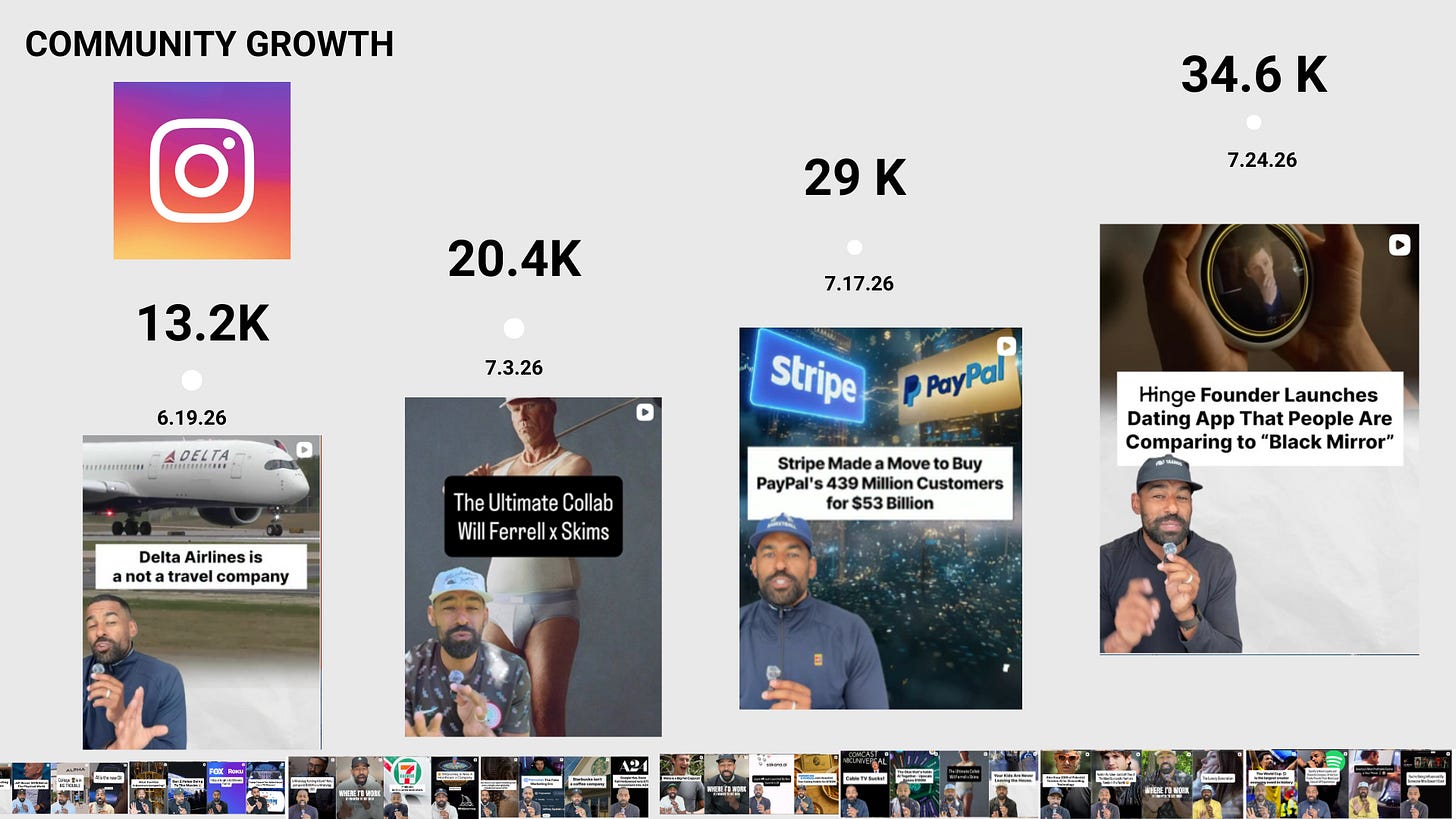
This week, Drew had a new studio. Drew was on vacation with his family and still had to record from a cabin, which created a different kind of production challenge. The setup was less controlled, the schedule was tighter, and the margin for overthinking was smaller. But that is also part of building Uncovered in public. The work does not always happen in perfect conditions, and the people making it are still people. We are building systems so we can show up consistently, but we are also trying to build something that leaves room for real life. Hopefully, that comes through too. Follow us on Insta: @glovejones.
THE KEEP
A media company is only as strong as the relationships it remembers. At Uncovered, we use Attio to track the people we interview, the people we want to interview, and the founders, investors, operators, and sponsors we want in our ecosystem. The value is not just contact management. It is shared context. Who have we talked to? What did we learn? Who should we follow up with? Where might they fit across Founder, VC, CTO, CMO, or LP Uncovered? For a two-person team, Attio gives us one place to manage the relationship layer behind the content. It keeps our network from living in someone’s inbox and helps us build the ecosystem with more intention.
Every industry, every business model, there is a larger opportunity hiding inside of it. We’re here to help you find them. Follow Uncovered for more tech and AI news.
Questions this answers
What is Overtone and who founded it?
Overtone is a new AI dating app founded by the creator of Hinge. It raised $18 million from Match Group, FirstMark Capital, and Pace Capital, and instead of swiping or photos, users talk to an AI that learns their personality and values before making selective introductions with an explanation for the match.
How much did Netflix pay for InterPositive?
Netflix paid $587 million for InterPositive, a 16-person AI startup built around Ben Affleck that creates custom AI models trained on a film's own footage to adjust lighting, replace backgrounds, remove unwanted objects, and fill in missing shots.
Why is Netflix's InterPositive deal significant for film production?
Post-production can eat up roughly 10% to 20% of a film's total budget, and InterPositive turns AI into a post-production safety net that fixes shots and fills gaps, which Netflix is using to reduce expensive creative waste rather than just improve visuals.
What is Colossal Biosciences valued at and what does it do?
Colossal Biosciences is reportedly raising money at a $20 billion to $30 billion valuation for its de-extinction work on species including the woolly mammoth, dire wolf, dodo, and Tasmanian tiger, though it has not yet brought back an extinct animal.
Why are investors backing Colossal if it hasn't de-extincted an animal yet?
According to the article, investors are underwriting the possibility that biology becomes programmable infrastructure, since the genome-editing tools Colossal develops could eventually apply to genetic disease, organ transplantation, cancer therapies, fertility, and aging beyond just de-extinction.
Originally published on The Week · By Brandy Whalen