Uncovered Originals
7-Eleven, Tesla, Mercor, and Meta all point to the same shift: the real business is underneath the product.
The short version
This Uncovered Originals roundup argues that the most important business shifts are hidden underneath the obvious story: Tesla's Cybercab and home solar turn owned assets into income-generating side hustles, 7-Eleven's real product is reducing daily decisions rather than selling snacks, and Mercor supplies the human talent that makes AI models smarter and safer. It also covers Granola, a note-taking tool Uncovered Co-founder Nick Madrid uses to capture and organize interview conversations. The main takeaway: value increasingly sits in the infrastructure and trust layer beneath the visible product, not in the product itself.
- Tesla's Cybercab and home solar represent an 'asset gig economy' where owned things, not people, generate income by working on your behalf.
- 7-Eleven's real business is reducing daily decisions; owning a routine lets it layer banking, bill pay, insurance, and other services on top of trust built through repeated small transactions.
- Mercor supplies the human talent behind AI model development, positioning itself as critical infrastructure rather than a visible AI lab.
- Eric Theis's point from Thesis Uncovered supports the idea that the biggest AI opportunities hide in messy, exception-heavy workflows rather than in the spotlighted models.
- Uncovered Co-founder Nick Madrid uses Granola, a tool that captures and organizes call conversations into searchable notes, calling it a 'team memory layer' for the media company.
DREAM IN PUBLIC
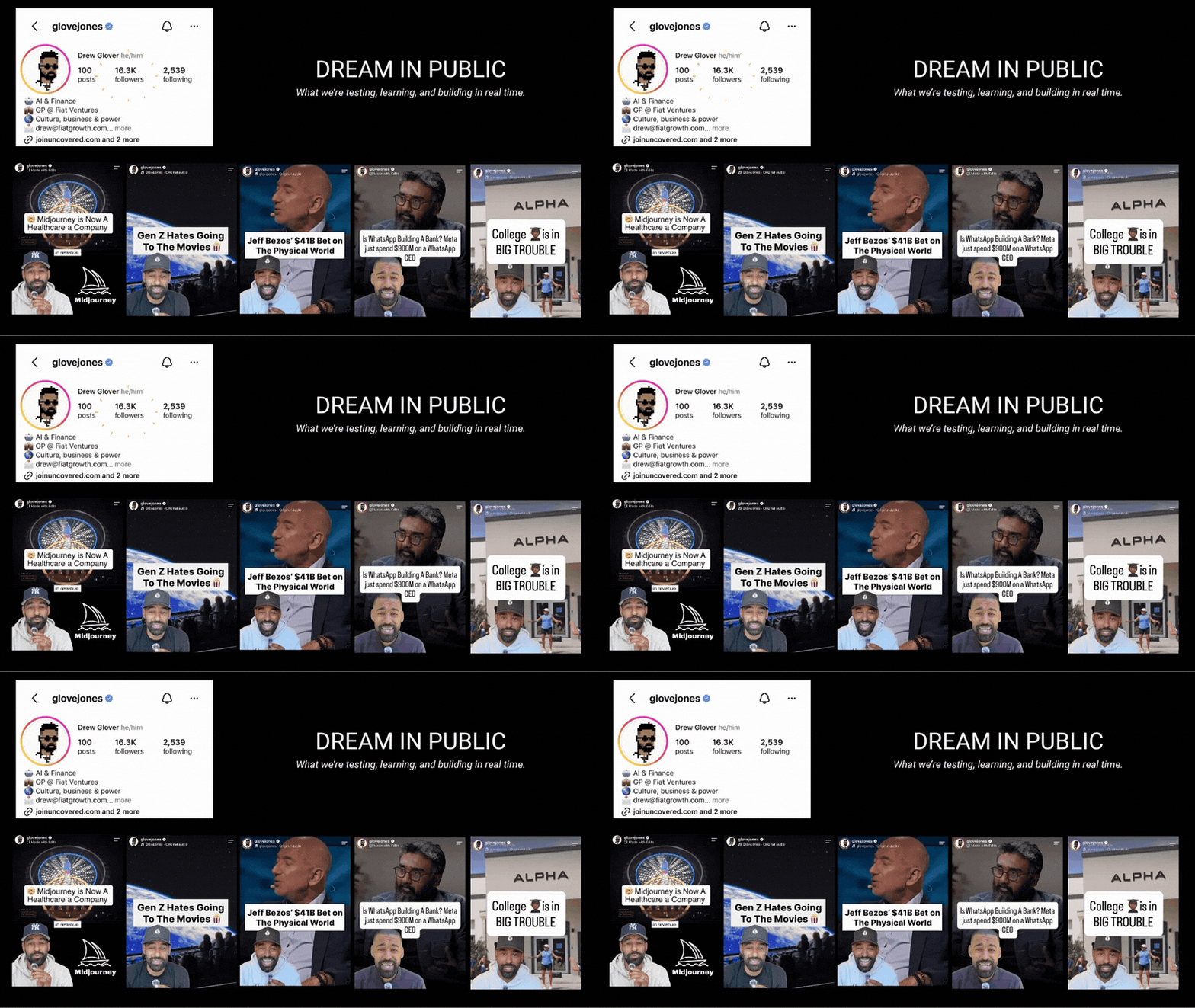
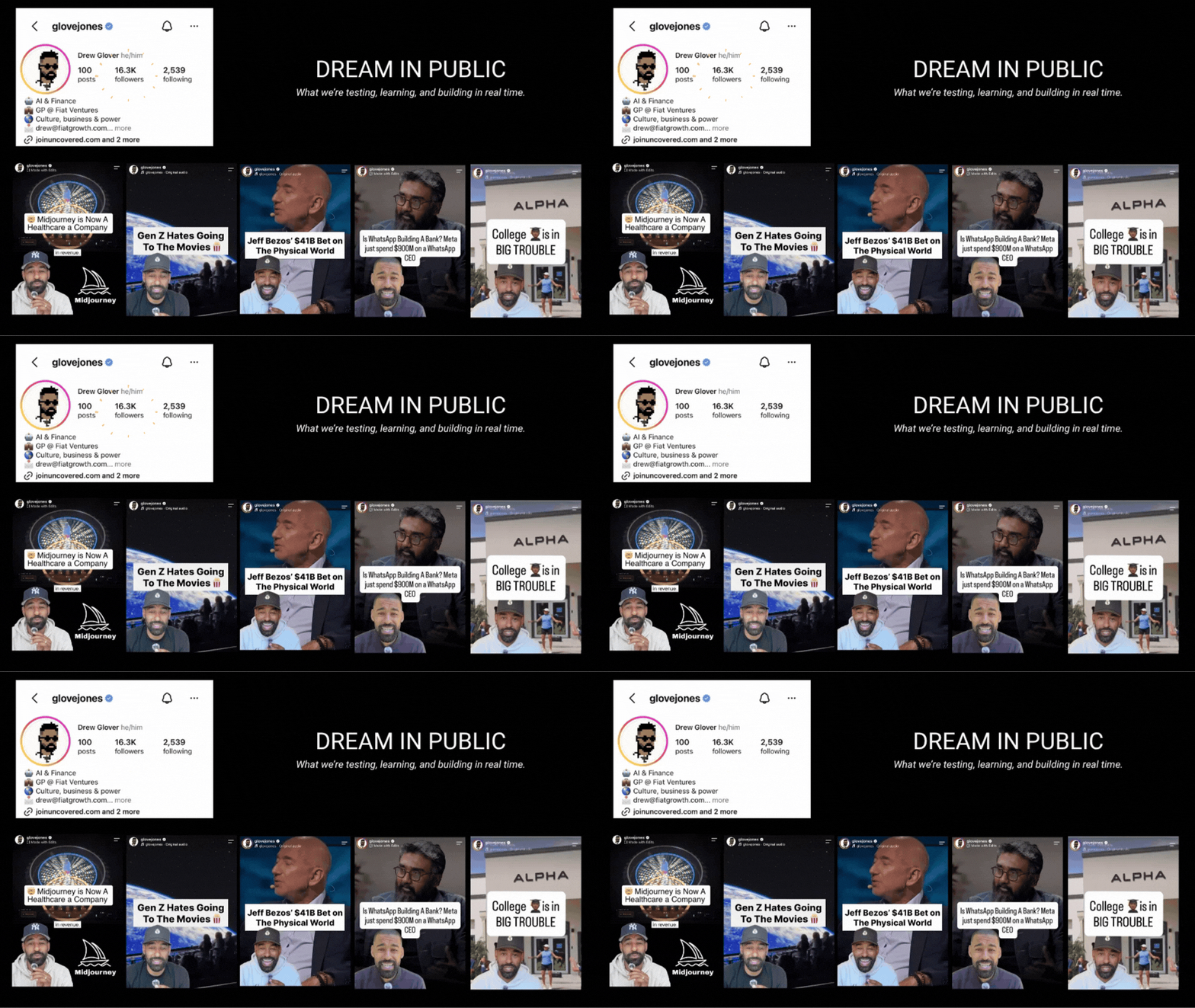
The big learning this week: insight beats information. The posts that moved were not just about what happened. They gave people a frame for what it means. Tesla as the asset gig economy. WhatsApp as distribution. Midjourney as healthcare infrastructure. College as a product under pressure. That is the lane we’re trying to own. Not news. Not hot takes. A sharp explanation of the shift underneath the story. Follow us on Insta — @glovejones.
The things you own are about to clock in. The gig economy had people working for platforms. The next version may have your stuff working for you. Tesla’s Cybercab turns a car into a driverless side hustle. Solar turns a roof into an energy seller. Home data centers could turn spare space and power into AI infrastructure. Readers asked what to call this. The best answer might be: the asset gig economy. You don’t clock in. The things you own do.
The most valuable businesses become defaults. 7-Eleven is not really selling snacks. It is selling fewer decisions. Once a company owns a daily routine, it can layer almost anything on top: food, banking, bill pay, insurance, tickets, even fresh meals. That is the hidden power of convenience. It is not just speed. It is trust built through repetition. Every small transaction earns permission for the next, bigger one. The best businesses do not just win customers. They become the place people go before they even think about going anywhere else.
The picks and shovels of AI may be people. Mercor sits behind the model boom, supplying the human talent that makes AI smarter, safer, and more useful. Everyone is chasing the lab. Mercor is chasing the bottleneck. It connects directly to what Eric Theis discussed in Thesis Uncovered: the biggest AI opportunities often hide in the messy, exception-heavy workflows no one sees. The model gets the spotlight. The infrastructure underneath captures the value. If you’re looking for your next gig, comment on this post, and we will send you the hiring page.
THE KEEP
The best productivity tools do not help you do more. They help you miss less. Uncovered Co-founder Nick Madrid is constantly testing new tools to help our team move faster, and Granola is the one that actually stuck. It captures the conversation, organizes the important points, and turns scattered calls into clean notes we can search, share, and act on. The biggest benefit is not just saving time. It lets you stay present in the conversation instead of splitting your brain between listening, typing, and trying not to miss the next good idea. For a media company built on interviews, insights, and follow-up, Granola has become less of a tool and more of a team memory layer.

Questions this answers
What is the 'asset gig economy'?
It is a term Uncovered uses to describe a shift where owned assets, like a Tesla with driverless Cybercab capability or a home with solar panels, generate income by working on their owner's behalf, rather than people working gig jobs for platforms.
Why does Uncovered say 7-Eleven isn't really selling snacks?
Uncovered argues 7-Eleven's real product is reducing daily decisions by owning a routine; once it does, it can layer banking, bill pay, insurance, tickets, and meals on top of the trust built through repeated small transactions.
What does Mercor do and why does Uncovered call it the 'picks and shovels' of AI?
Mercor supplies the human talent that makes AI models smarter, safer, and more useful, sitting behind the model boom as critical infrastructure while everyone else chases the AI labs themselves.
What tool does Uncovered use for taking notes on interviews and calls?
Uncovered Co-founder Nick Madrid uses Granola, which captures conversations, organizes key points, and turns calls into searchable, shareable notes, acting as a team memory layer.
Originally published on The Week · By Brandy Whalen