Uncovered Originals 8.7.26
Congress wants sunlight at the cash register. Cities want a Costco. LSU wants a stronger balance sheet.
The short version
This Uncovered Originals episode covers three stories: the Sunshine Protection Act eliminating clock changes because evening daylight drives consumer spending, cities paying Costco millions to open warehouses due to its economic pull and membership loyalty, and LSU selling 10% of future media revenue for $100M upfront to finance a $40M roster and coaching buyout. The throughline is that each story reveals a hidden financial logic behind a familiar system: sunlight tied to spending, retail as economic infrastructure, and college football turning into a balance sheet business.
- JPMorgan Chase found that daily spending per person rises when clocks spring forward and drops when they fall back, showing evening daylight is more valuable to the economy than morning daylight.
- Congress passed the Sunshine Protection Act to eliminate seasonal clock changes, a move framed as being about circadian rhythm but actually tied to consumer spending patterns.
- Clarksville, Tennessee offered Costco $21.5M and St. George, Utah offered $3.18M to attract a store, because a Costco warehouse brings jobs, tax revenue, traffic, and higher property values.
- Costco's membership model, with 140 million cardholders and a 90% renewal rate, makes the company more durable than a typical retailer by building a club people organize their lives around.
- LSU sold 10% of its future media revenue for $100M in upfront financing to help cover a reported $40M 2026 roster cost plus a coaching buyout.
- Kentucky moved its athletic department to an LLC and Utah formed a for-profit company with Otro Capital, signaling a broader shift of college athletic departments into corporate financing vehicles.

Daylight Savings Time / Evening Spending
The Story:
Congress voted to eliminate the fall behind and spring ahead clock changes with the Sunshine Protection Act. No more sleep adjustment in the spring and no more 5 pm darkness in the fall. The move might seem like concern over our circadian rhythm but in reality, it’s all about money.
The Real Story:
Studies show that Americans spend more when there’s more daylight in the early evening. In fact, JPMorgan Chase found that when clocks spring forward, daily spending per person rises, and when clocks fall back, spending drops. These numbers matter because evening hours are more valuable than morning hours for large parts of the economy. Dinner costs more than breakfast. Drinks, restaurants, concerts, sporting events, shopping, tourism, golf, and many other forms of entrainment benefit when people have more daylight.
The Shift:
The government decided that evenings are worth more than mornings. Daylight saving time is not really about saving daylight. It’s about moving sunlight closer to the cash register.
Costco/Economic Pull
The Story:
Cities offer Costco millions to move in— Clarksville, Tennessee offered $21.5M and St. George, Utah offered $3.18M. The mathematical equation is simple; Costco can turn a piece of land into a retail ecosystem.
The Real Story:
Costco isn’t just a store with cult following, it’s an economic development machine. A warehouse brings jobs, tax revenue, traffic, surrounding retailer, higher property values, and a level of commercial gravity most cities cannot create on their own. The superpower of Costco isn’t the warehouse full of amazing products, it’s the membership model. With 140 million cardholders and a renewal rate of 90%, Costco has built something more durable than a shopping habit. It has built a club people organize their entire lives around.
The Shift:
The most valuable businesses don’t just attract customers. They reorganize their world with a warehouse, a membership card, and a $1.50 hot dog.
LSU/Financing Deal
The Story:
LSU sold 10% of its future media revenue for $100M upfront financing. We are not talking about a donation, this is a financing deal that signals how quickly college football is becoming a balance sheet business.
The Real Story:
College football was built around facilities, coaches, recruiting, swag, and game day revenue. Now the sport has to find a way to finance a professional payroll without calling it professional sports. LSU’s 2026 roster reportedly costs $40M, plus the school is also carrying a major coaching buyout. And, we are seeing this trend with Kentucky moving its athletic department to an LLC, and Utah formed a for-profit company with Otro Capital. LSU is selling future media rights for immediate capital. This is no longer booster culture, it’s corporate financing.
The Shift:
The head coach looks more like a CEO, and the athletic department is the financing vehicle. Championships used to be built in the weight room and now they’re being built in a finance office.
DREAM IN PUBLIC
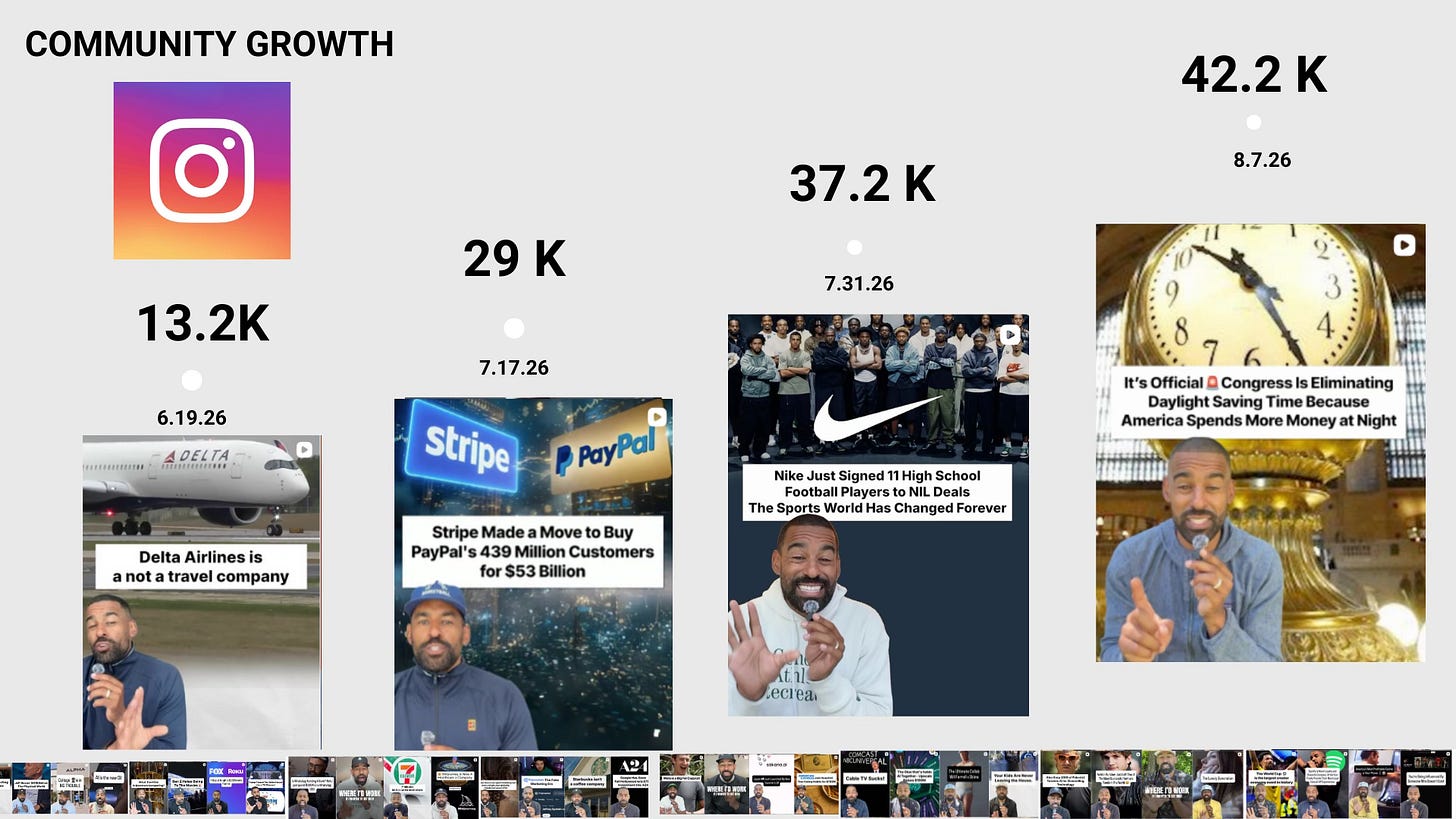
Sometimes you have to throw away a perfectly good story. Every day we spend a significant amount of time finding an idea, pressure testing the angle, researching details, recording, and editing. And sometimes, after all that work, we decide to throw it away. There are a lot of different reasons why we make this decision. The story might be interesting, but not sharp enough. Timely, but not sticky enough. Smart, but not something people will stop and care about. We are constantly learning about what catches attention. Not every good idea deserves airtime. The real work is knowing when to put it in the garbage. Follow us on Insta: @glovejones.
THE KEEP
Finding the right health tools to better understand yourself feels like a constant exploration. Drew is a Function member because it changes his relationship with health from reactive to measurable. Instead of waiting until something feels off, Function gives him a clearer view of what is happening through comprehensive blood testing and biomarker tracking. Health data is often fragmented and confusing. Function allows Drew to see patterns, ask better questions, and treat health more like a system you can monitor over time.
Every industry, every business model, there is a larger opportunity hiding inside of it. We’re here to help you find them. Follow Uncovered for more tech and AI news.
Questions this answers
Why did Congress eliminate daylight saving time clock changes?
The Sunshine Protection Act removes the seasonal clock changes, and while framed around circadian rhythm, the underlying reason is that evening daylight drives more consumer spending, as shown by JPMorgan Chase data on spending rising and falling with the clock shifts.
Why do cities pay Costco millions of dollars to open a store?
Clarksville, Tennessee offered Costco $21.5M and St. George, Utah offered $3.18M because a Costco warehouse functions as an economic development machine, generating jobs, tax revenue, traffic, surrounding retail, and higher property values.
What makes Costco's business model so durable according to this content?
Costco's membership model, with 140 million cardholders and a 90% renewal rate, has built a club that people organize their lives around, making it more durable than a typical shopping habit.
What is the LSU financing deal and why does it matter?
LSU sold 10% of its future media revenue for $100M upfront to help finance a reported $40M 2026 roster and a major coaching buyout, signaling that college football is becoming a balance sheet business run through corporate financing rather than booster culture.
How are other college athletic departments following LSU's approach?
Kentucky moved its athletic department to an LLC, and Utah formed a for-profit company with Otro Capital, both reflecting the same shift toward treating athletic departments as financing vehicles.
Originally published on The Week · By Brandy Whalen