Atlas Berry
M1C
From South African Mines to Linkin Park: Building the Physical Backbone of AI.
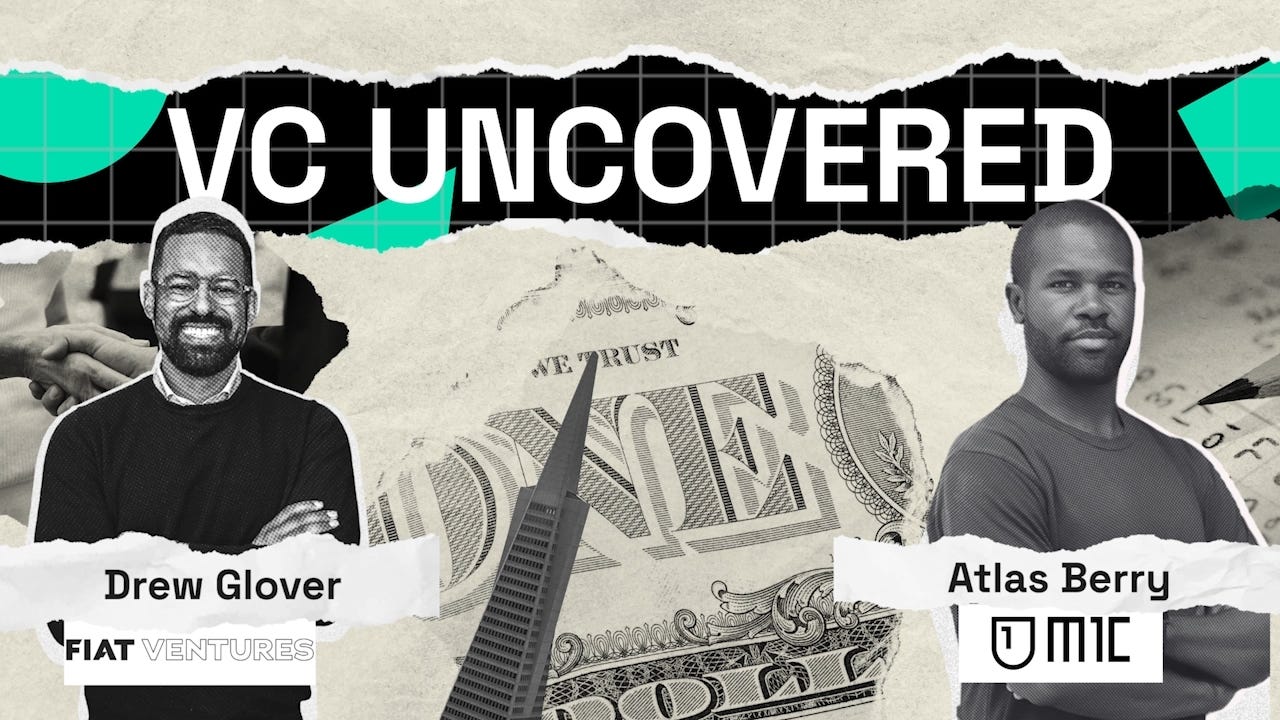
Atlas Berry (M1C)
Read the VC Uncovered Profile:
https://www.vcuncovered.com/p/atlas-berry-m1c
In this Episode
Drew Glover talks to Atlas Berry from Mission One Capital (M1C) on the “physical AI” revolution and the industrial infrastructure required to power it.
Atlas, the founder of M1C, explains that the U.S. power grid is facing a “comfort crisis,” currently unable to meet the massive energy demands of AI. He positions M1C as a specialist partner focusing on three pillars: energy, industrial resilience, and earth systems. By prioritizing “behind the meter” power generation and Virtual Power Plants (VPPs), the firm aims to build a decentralized, resilient power landscape that can operate independently of the traditional, strained grid.
The conversation takes a compelling turn as Atlas shares his transition from high-stakes investment banking in South African mines—where meetings required security sweeps for explosives—to managing the global footprint of Linkin Park. These high-pressure environments, coupled with early venture experience backing companies like Lyft and Snap, shaped his “performance protocol” for evaluating the next generation of industrial founders.
The episode is particularly insightful when he discusses the “Misogi”: an annual challenge with a 50% chance of failure designed to recalibrate a founder’s mental and physical endurance. Atlas argues that building in hard-tech is an endurance sport, requiring “battle-tested” individuals from military or elite engineering backgrounds. He cautions that in an infrastructure-heavy future, specialized VCs must act as more than just capital providers, serving as deep value-add partners for those solving tangible, world-scale problems.
Sponsor:
This season is supported by SVB. Silicon Valley Bank, a division of First Citizens Bank. Member FDIC. SVB is a trusted collaborator for the founders pushing boundaries and the investors who back them. We’re proud to have them as our sponsor.
Please note, this podcast is for informational purposes and is not investment, financial, or legal advice. The views expressed are those of the speakers and do not necessarily reflect the position of SVB.
More from Uncovered Media





Read the full transcript
0:00 this transition from you like literally being in physical danger in south af rica in mines and shifting over to managing lincoln park like when i say lincoln park the rock band lincoln park shine a little bit more like tell us the story here how far back do you want to go they're the largest ban on face but they had 65 million or so
0:18 fans for example we toured china we did five massive stadiums in china you know 35 40 000 people per show and then we also like spoke to you know all the top tech companies you know all the top drone from the dji and others and built out partnerships and so i think there was
0:35 they were a very unique talent that was able to do that international play and i think that was what i was most excited about probably welcome to vc on cover the series where we highlight the next generation of investors who move faster take bigger risks and build shoulder to shoulder with founders i'm
0:50 your host drew glove co-founder of cia growth in general partner at cia ventures so with that so excited to bring on season two of vc uncovered excited for this first episode with atlas berry working on some really really incredible things as it pertains to venture as it pertains to
1:07 things beyond venture i think atlas and i we get along so well because we believe that venture is more than just investing and it has to be to enter this new era of of of what venture looks like so with that atlas so glad to have you would love for you to just give us a quick rundown of what you
1:23 're working on and then we can just start talking about a slew of the things that we were just talking about off the record that i think you know we want to bring on the record because you know being a vc today does not need to be the vc it was yesterday there is a new era coming in and i
1:39 think you know you specifically but i am trying to follow your footsteps and doing a lot of similar things so tell us about the fund and then let's let's dive into it most definitely yeah and it speaks to a lot of those thanks for having me on appreciate the time i think when we started the fund and what we realized is the evolution of how ventures started to change is that there's
1:56 really become two worlds there's the multi-stage fund that's able to do be a generalist kind of a series c plus really all with ipo and what it's been requiring is emerging managers like myself as well and i know you guys as well to really specialize and pick where you can really go early and have
2:12 conviction before a lot of those players because you can take on more technical risk or more domain related risk because you understand these spaces and you live and breathe these and so that's what the fund has become and so mission one has really been focused on becoming a specialist firm around
2:28 three real pillars the first one being energy you know obviously as we talk about the power demand around ai the need for data centers but also power generation and storage obviously looking at it from a renewable energies perspective you know we're playing on power
2:43 generation storage and all the software that really enables this energy future when we talk about the grid and great capacity and the straining of the grid as this growth starts to happen as well as the importance of energy and like abundance so that's the first pillar the second one being in doubt what we call
2:58 industrial resilience and so the wave around onshoring of advanced manufacturing and supply chain logistics is you know we can't just do that in a one-to-one way like other nations really really need to think about automation and robotics and how physical AI you know AI applied to real
3:15 world data helps us be more efficient and really take advantage of technology to actually be more efficient in this future world and so that's the second pillar and then the third one is what we call earth systems and so that's thinking about obviously all the natural resources that are going to go into the industrial process so critical minerals is obviously getting a lot of press
3:33 right now and rightfully so because of the need for that and being a choke point for things like batteries and you know chips etc but also other types of real world assets whether it be forest or water or other types of things that are required for this industrial era so the fund has really been
3:48 become a specialist around essentially backing founders that are helping to push forward this next industrial era yeah i first i love the space that you're in i think it's it's super novel and frankly you know as an early stage investor i've always felt like it's really
4:05 hard to enter those spaces because a lot of them are very very expensive to get into there's their capital intensive when i see rounds coming out even like pre-seed and seed rounds these are these are like 50 60 million dollar rounds with 10 12 13 14 25 million dollar rounds being led
4:25 by everything from a later stage vc like a sequoia all the way to a PE firm it just like wants to get in the space and so i'm curious as an emerging manager how are you finding entry points in companies
4:40 and teams that you like have high conviction in definitely definitely those are all great points and and you know that's definitely something that you know we're learning as well along the way and so what we started with is saying okay you know realizing that really at
4:55 the seed is where a lot of that like a lot of the space goes and step ups and so since it's hardware deep tech related a lot of times it's based on what they call like basically commercial readiness kind of milestones that are being hit and so it's not just like traditional ARR
5:10 a lot of times and so usually at the the pre-seed is where you're most likely taking on a lot of technical risk they're at you know what we call TRL 3 or 4 or 5 which is like they maybe have that first lab scale test of what they're actually building they're thinking about that first
5:26 set of LOIs and commercialization that's really a pre-seed stage we try to come in them because that's when we can really get favorable economics in terms of valuation because at the seed now when they're looking at really deploying on a commercial scale that's when you get that massive step up
5:41 round and so that's been the first way of how we really started to play it and in order to do that though we've had to really build the team around us to be able to understand technically how to really go in very early and so you know my myself I'm not a technical investor by trade I was a software investor before and we can talk about some of my background but
5:59 I brought in folks who are PhDs in you know nuclear engineering folks who've been doing industrial based venture investing you know both at the early and growth stage and so they can understand the trajectory of a full company you know we have we had to get folks in DC I've got someone
6:14 on our team that comes from the CIA who sits in Washington helps companies a lot of them have dual use applications and so we've really built the team to enable us to be smart at the early stage and kind of have that conviction so that's the first that's probably the first step but then to your second point
6:29 which I think is what we've definitely been starting to see as this space has evolved is that venture firms have had to really change and become multi-hyphenes to really like service these companies from a capital perspective and a relationship perspective as they've gotten bigger right and so you know maybe there's a venture bet to be had at the earlier stage but when
6:47 they need to build out that first manufacturing plant that's going to look more like infrastructure spending maybe private equity some to some case and so we're seeing firms like we had just talked about off-camera like eight VC partner with Apollo in order to enable them to have that full balance
7:02 sheet that can see a company through the entire lifecycle general catalyst you know being able to start buying hospital systems and you know things like that that's enabling them to now say okay we're not just a venture fund that's looking for you know equity-based risk but we can also
7:17 take on different parts of the capital stack you know have deeper pockets and depot capital markets on the debt side on the financing side and so that's been really changing the landscape yeah I think well I think that's really interesting and obviously there's a lot of like fiat features fiat growth DNA in there as well right we are trying to
7:38 use growth and distribution as a moat for every single investment we make you know if we make an investment the company we want to say hey we have a built-in moat for your business and and I think what you're talking about is exactly that right general catalyst buying a health care
7:54 system and then investing in an early stage health care company hey we have your biggest customer on day one you know general catalyst is also working with a lot of direct to consumer businesses and actually floating them millions of dollars to spend for growth and underwriting the
8:09 downside of that but making it so people aren't having to give up or do massive equity rounds and instead they can utilize you know their debt to be able to to scale the business same with AVC but I agree from a VC perspective it is so important for you to have a built-in moat as an investment
8:27 partner and for you to say if I'm going to invest why should I take your money over someone else's money money as a commodity right like you take my money because I'm going to build out your first I'm going to build out your your your first like infrastructure plant for you know the
8:44 energy product that you're creating here and if you have the ability to do that it's an easy yes for why you should leave the round versus someone else right yeah yeah I mean that's that's exactly right and so like those some of those venture partners that I mentioned you know we're key for me to get you know for example we started investing things like space and defense and
9:02 having someone in Washington that can help them actually get some of those SBIR which are like non-deluded grant type funding at the early stage and help like walk them into certain three-letter organizations to look for pockets of capital that's going to offset the venture capital you know that
9:17 's been a value add that allowed us to get into some of those companies early that we probably wouldn't have and so to your point like identifying what that value add was going to be was how I like I reversed engineer that when I was building out the team like okay we're going to need to be able to do something other than capital and being a nice guy you know so that's what we
9:35 really have to do and build into like you know how we form the team I agree with that yeah the reverse engineering language is something that we've always used it at fiat as well right because what typically happens as a VC fund goes and raises a billion dollars of of of investment capital and
9:52 then they use that management fee to then go build out their platform team where the reverse engineering aspect of it is like how can you build a platform team first so when you make that investment on day one you have additional value to add to that founder and that company to help them
10:09 scale I'm curious from your perspective beyond like having that platform team beyond being able to turn key some of these like moats you know through through that through the the team that you've created what are some of the other things that you think VCs need today to be able to differentiate that
10:25 differentiate themselves from the pack but also to make it so and this is how I think about it how can I show up looking like I'm a thousand person VC fund knowing that like if they came into my office they'd be like you know you got a team of like seven dudes seven people here you know
10:40 like seven men and women yeah exactly yeah I think like a lot of it's also like well venture is a relationship business too and so you know what I love about venture at least is that especially at the early stages say you know when it gets later and it started looking like growth stages it's a
10:56 very different game which is why I don't play it is that you can be very collaborative and so what I've been really liking is that at the early stages a lot of emerging managers like myself where each one kind of brings a different skill set and we can kind of create almost like a syndicate on a
11:11 cap table on a company and everyone brings their value ad and so now we look like a larger like firm that would be able to do that all in house themselves and so that's one way is like through my relationships been building those syndicates and so even for example if I find a company that
11:26 thing's really interesting I might say okay you should actually have this other fund lead because of what I know they can bring and I almost like pieced together the cap table based on what I know everyone's value ads going to be at the early stage after that it's like how do we shepherd them to
11:44 the right larger multi-stage firm that can really take them to the next level and so you know some of my early LPs were multi-stage firms and so being able to make that relationship really smooth has been something that we've been trying to prove out as well yeah I love that I think it's one I
12:00 think it's really important for you know VCs to get out of their own way you know let their ego get out of the way too have been like no like we don't need to fight to to lead around or co-lead around or get really sharp elbows when if we're doing what we're supposed to be doing we're just
12:17 making sure the absolute best people are on the cap table and the best people or the people that can add the most value are leading the cap table but I find space for myself I also just want to say like as an emerging manager like you're always fundraising and what you just said is to me is like
12:33 a very like indirect authentic thoughtful way to fundraise right like you are giving access to people it actually sounds like VCs that sound like they're actually investors in your fund but second arily as you're running syndicates it gives potential investors the ability to underwrite you as an
12:53 investor you're sharing the deal you're doing the write-up you're saying why this is a great deal and they get a front row seat to like what makes you special how is that syndicate structure helped you better fundraise better fundraise I think well you know there's still a macro
13:09 fundraising environment that we should talk about right yeah but I think like do creating those syndicates is how you show that you know you need to prove those relationships right I think it's one thing you know everyone has that one slide and their fundraising deck that says oh and I know all these
13:24 VCs but you really need to like prove that in practice and so be able to point to specific deals where you would have built those syndicates is really you know probably what's helped me in like validating the network and fundraising but I think like to like we were talking about before as an emerging manager
13:39 it's a really tough time to be out in the market right now because you know the liquidity for LPs has been tight for quite some time we're all waiting for all these very late stage companies that haven't gone public you know in the time frame that we thought venture and we thought they would
13:54 and so that's leading to like there being like a starving of kind of emerging manager capital from an LP standpoint and then a flight to safety to like a lot of these larger multi-stage firms you know I think some of the stats you know I don't know it was 30 to maybe 50% of the capital
14:09 in last year was really taken up by two or three different funds and so that doesn't leave a lot of room for emerging managers no I agree and you know I I always got to respect the big the big folks are being able to raise bigger and bigger rounds but you know at the end
14:24 of the day like diversity of capital and it being able to be deployed in a diverse way to the market I think is is of equal importance and actually is better for the founders at the end of the day and better for valuations you know like you don't want to have a monopoly or do happily on like
14:39 you know what companies are worth like it shouldn't be the sentiment of one or two firms but I think it's also that on the emerging managers like on their you know their responsibility to make sure that they're kind of like you just mentioned punching above your weight class and like showing up like a bigger dog than you are and barking louder than you
14:56 actually are or whatever the the you know the metaphor might be and so you know like we talked about before I think content does a couple things and showcases your knowledge a lot of times and showcases that which is important it also like shortens the kind of trust time frame that it takes
15:12 for a founder to get to know you because they watch a couple of your content they understand who you are and most important they they understand how you think they understand what you believe they understand what you can bring to the table what you would be like as a partner and so that
15:27 like helps to like I think give emerging managers more of a kind of advantage when some multi-s amed firms let's say are still like playing the old version of venture which we all grew up in which is sitting on Sandhill Road and I think you know Mark and Jeeson and Jeeson and Jeeson in
15:42 general has done a great job obviously bringing Eric Turnberg and others are building out that entire platform like we made an interesting point where he's saying like all these traditional VCs are just sitting back and watching that kind of sushi sushi boat go around and then picking the sushi off the sushi boat like that looks like most games are over now you have to be much more on your
16:00 forefoot and kind of be out there and use visibility which leads to trust which leads to you know understanding how you're positioned which hopefully like becomes an attractive value prop to founders as well who also probably need distribution as they go out especially at the early stage
16:15 can leverage you for that. I 100 agree and I always like say say say to my team because I have some team members that are like fully engaged with with content I have other ones that you know everyone's scared everyone's here to content I'm still scared to press send on a lot of stuff but it's very
16:32 important for someone to show up to my front door and us not spend the first hour talking about who I am and how I think I think they should show up knowing exactly how I think and also it makes it so when they show up they already know that their potential good fit for the way I think and so it
16:48 saves time for everyone but it also just makes it so the process is much easier and again like it's not about just having you know fiat as the brand like every VC is their own brand and I would argue that every founder is an influencer regardless if you have 200 000 followers or zero
17:07 followers you're either a bad influencer or a good influencer but you are an influencer if you are trying to build a generational business that's right that's right and I think like to your point I think also if you're using content well first of all the reason why you mentioned like only
17:23 certain VCs probably I would like to say not every VC needs a podcast right I think it's true everyone has their different strengths some people are very good on camera some people are good in a written format you know so that's why you're seeing you know x is probably the lowest stakes you know it's like everyone can
17:39 tweet you know that's an easy way to play but if you're able to show a differentiated way of playing then you'll stand out more and we're all playing in the differentiated kind of game right about playing outliers and becoming an outlier and so I think founders really appreciate when you can articulate your point of view and they can understand that you are at thesis
17:56 driven especially since we're specialists we should be able to speak to the areas that we're going to be investing into in a way that's you know close to as fluent as people who are actually building in these spaces and showcase that hey I understand what you're going through and I'm ready to go along the journeys because I see some of the corners that you're seeing and I'm ready to
18:14 kind of be like help you along that and they can kind of get that from the content and so I think like the purpose of the content isn't just to be bragadocious and be out there but it's also like really a tool to explain a lot of these things to your point where you can really like short- circuit the conversation to make a lot easier when you're working with founders. 100% 100% and I want to
18:32 take a moment here and just like completely transition because you know we've uncovered gotten the opportunity to like learn so much about you and I think you're your background and some of the stuff like the the shifts the shifting moments in your career are just so fascinating and like one
18:48 of the ones that I want to just like touch on here is this this transition from you like literally being in physical danger in South Africa in mines and shifting over to managing Lincoln Park like when I say Lincoln Park the rock band Lincoln Park their entire family office that's one of the most
19:05 unique pivots I've ever heard of like in the real world so would love for you to just like shine a little bit more like tell us the story here sure love to you all we're how far how far back do you want to go I mean South Africa was was after also a journey right like I mean I you know I grew
19:22 up in Europe so I grew up really international as a kid and I think when I got to college and when I started investment banking as my first career at that pivot point to be honest I was thinking either invest in banking because I went to Wharton Penn everyone that's what everyone was doing and I was
19:37 competitive and so that's what I wanted to I want to compete I want to compete at the highest level but I also I think deep down wanted to do things like potentially join the CIA or do something that was more dangerous in nature leveraging my international understanding coupled with my economic understanding there's a book called Confessions of Economic Hitman
19:55 which is one of my favorites which really was someone who like used economic levers to actually change outcomes let's say in certain countries that were advantageous to us you know political you know endeavors let's say and so true story really interesting book and so I think when I would after I
20:13 was doing banking in New York I was like well that's very safe I was looking for danger I was looking for frontier markets I was looking for unstructured areas where I can kind of like test that you know do I have that in me and so South Africa was really like that it became that shining opportunity of what
20:28 that would look like I found out that the head of the South African office was going to be in a certain elevator at a certain time going to a certain meeting and I just happened to be there right so I literally I'm in the elevator he comes in to be there hey I happen
20:44 to bump into him you know like my shoe was untied and I bump into him and I just spit everything I know about the region why I think I'd be good for this space basically my founder pitch you know six months later I'm on a flight down the South Africa I'd never been there go to Joe Berg
21:00 side unseen doing steps here in african m&a for a number of years down over and to your point it was I got everything I was looking for danger you know I got robbed twice out there they were competing against Russian banks who would come with suitcases of cash to deals you know some of our
21:15 meetings will get swiped we get sweeped for for explosives prior just going into to meetings and you know we live within compounds and so they got I got all of the things I was looking for for sure but also really started to get this entrepreneurial itch of like what it's like to build in
21:31 areas that are just like you said I said before unstructured there were no rules and so you can kind of build based on your imagination of what was possible and I saw a lot of entrepreneurs starting to do that down there and so when I came back to the US I wanted to join a startup right I was like I don't want
21:46 to do banking anymore I've been I'd spent way too long and making more than all my peers I came to the states joined a startup it happened to be an influencer marketing and so this is how I started getting into the entertainment world at the time I you know I said hey I'll just run the books if you can let me come to the parties essentially you know they were they were
22:03 basically you got a brand to give them the business model was brand X gives them 10 grand to throw an amazing party with all their friends who happen to be people like Jay Z and Beyonce and Ph arrell and you know all these folks they'd spend eight grand on the party they have two left and they'd
22:21 like split that amongst each other that was a business model and so I'm like I think I can you know bring some of my understanding to this and like I think there's a better way let me just take a look at the books and help you out there we go from doing like 50,000 a year when I got there to do in about 40 million a year and about two and three two or three years just like a lot of things
22:39 been and we benefited from meaning we were doing influencer marketing before hashtags and so hashtags came on now digital influence became a thing then became tracking digital analytics of influence across you know now it's for the commonplace that we really benefited from a lot of that I would
22:55 say as well so there are tailwinds that we definitely rode for sure you know we're an inks fast we're on compilist multi-legion world while while doing that I was growing our LA office and I bump into CAA and so CAA they represent you know Tom Cruise, Will Smith, Renaldo, those type of talent LeBron
23:12 and they basically poached me from the startup to join CAA because TPG had just bought a stake in CAA and they were trying to expand internationally with the agency and so I came in and joined the international team to help us do that and then I'd also talk for example how do we bring Will
23:30 Smith or you know Tom Cruise how do we get them into Bollywood we do that by doing a JV in India and then through that we get access to the film market how do we tour someone like Justin Bieber down into Latin America maybe we buy a touring business we can tour him as well as all our
23:45 other acts through there and so it was more like Corp Dev with large talent in mind and so that's when I bumped into Lincoln Park normal Tuesday speaking to that type of talent this is what I think you guys should do the market shifting talent is starting to build businesses around their
24:01 influence why don't we do that for you they said that sounds great but why do we need to join the agency why don't you just join us and we'll do it together and so that's how I ended up with the band and you know it went on a wild win with wild whirlwind with them touring the world you know building businesses everywhere from Germany to Hong Kong to Haiti to wherever
24:21 and then doing venture and that's how I started getting into venture capital so cool where do I start I had a couple couple follow-ups but I guess I'll start with the one that popped in my head most recently Lincoln Park is in your office and you're having this conversation
24:36 you realize that Lincoln Park is interested in this model specifically interested in you running this model for them yeah why did you jump at Lincoln Park if you knew that other types of talent would be interested in something similar you had the ability to go pitches to a
24:52 number of different people why Lincoln Park that's a good point probably because when you look at their numbers at least at the time and they still are surprisingly and I always love to play this game with people like who do you think the top 10 highest grossing most international artists are
25:07 they're probably more surprising than you think so they had at that time they were the largest band on Facebook again this is back I'm left to take you back to 2013 2014 so 10 years ago they were the largest band on Facebook they had 65 million or so fans and and and so I was and and when I
25:26 looked at the social graph the international reach was really diversified outside the US and so I think like when I was looking at artists and like the platform and the opportunity like a lot of the other artists I had spoken to were very US centric but this was an opportunity where they had
25:43 this real almost more ex-US opportunity that was untapped and so I think that was really what I saw is these are again frontier markets for example we toured China we did five massive stadiums in China you know 35 40 000 people per show and then we also like spoke to you
26:00 know all the top tech companies you know all the top drone kind of DJI and others and built out partnerships and so I think there was they were a very unique talent that was able to do that international play and I think that was what I was most excited about probably. Well and out of all the businesses
26:15 all the projects that you worked for under Lincoln Park what was what was the thing you're most proud of well maybe two of them whatever you want to do one or two yeah yeah sure I mean obviously the venture investing was really exciting at that time because it was so new it was
26:30 so new that we almost didn't want to do it because we thought the fans would think we're so too business oriented and so you know we actually ended up and I ended up teaching a class at Harvard around this because we said hey let's have someone and in this case it was a Harvard Business School help us think about
26:46 how do we in this specific class run by Anita Elbursay who basically talks about entertainment as it pertains to business this amazing class and she helped us think about how do you as an artist still maintain that integrity while going into things like venture capital and
27:01 business building because really the only the folks that we knew that we spoke to were you know Nas Snoop, Ashton Kutcher, Scooter Braun and we were on tour with Jared Leto and he told us about all the angel investing he had been doing that's actually what got us into
27:16 venture and so I think that was that was something that was really at that time at least it was very novel to go into venture so when we started doing that that was that I was proud because we were going from a cold start you know we knew no one in SF I had to literally start making chips and
27:31 taking flights up there were sometimes I get meetings most of the time I get sent home for the first couple times like why are you here you know why would someone from Lincoln Parks team be up here asking us anything about venture capital you know and you know then you get an
27:46 introduction like Mark Sussart up from Ventures gave me an introduction to one person then like Nas's team would introduce me to one person that they happened to me like you know A16Z for example met them in the early days and little by little I started to build out my network which then led to us making a lot of great investments so that was like something that I was
28:03 really proud of just to be able to kind of build that out for them we also put films in theater so we did a film where because one of the band members was really big in the film and he did all the music videos for the band and he wanted to actually you know start building out a film career and so we built we went we ended up financing it getting it done putting it out it wouldn't
28:22 then stream on Netflix it's called it's called mall his name of the film if anyone wants to see it and also did the score and so like structured and packaged that deal for them which is really interesting So we did a bunch of like more like special projects for them. We built hardware and Hong Kong,
28:37 how to make many trips to Japan and Hong Kong and man. Just the way of doing business is a lot different and slower. So a lot of tea, a lot of, you know, sumo wrestling, a lot of anime, a lot of otaku culture
28:53 and eventually where, which ended up being like a speaker product, which is really fun. So a bunch of really, I'm being a bunch of fun stories. I was DJing at the time, you know, as well, doing all the after parties as well. So, you know, I was a lot younger than I a lot more energy, let's say. - Dude, you might be the most interesting man
29:11 in the world at this point. - I can literally like ask a hundred more questions based on the rundown you gave me from South Africa to Lincoln Park, but I will ask, you've got an exposure to so many different markets, so many different business models, so many different types of people that have money
29:29 working in a million different industries. - Yeah. - You being an emerging manager now, how did you land on the focus areas that you are focused on? Because you are very focused right now, you have a very clear perspective on what you want to be investing in,
29:44 and you built a team and a platform around you that are focused on those areas. How did you get there, and how did you get that conviction? - Definitely. So after being with the band, I was a generalist, you know, really stage agnostic opportunistic.
29:59 That was a thesis, right? You know, we ended up in a lot of great companies, Robin Hood, Lyft, Snapchat, and Possible Foods. I mean, we did really well, but I always felt like I was a mile wide and an inch deep. And so whenever I'd talk to founders, it's like, I know what I could bring in terms of obviously the brand, the band, and also their reach,
30:16 and their relationships, which was even more important a lot of times. But, you know, I wanted to really go deeper so I can actually sit alongside a founder and be able to sit alongside our crossroads and say, "Hey, I understand the space you're going into. "Let's go a couple of levels deeper "so we can really talk about the real pain points."
30:32 2018, the IPCC report, which is like a climate report essentially came out, which talks about, you know, basically how close we're getting to, you know, rising climates where we're not going to be inhabitable as an Earth and all this kind of like kind of doomsday activity.
30:48 But on the flip side of that was, but if people solve these problems, these are big opportunities, right? And so, but that kind of that kind of mindset, adventure mindset, I was like, wow, obviously there's all this doomsday talk, but there's a lot of opportunity for people
31:03 who would have solved these issues. And that's how I started getting in things like energy because then I said, okay, renewable energy is how we're going to do that. You know, and then that's how I started along that path of thinking about more hardware and deep tech related opportunities is 2018. This is long before I started the fun.
31:20 From then until 2022, I had to say, okay, now I need to get smart by really using a lot of my own capital off my own balance sheet to learn and learn by winning and losing and learn by putting money on the ground
31:35 so you have to really dig in and understand these things. And that's what I did. So I started doing a lot of angel investing from 2018 and 2022 to really get smart in these areas and start to think about, okay, where would I pick my bets? 'Cause I think, you know, energy is very different than food and ag, which is very different than mobility.
31:53 And so you really need to think about like, where do I think the opportunities are going? Which ones long dated opportunities? Which ones are closer? And I had to go through all that to eventually start to zero in on the thesis when we eventually launched the fund. - I'm gonna give you a moment to just flex here a little bit,
32:08 but tell us a little bit more about energy. I'll tell you, like, I spent a little bit of time recently because there was this like a founder that I've known in my network for a very, very long time who came in with an idea and I was like, this is a tier one founder, so I have to give it the proper look. And it was very interesting, like, you know,
32:23 it sounded like this is like very much consensus here. It's right now with AI, with a lot of things that are moving from an energy perspective, the need for electricity across our energy grid is going to skyrocket over the next 20 years here.
32:39 And basically over the previous 20 years, it really hasn't moved that much. And America is not prepared to deliver the need for energy that America will have over the next couple decades here. And there's a huge gap in the grid that we have available.
32:55 And I'm curious, like, don't scare us too much, but like tell us what we're kind of like looking towards over the next, you know, 20 to 40 years here if changes aren't made. - Yeah, I mean, like the biggest thing is that there's going to start to be blackouts
33:10 'cause the grid is just too strained and can't actually, is not prepared for the demand. Like the build out of the grid itself is not prepared for the demand of what data centers are going to require and what AI requires. And so, and on top of that, the grid is a very interesting,
33:26 you know, business model where they're not necessarily incentivized to make a lot of those upgrades that are needed because of their cost structure and the ownership structure of the grid. And on top of that, it's very regionally done. And so each region has different rules
33:42 that allow you to do different things. And so, and that's why things like Texas are really open markets. You can actually do a lot of really interesting Texas so a lot of startups are doing a lot of things there. California is really more favorable to maybe renewables, you know, but have different types of tax incentives
33:57 and things like that. So you have to understand kind of like that landscape. That's also why, because of that grid stress, that's also why what we call behind the meter power generation is becoming really popular. Meaning you're independent from the grid itself.
34:13 You're creating your own independent power. This is where solar comes into play. This is where, you know, nuclear is becoming a really interesting topic, is because we need to find ways to build out fast energy generation and we can't rely on the grid.
34:28 Because for example, if you look at the queue of the people who are even looking to connect to the grid, the size of the queue for people to connect is like larger than the grid itself. You know, the queue is just like, it's almost like, you know, I don't know, it's like a Drake concert.
34:43 Everybody's waiting. I don't know. - What type of people are in the queue? Are these companies, are these people? What is the queue? - These are developers. These are developers who have different phases of development of their project. Maybe they have land that needs permitting.
34:58 Maybe they have a project that they've built that's waiting to get interconnection access. And so there are different phases of that process. And different power generation asset types. And so that's why energy power generation
35:13 behind the meters become really popular now. And because of the fact that we need to do it quickly, a lot of times, and I think that's why, I mean, we need to do it quickly and we can't do it and we want to do it cleanly in a sustainable way. I think that's why nuclear is becoming way more
35:28 like in the picture and why all the big tech companies are really looking at nuclear and starting to try to either restart dormant nuclear plants or do, you know, small modular reactors that can co-locate and sit directly near the data center.
35:43 And now the data center plus the energy can actually be self-sustaining and doesn't even need any grid access and can do its own thing and kind of be separate. And so that's why we're seeing a lot of really interesting opportunities there. - Yeah, I can keep going. But yeah, that's part of it. - Please, please, I want to leave,
35:59 I want to leave some up for, I want to leave the mystery up so they can reach out to you directly when they got a killer business to chat about. But I mean, incredibly fascinating. I've been learning about this a bit more and kind of a one-off obviously, you know, we'll invest quite a bit in the intersection
36:14 of fintech and energy, but we're not living in like pure energy, right? And there are some opportunities there when you talk about financing some of these projects, you know, insuring some of these products and projects. - Yeah, those are interesting. And then also I thought what you were going to say is
36:30 now we're seeing a decentralized opportunity as well. So if there's a lot of power that's being generated or stored, so also batteries and different, there's different novel technologies around storage for different energy durations because lithium can only store
36:46 for a certain amount of time versus say, you know, iron versus say hydrogen, et cetera, for different use cases as well. But if we have all those behind the meter, generation and storage assets, all those can now start to create interesting
37:01 financial opportunities, right? To monetize those assets, to like pledge those assets to the grid and get paid for, you know, actually the development of that. And so for example, we've invested in companies that are helping to connect these OEMs who are building the actual physical, you know,
37:17 generation and storage assets, let's say in homes, you know, people have solar and battery storage, maybe in their home, et cetera, helping to connect all that to like a larger network that they can pledge their assets to and get paid for. And so it helps with the payback period,
37:32 like to your point of the about the financing around the energy asset, if you could think about being able to pledge those assets to a grid and get paid for, you know, excess capacity that you might have and that you've built out. And so those type of technologies, you know, we call them virtual power plants is essentially what we've also been investing into.
37:47 And there's a lot of tooling and infrastructure that goes into that that's really interesting, especially as it pertains to data centers as well. - Yeah, I love that. I love that from like just like these in these picks and shovel infrastructure plays that, you know, I mean, those are the types of businesses that we're talking about, trillion dollar opportunities
38:02 in spaces that people aren't playing around in a ton because I think the assumption is, is that the barrier so big from the way we think about energy, we're like, oh, you're gonna create a new type of battery to go into this, therefore you need to raise a billion dollars
38:17 and do it, but like, that's a great example of something where like a sea round is very approachable, right? In terms of a really strong entry point from a financial standpoint and they're not starting out with some hardware, they're starting out with a way for people
38:33 to be able to play a role in solving these problems. - That's right. And then like, even when we talked about the grid before, for example, one of our, I love all my babies of portfolio companies, right? But one of the really doing that's interesting is they're saying, okay, the grid itself, needs to be maintained.
38:48 And like, there's a lot of operational costs that go into maintaining the grid itself and physical assets and infrastructure itself, to your point, like, you would think, oh, I'm gonna actually build the full infrastructure and it's gonna be a whole thing. But there's a lot of software that could be paired with,
39:03 you know, data collection around, let's say drones and other types of assets that, you know, that can go out and collect imagery data, you can build an actual foundation model to actually like analyze those physical assets and start to do predictive maintenance and repair
39:18 on these physical assets as well. And so, again, that's a more, you know, foundation model kind of software based application for energy as well. And so there's not, it's not all hardware and deep tech, which a lot of people think, yup. A lot of the opportunity that's really interesting is what you've been talking about,
39:34 all the tooling and the picture and shovels that enables a lot of this to play. - Alice, we got things to talk about offline. Obviously, if any, you guys have heard enough to know that if you have questions, if you wanna learn more, you know how to reach out to. With that, I wanna start concluding this, this incredible conversation.
39:50 What I typically do towards the end of every podcast, I just kind of do a speed round of a couple questions. One thing that, you know, I wanna make sure we touch on before I jump to that speed round
40:05 is you just talking about founders. And that's something that we talked a little bit about in some of our previous conversations, of you looking at founders as athletes and this connection you make in terms of being able to, listen, we can talk about companies. We can talk about ideas. We can talk about how we're gonna put those ideas into action.
40:21 But at the end of the day here, we all know this. You have to be investing in like maniac founders that you just deeply believe in. And so, this founders as an athletes concept, I really wanna just, I'd love for you to just expand on it a bit more 'cause I think it's a really interesting way.
40:37 And I grew up an athlete. Like I played football in college. Like there was a certain type of mentality that like, I know that I bring to everything 'cause it was hard-coded in me from a very, very early age. - That's right. - And when you were talking about it, it popped out at me as something I wanna dig into. - Oh, great, great point.
40:52 I appreciate that. Yeah, I mean, I went ball. I wasn't athlete growing up. I played mostly, well, actually I played tennis. I played rugby. I played a lot of sports as well. - You get up with some tennis, man. - Yeah, in Europe, I would actually play sports based on what countries we were gonna travel to. And so I was like, oh, we're gonna travel to Switzerland.
41:08 So I'll play rugby. That was a bad idea. (laughs) - You gotta learn some now. - Yeah, and I guess these British guys played, that's a different sport. Played the cross growing up, played a bit of football. But as I grew older, I started to really zero in on endurance sports.
41:23 And I think that's really, there's a strong parallel to that and being a founder, right? Like I do Iron Man's and Altras. And I'm a glutton for punishment when it comes to that. But I think it's the same mindset for founders because it's a long game, right? It's gonna be, it's saying you're gonna have to dedicate 10 years to this. And so it's not a sprint.
41:38 It's a marathon that you're running. And so what we've been trying to do as well is think about how do we prepare, first of all, when we're vetting founders, we're looking for people who have that mindset already built in, whether it be sports related or whether it be like extremely stressful environments
41:54 where they've been tested. Sometimes it's, they were in the army, sometimes they were working at companies that we know to be extremely grueling, like a SpaceX, et cetera. And so we try to find, there are some even more interesting stories about founders
42:10 who were building companies super early, ended up getting in legal trouble at like an early age and stuff like that and having to find their way out of that. And so all those give us inklings of your battle tested and you've shown that you can show up to stress in a certain way. And then that, then we're trying to think about like,
42:25 as you, as it pertains to your company, okay, we know you have that in you, but how do we start building you to be more of a long-term endurance type player? And so what we built is this performance protocol where we bring in former founders, but these also these same founders are also,
42:40 a lot of times like extreme athletes. And so for example, one was the former coach of the USA national cycling team, for example. And also he was a founder as well as that. And as well as someone else who's a founder and also the head of, was on the national sailing team as well.
42:57 So we're looking for people who have both been extreme on the founder side and seen that, but also on like some sort of physical environment as well because you think that there's a lot of alignment there and that's also differentiated for us. And then we also say, okay, it's not just about go, go, go. We also have this longevity mindset as well.
43:13 So we also bring in coaches on the longevity side to talk about eating, sleeping, biomarkers, HRV, and different things that help you think about the long game of, okay, we're gonna have to play this out for 10 years. You're only gonna be as strong as your body
43:29 and your mind allows your body being a big, strong period of that and your mind is gonna be trained by what you do to your body and like that parallel and that connection. And so that peak performance protocol we've built is really designed to do that and to help people
43:44 like become stronger in that way. - I love that. And then how much is it you bringing in these experts to make it so people can become better founders versus you looking to invest in these types of people
44:01 that are already athletes or endurance sports, have endurance sports minds. I know like there's, I remember growing up, I used to work in sales and sales force would be like, if you were an athlete at one of these schools, like you're hired, you know? Like so, like, how do you kind of think about it
44:17 from like teaching versus investing in that type of mindset? - Yeah, I do try to tease that out if I'm being honest in the vetting, but in the diligence process, you know, some are, again, a lot of our founders do have these archetypes. X military, we have some that are X special forces,
44:33 you know, at the highest levels. SpaceX, you know, former SpaceX engineers in the early days. Folks who've had international experience, you know, so there's other ways to kind of test that out versus just like, you know, where you an athlete per se, but I think all that leads to the same type of mindset
44:50 that we definitely look for in diligence. 'Cause we think that, you know, credentials and degrees, what we found, and maybe you found that as well, doesn't always translate to resilience when it comes to being a founder, and sometimes the opposite, you know?
45:06 And so I think that's something that we really try to like, that's a core characteristic of all the founders that we invest into as they have some sort of, and we check into that origin and we look for stress tests and being battle tested very early, you know, in different points in their career.
45:21 - Yeah, totally, yeah. Just simply being able to push through a shit ton of pain, like, please, like, let's get that there. We're coming up on time. I just have a couple quick speed round questions. Feel free to answer them as quickly as you can or as long as you want, but they're meant to be speed.
45:38 They're meant to be speed. First one, we'll make it easy. What's the first thing you do when you wake up in the morning? - Well, I mean, first thing, once I'm up, mouthwash is the first thing. (laughing) I should brush my teeth. I'm trying to get back to brushing,
45:53 but like, mouthwash is my natural light. I have to get all my liquids in because I know I'm gonna have a training session that morning. So usually, like, I try to do something and then, like, eventually try to take my liquids. Like, electrolytes, pre-workout, carbohydrates, you know, and kind of think about what that first training session
46:09 is gonna be like. So that's usually what I do first thing. - Nice. Being an endurance athlete, what's your best wellness hack that you could give some of us commoners? - Sauna, cold plunge. That's it. - Sauna?
46:24 - Say less. - I mean, from a longevity standpoint, and one of my good friends is from Finland, and he always sends all the reports around, you know, saunas and how that's tied to brain health even, things like dementia and longevity. And so, saunas are extremely important, not just for recovery.
46:39 And then, cold plunge, cold plunge for a couple of reasons. One, it's, yes, it does help the muscles, but two, it kind of forces you to do something that you know you don't wanna do. You know you don't wanna get in that cold plunge. (laughs) You don't wanna get in there.
46:54 - You don't bro. - You don't wanna do that. - You don't. - It forces you, but it feels good when you get out. - You gotta face your fears in that moment. And so I try to, for example, like every year I do this as well, I try to do what's called a misogie, like Japanese call a misogie,
47:09 which is one difficult thing throughout the year that there's a 50% chance of failure. And the reason why I do that is because you need to be in those high stress environments, because all our days, there's a book, I was saying, I think it's Michael Easter, I wanna say it's called The Comfort Crisis,
47:24 so I'm not mistaken. Someone can correct me, but it's something like that. And he talks about this because most of our lives were in comfort, we're sitting at a desk, in air-conditioned climate-controlled environments, we're not out in the wild, but humans were meant to be in the wild. We're meant, you know, we're still animals,
47:40 and we need to like experience that stress where danger, maybe not death, as the danger environment, we're not gonna be Alex Honnold climbing Taipei 101 that just happened on Netflix. (laughs) - But shout out to him, yeah. - Whatever your version of that is is important,
47:56 because then every other scenario you go into, when you have a big meeting, you know, when you have a big pitch, all those look very small in comparison to the misogie that you went through. And so that's like a big thing. - Yeah. - A mindset like recalibration every year. For example, my last one I did last,
48:11 I ran a ultra marathon through the Grand Canyon, and like, that was painful. I'm like, I don't know what comes next after that. - Exactly, exactly, exactly. Have you seen him on the side of a bum? - You know something went terribly wrong.
48:26 (laughs) - Yeah, I'll pick you up, bro, don't worry. If you had to go be the CEO of a Fortune 500 company tomorrow, like which company would you choose? - Whoa, that's a good one. Man, I'm not gonna go do SpaceX,
48:43 but I would wanna do something that's very frontier and kind of now starts to, can fully leverage, I think, what this physical AI revolution is gonna be like, and we'll ask something that's completely different. That maybe has like a core foundational asset
48:58 that now can be unlocked with physical AI. And so I don't have that answer. That's a really good question. - Give us a brand, give us something, man. Something that you're just like inching on. Is it SpaceX? Let's call it SpaceX for now. - No, no, no, that's too obvious. (laughs)
49:14 - All right, fair enough. I understand that something that in this world can leverage AI to like turn what was a multi-billion dollar business into a trillion dollar business. - Leverage, specifically physical AI,
49:29 meaning AI in relationships with the world, using proprietary data sets that are getting in the real world, that can be now unlocked due to AI to do something even more interesting. That would be something I'd be super excited to work on. I mean, again, that's to my thesis,
49:45 but I think there are a lot of larger incumbent companies that have large proprietary data sets in the physical world that are gonna enable them to do something that we couldn't even imagine. Like, yeah, that's what I would do. - Last question, if someone, it's Misogi, right?
50:00 Is that what you pronounce it? - Misogi. - Misogi. If someone says, "Great, from this podcast, if anything," like, I'm embedding Misogi into 2026, I'm gonna run a marathon. From your perspective out of the marathons you've done, what is the one marathon you tell a first-time marathoner to do?
50:17 - Miami, because the weather is great, the land is flat, which is really important. And so I would say Miami, for that reason, the environment is just perfectly set up
50:34 for all the spectators, the music is so unique and special. So that would be one. Another one that would be interesting, if not, if you're like, after you've done that first one, when you wanna start to do more interesting ones, there are some coast-to-coast South African-based
50:51 ultramarathons that are really interesting as well. Or through the garden route, for example, in South Africa, there's some races where you go through some scenic routes where, you're in the pancake, but at least you're seeing some amazing, like, some of the most amazing land that you've ever seen.
51:06 And so there'd probably be more of an exotic location than I would say as the one once you got your feet wet. - Yeah, love it, love it. All right, well, you guys heard it here, Atlas Berry. Thank you so much, man, for taking the time. Mission, mission one capital. Keep an eye out for it, if you have any questions,
51:21 you know who to reach out to. And this was an incredible conversation. I appreciate your time, brother. - Likewise, thanks, appreciate it. More to come. - Thanks, Atlas. This season is supported by Silicon Valley Bank. For decades, Silicon Valley Bank has been a true partner to the innovation economy,
51:37 helping both founders and funders grow. Silicon Valley Bank, a division of First Citizens Bank, member FDIC. Please note this podcast is for informational purposes and not investment, financial, or legal advice.
51:52 The views expressed are those of the speakers and do not necessarily reflect the position of Silicon Valley Bank. (upbeat music)
Transcript generated automatically; it may contain errors.
Originally published on VC Uncovered · By Drew Glover