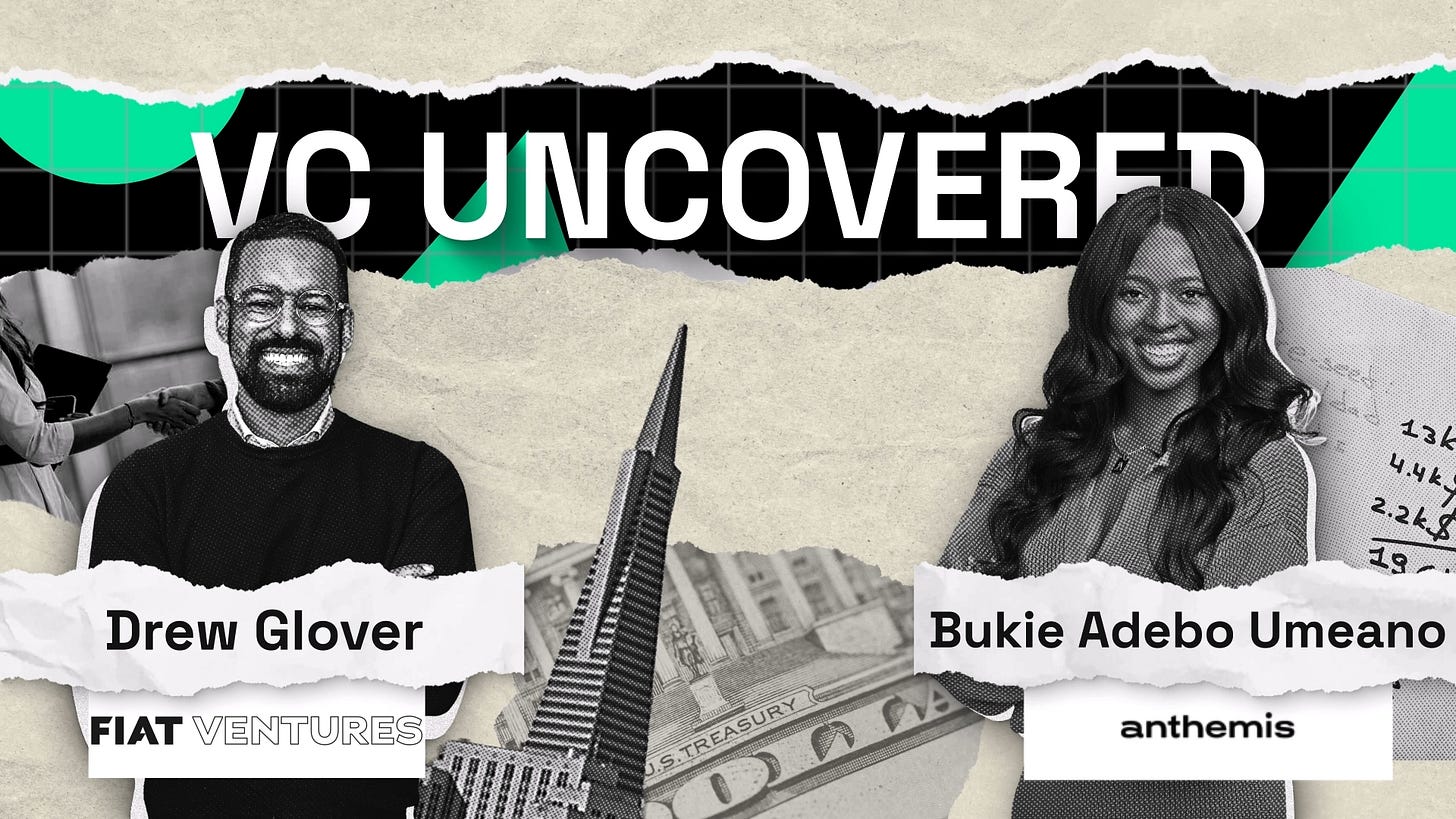
Bukie Adebo Umeano
Anthemis Group
The next wave of fintech may not look like fintech at all, and that is exactly what Bukie Adebo Umeano is betting on.
There is a version of financial services so well-built that nobody notices it is there. No app to open, no form to fill out, no branch to visit. A restaurant owner changes her menu, hires three people, opens a new location, and, somewhere in the background, her banking, lending, and payments infrastructure adjusts automatically to keep pace. The owner never thinks about her finances. She just runs her business.
That is not a distant vision for Bukie Adebo Umeano. It is the investment thesis she has been underwriting for the past four years as an early-stage investor at Anthemis Group. The firm calls it invisible finance, and Bukie has built her entire lens around it, from the structural advantages she believes in to the founders she backs to the unsexy infrastructure plays she gets genuinely excited about. The most powerful version of a thing, she argues, is often the one that quietly disappears.
Iron Sharpens Iron
Before Bukie was an investor, she was a builder. And before she was a builder, she was the second of four sisters, growing up in a household where imprecise thinking had consequences.
“If I say something that makes no sense, they’ll be like, wait, back up,” she said. “They challenge me, they push me. I got in a habit of a good back-and-forth, a healthy debate from a young age.” The four sisters have been called a cult by outsiders and, on at least one occasion, by their own mother, who reportedly turned away from the room after they showed her their welded-on matching bracelets. The bracelets do not come off. Neither, apparently, does the intellectual sparring.
That environment gave Bukie something that proved useful later: the ability to hold a position, defend it under pressure, and let it go when the argument runs out. She admits she still overqualifies her statements at times, a habit she has received feedback on, but the underlying instinct to stay open to being wrong has served her well in every role she has held. “Be open to being incorrect,” she said. “I learned that at a very young age.”
From that household, she moved through consulting and business school before landing in the fintech founding world. That operator experience is what eventually pulled her toward venture. She wanted to be, as she put it, the type of investor she wished she’d had.
What the Founder Side Gets Wrong About VCs
The transition from founder to investor came with a stack of recalibrations. Bukie describes them with the kind of specificity that only comes from having lived on both sides of the table.
As a founder, she could not understand why investors kept pushing on go-to-market so early. The product was good, the early users were there, so why all the questions about scale? On the other side, the logic snapped into focus quickly. “A lot of businesses do well in the first few years, and they reach this point where they can’t actually hit escape velocity,” she said. “Of course, investors try to de-risk that upfront.” If a portfolio keeps stalling at the same inflection point, the investor will start asking that question earlier next time.
Portfolio construction was the other blind spot. Bukie was direct about it: “There are so many great companies that we have not invested in, knowing they were great companies.” A strong business is a necessary condition, not a sufficient one. Ownership thresholds, fund model fit, stage, and check size all factor in before a check gets written. For founders, especially those who do not understand why a VC who loved their pitch still passed, that context matters.
She also noted that every party in a deal answers to someone. “Everybody has a boss,” she said. “Even the person who seems like they have power in a certain dynamic with you, they also have someone that they answer to.” For Bukie, that means the promises made to Anthemis’s limited partners shape every decision she makes as an investor.
The Moat Problem and the Network Effects Standard
At Anthemis, the early-stage fund focuses on pre-seed and seed companies operating in what the firm calls “high assurance” industries: financial services, healthcare, energy, and other categories that are heavily regulated and function as critical infrastructure. Anthemis has been investing in financial services for 15 years, and that experience in one complex regulated space turned out to map across others.
When it comes to evaluating defensibility in those businesses, Bukie is measured about what actually qualifies as a moat. She described most claims to moats as overstated. The one she takes seriously is genuine network effects, and she is precise about the definition. “Why does having company A make it easier, better, or more likely for company B to also be part of this network? Why does company B’s presence make it easier, better, or more likely for company C?” The standard is not just data accumulation. Every company accumulates data now. The question is whether data from one node improves the performance of every other node.
She looks for two things when assessing whether a business can build that kind of structure. First, reinforcing data loops: “Are there reinforcing data loops where one piece of information very closely launches you into the next piece of information?” Second, workflow integration. Businesses that embed themselves in where users already work, whether through technology, a physical environment, or an existing habit, are more likely to build something sticky. The further a product sits from the user’s actual workflow, the harder the network becomes to build and sustain.
The Invisible Finance Thesis, Wave by Wave
The thesis Anthemis developed for its current fund threads through all of this. Bukie described financial services innovation in three distinct waves.
Wave one was digitization: moving from the branch and the phone call to the mobile interface. Think neo-banks, early insurtech apps, the entire first generation of consumer fintech. Wave two was embedded finance: putting financial products at the exact point of need, so a business owner could access lending or payments from within her operating system rather than a separate banking app.
Wave three is what Anthemis is investing in now. “Your financial services are running in the background,” Bukie said. “You, as a business owner, are actually just making decisions.” In her framework, the imaginary founder she tracks through each wave, a restaurant owner she nicknamed “Rosie Restaurateur” in the fund deck, goes from opening a banking app in wave one, to accessing finance within her restaurant’s operating system in wave two, to simply running her business in wave three while the financial infrastructure adjusts behind her. “We don’t think about our electricity, do we? You just walk into a room, you turn on the lights, you never think twice about the fact that the lights work.”
The infrastructure thesis Anthemis is currently writing checks into reflects that directly. She pointed to investments in core banking, rebuilt from the ground up with AI, and in data orchestration platforms, reconstructed the same way. The other category she finds compelling sits at the coordination layer: businesses that unify the growing stack of AI agents and tools that companies are already using, helping them work together rather than creating parallel silos.
On the consumer side, she sees invisible finance building slowly. The business model is harder to crack, go-to-market is expensive, and the data needed to deliver real personalization takes time to accumulate. The founders she finds most interesting in that space are solving for that problem directly: finding ways to generate meaningful user data from day one rather than waiting months or years for the picture to develop.
Betting on the Unsexy
Bukie’s framework keeps returning to a counterintuitive place: the less visible the technology, the more interesting the investment. That applies to the infrastructure she funds, to the businesses she watches become embedded in daily life without anyone noticing, and to the founders who convince people to make decisions that look irrational from the outside because the logic is invisible until it is not.
She is also watching spaces that were historically overlooked become more compelling, specifically because automation cannot reach them. Physical goods, last-mile logistics, anything with a durable analog component: “There are pieces of this that are always going to be in the physical world and can’t be automated away. What automation do we build around that to kind of get us into the next era?”
For Bukie, that question is the right one to be asking. Not where the flashiest opportunity is, but where the work is that will still need to happen regardless of what the technology does next, and who is building the invisible infrastructure to support it.
This season is supported by SVB. Silicon Valley Bank, a division of First Citizens Bank. Member FDIC. SVB is a trusted collaborator for the founders, pushing boundaries and the investors who back them. We’re proud to have them as our sponsor.
Please note, this podcast is for informational purposes and is not investment, financial, or legal advice. The views expressed are those of the speakers and do not necessarily reflect the position of SVB.
Read Bukie’s VC Profile
More from Uncovered Media





Read the full transcript
0:00 I think the last existing mode is true network effects, like real network effects. Why does having company A make it easier, better, or more likely for company B to be also, also be part of this network? Why does company B's presence make it easier, better, or more likely for company C to be a part of the network?
0:17 Why is each added node in the network making the network better overall, making the network more compelling, making the network more profitable? That you don't see very often, and whenever we see businesses like that, that's when I get super excited. - Welcome to VC Untuber. The series where we highlight the next generation
0:33 of investors who move faster, take bigger risks, and build shoulder to shoulder with founders. I'm your host, Drew Glover, co-founder of Theat Growth and general partner at Theat Ventures. - Buki Adeva Amano.
0:49 - Yes. - So good to have you, so good to have you. We are on, I mean, I don't even know what episode this is of VC Uncovered, but you were one of the first folks that I spoke to when we were getting the newsletter off the ground, and it was such a pleasure. Learned so much about you.
1:05 We've been on cap tables together. We've spent many of ours over lunches, over chats at different conferences, just one-on-one talking about how we think about FinTech, how we think about investing, how we think about this new founder DNA, and so Buki, so thankful to have you on.
1:21 If you don't mind, maybe just starting off telling us a little bit more about you, about what you're investing in, and what you're focused on right now. - Yeah, absolutely. So my name is Buki, early stage investor at Anthemus. I've been with a firm now for about four years.
1:38 At Anthemus, we focus on primarily early stage investing. So the fund that I set on our early stage fund, we invest in pre-seed and seed stage companies. We have a goal of co-leading and leading those early rounds. The companies that we invested and fit into this broader bucket of high assurance. By high assurance, we're referring to industries
1:54 that are highly regulated, and we see them as critical infrastructure for people's day-to-day lives. The core of this is financial services, that's our bread and butter. We've been investing in financial services as a firm for the last 15 years. Over time, we realized our experience in one really complicated regulated industry
2:09 mapped over to other industries, like healthcare, energy, et cetera, and so that broader bucket is what we call high assurance. And we come in at the very earliest stages, and part of how we partner with our founders is by connecting them to our corporate network for commercial relationships, partnerships, and more.
2:24 And we invest across the US and Europe. - Fantastic, fantastic. And I wanna kick this conversation off. I know we have a couple of questions that I shared over, but I wanna kick things off because I have something that I'm really obsessed with right now, which is just like, I'm trying to uncover
2:39 the last existing moats that exist for businesses. One of the biggest moats that used to exist was this technological moat. Every founder needed this technical co-founder.
2:54 Anyone can go do a hackathon and create anybody's product that's already been created today. But I'm thinking about data. I'm thinking about distribution. There's a number of things that still exist that, if done right, can be these unfair advantages
3:10 that are very much set you up to be really successful as a business as a founder. I'm curious, as a VC today, what do you think the last existing moats are that you get really excited about when you're talking to an early stage business?
3:26 - So I think moats are really difficult to come by these days, honestly. I almost feel bad for founders having to pitch their businesses and stay in age and convince people that it's truly unique and nobody else can build it 'cause I think that's really, really difficult to come by. I think the last existing moat is true network effects,
3:43 like real network effects. I think people throw that term around pretty lightly. They're like, oh, I do this and I'll just create all these amazing network effects and then boom, my business will be massive. And it's like, well, why does having company A make it easier, better, or more likely for company B
3:59 to also be part of this network? Why does company B's presence make it easier, better, or more likely for company C to be a part of the network? And so forth and so on. Why is each added node in the network making the network better overall? Making the network more compelling,
4:14 making the network more profitable? That you don't see very often. And whenever we see businesses like that, that's when I get super excited. So it's more than just saying, oh, the more people we have on board, the more data we have. I think that's insufficient now, right? Because everyone is capturing data at much faster paces and much larger quantities.
4:30 But that's not the same as saying that you're taking the information that you're gleaning from a couple of these businesses and turning it to something that's effective for the entire network. That's, to me, the last remaining real moat. - Interesting. And so, I mean, that very much excites me. I mean, as a growth marketer, that's something that I'm constantly trying to manufacture
4:46 for just about every single client we have on the fiat growth side, also a lot of the founders that we're working with through our consultancy on the venture side. Also something really, really hard to underwrite, unless you already see like the magic fully formed. So I mean, is this a founder thing?
5:03 Is it a business model thing? Like, how are you evaluating either that already existing in a business or the potential of it existing because of the company that's being built? - Yeah, I mean, part of it is the founder.
5:20 I like to say that the most compelling founders are the ones that convince people to do irrational things. Like, that is the quality that you're looking for in a founder is that you can convince people to do things. Yeah, that don't make any sense, right? - Yes. - I'm gonna partner with your fledgling business instead of established enterprise business
5:35 that I've known for years. I'm gonna leave my well-paying job and go work for your company that might fail in two years. And I'm also gonna convince VCs to give me millions of dollars when I have like an ID on a napkin, right? So like that, there is something about the founder that you know they have this like compelling quality. And by the way, that doesn't have to be packaged
5:51 as a charismatic founder, right? I don't think the only people you have that quality. Yeah, I think that's the misconception is like this has to be this like standing on stage, like beating their chest kind of personality. And I don't agree. Sometimes the people who can convince you are the ones who can sit next to you and be really thoughtful and methodical and calm and measured.
6:06 It's not my style, but I do think that's really effective too. So one is the founder. I think the other thing is a little bit more structural. It is the business itself, right? There are some businesses that are designed for stronger network effects than others. I think one is, you know, what do the data loops look like in the business, right?
6:23 Are there kind of like reinforcing data loops where, you know, one piece of information very closely kind of launches you into the next piece of information. Are you forming a relatively close loop of information that gets stronger and stronger each step of the way?
6:38 Like there are things about the structure of the business too that can also increase the likelihood of having genuine network effects. The other thing that I look for is where the work is happening, right? So it's really hard to build like a really cohesive strong network and something that takes someone out
6:54 of their day-to-day workflow, whether that's an individual user or a business. Like you want to kind of be in the mix of where the work is already taking place in their existing workflows and their existing patterns, habits, behaviors. That can be a technology, that can be a physical space, that can be a way of working, but you want to fit within the existing workflows.
7:09 I think then you tend to have a stronger likelihood of ending up in that place. So it's part, founder, part, business structure. - Yeah, and the way you're talking about this, I'm, my spidey senses go towards like direct-to-consumer, the way you're explaining the customer journey,
7:26 but curious how you're, I mean, obviously, I think from a fintech perspective, we're still in the middle of this like B2B or B2B2C craze, like, the direct-to-consumer world is, I think it's starting to bubble up again,
7:41 but it's not in, it's by no means, and it's stride like it was four or five years ago. Network effects to me, I instantly think direct-to-consumer. How does that work so much for B2B? What type of network effect gets you really excited from a B2B standpoint?
7:57 - So I actually think that from like an adoption standpoint, AI is changing the adoption pattern within businesses, right? Businesses of all types, and I think this applies to financial services. So when you're in the midst of a big like technological shift,
8:13 you tend to get a lot of bottoms up adoption, right? Like an individual is always gonna move faster than a company at deciding that we need to use the latest technology, right? Of course, the company has their policy and they have their approach. What happens is like, some developers, like, no, I found this thing that's really cold,
8:29 it's really effective, but I'm gonna use it. Some like analysts is like, actually, why would I waste my time doing X, Y, Z, when AI can help me go faster? And so I think we're in this mode that yes, that even businesses are looking more consumer-ish in their adoption patterns, because you're getting a lot of this groundswell coming from individual users who are saying,
8:45 "Actually, the old-school way doesn't work." So I think the network effects model applies, yes, it does look kind of like consumer network effects, but it applies in the scenario, 'cause what happens is that when the people in your business start saying, "Hey, this is better, this works." I'm already using it off the side of my desk, maybe I'm breaking the rules as I do it.
9:00 I do think that that changes the kind of adoption curve within the organization. So yes, it is a consumer effect in this phase that we're in right now with AI. I think we're seeing a kind of more consumer adoption pattern happening even within businesses. - I think you're right. I really like that point.
9:15 Two things that pop up for me. One is I feel like right now, we're on this meteoric rise of usage of all these different products. That could be business, that could be individuals. I feel like we're about to hit this over-abundant
9:30 of optionality and a lot of similarities in terms of call it agents and products. And I think pretty quickly, again, this is the way the market always works. There's expanding in contraction. Right now, we're in the expanding phase because there's just so many different products.
9:46 And I feel like there's gonna be a contraction moment where we were like, "Hold on, now I have Claude, I have Chat GPT, I have Loveable, I have Vercel, I have 14 different ways to build a website.
10:02 Now I need to figure out how to bring that back." I also think that from a business's perspective, people will also internally, are present in fiat growth the other day. It's like, I just realized we have seven different instances of Chat GPT, do we need to be getting on an enterprise plan?
10:18 Do we need to choose between Claude and Chat GPT? The other one is I feel like we're on a race to the bottom of pricing of these things. Every single person that comes out, it's a little bit cheaper, it's a little bit cheaper, and these B2B businesses, what used to be an enterprise sell is now $60 a month,
10:35 that used to be a six-figure contract. And so I'm curious, I do agree that a lot of B2B companies are acting as if they are consumers these days,
10:50 but I also feel like all the things that came from consumer of lower cost, we're gonna test everything. We're also feeling that same piece, which is gonna disrupt B2B enterprise SaaS in a big way. - Absolutely, you're even starting to see it
11:06 with some of the larger AI players, right? Where it's like, yes, they're growing overall, but their net growth is starting, their month over month growth is starting to decline, even for some of the really strong ones. Not like the Chat GPTs in Claude's of the world, I get that, they still have lots of runway,
11:21 but some of the coding agents you're seeing that, right? Because you've kind of reached the saturation of the types of folks who will actually pay for it. Not the bookies of the world, like I'm non-technical and I didn't even open up some of these like vibe coding solutions until very recently. So fine, you can still get me,
11:37 but for the enterprises that will actually pay for it, a lot of them have kind of hit their max already. So I do think you're gonna see that a lot. So while the adoption curve has shifted to kind of mirror consumer adoption and businesses, I don't necessarily think that that's good for the business always, but it does tell you something
11:54 about how you at least get that early traction, right? Because if you don't break, I think now, we're still in the phase of the market where if you don't break through that, it's really hard for you to like stick for you to gain any kind of momentum, right? And again, it's just 'cause the decision-making cycles
12:09 are so different. Like we've expanded even internally too, where somebody like will come and be like, oh, I've done some research and I've mapped it out and I found this one. It's like, oh, we already have these other five things that we've been using for three months, you know what I mean? Like it's really hard to beat the pace of just like I can find a new solution and like start using it in two seconds.
12:24 Totally, totally, and it also in my mind, it actually makes our job a lot harder because the more that happens, what happens is the more we see entrepreneurs trying to solve more and more niche problems.
12:39 And all of a sudden, what used to be like a niche that was a $50 billion opportunity is now a niche that's a $1 billion opportunity, but they're out there selling a dream just like they were as if, you know, they're trying to go after a trillion dollar opportunity.
12:55 So like, I am lots more really incredible founders are coming to me and I'm constantly asking myself, I was like, is this a lifestyle business or is this a power law investment as a VC? How are you feeling in terms of,
13:11 there's a great talent coming, but in terms of what they're pitching, you getting caught in the crosshairs of not investing, investing in the business that might be successful, but won't be venture return successful.
13:26 - So we've been getting stuck there a lot, honestly. And I wish I had like a solution to it. I don't. Honestly, right now we've been trying to approach it with a lot of humility. Like we come in and we're super honest, we're like, hey, here's where we're getting stuck. And you've had a couple of meetings with me and it's like the founder's really strong,
13:41 there's something to the idea. Then it's like, okay, I'm just gonna tell you like the reason why we're getting stuck or why we're having a hard time. So we just share it. Some founders are, I think the biggest red flag to me is if you're surprised by that feedback, right? If you're not prepared to navigate,
13:56 if you haven't thought about it. What we do get, I think the majority of the time, yes, like 60% of the time at least is like, totally get where you're coming from. We understand that. That is a challenge. Here's how we think about the business potentially moving into other arenas down the road, right? So like that's the kind of thing that we're looking for,
14:12 but no, we bump up against it a lot. And I actually don't think that we know for sure, which spaces are gonna not evaporate, the space will still exist, where there won't be space for a niche, like vertical solution. I think there's still gonna be some categories that surprise us. Like everybody was surprised with Lexus Nexus
14:27 and like legal seeming to not be competitive overnight. Like we all woke up one morning and it's like, oh, that's gone, that's dramatic. I'm oversimplifying, but you know what I mean. - Yeah, I know, I know. - Yeah, so I do think that we have to, there's a lot that we don't know. There's a lot that we don't, we can't predict.
14:44 - But I do think we can see which categories are becoming enough of a priority for some of the larger players that we are not gonna need a vertical solution, at least not 15 vertical solutions in the future. - Of course, of course. Yeah, it's a fun one to be investing in,
15:02 but it's also one where you can, you can make a lot of mistakes fast, if you're not, I think to your point, like being, like leaning into humility and just having real, real conversations and just throwing a lot of darts. - At every single deal. - And also the positive, the fun side of it,
15:18 is that some of the spaces that were historically a little bit less appealing are now a little bit more appealing, right? If you think of spaces that touch like physical goods and like the last mile, like that has become a little bit more compelling 'cause you're like, oh, there are pieces of this that are always gonna be in the physical world
15:33 and can't be automated away. What automation do we build around that to kind of get us into the next era? And that's more appealing than it used to be, so. - That's really exciting. I mean, from someone that is also, you know, overseeing this consultancy of business that historically was always like a 20% margin business
15:50 or I can look at it every single day and be like, yo, like how can we turn this into a 70 to 80% margin business, make it a smaller team, higher output, make it so everyone's 10x and 20x instead of two x or three x,
16:06 like these are fun problems to solve but also like low hanging fruit problems to solve. Like literally a chat GPT or a cloud instance can turn someone into a 10x employee overnight. So yeah, it's a lot of fun problems to solve, definitely.
16:24 I'm gonna transition over a bit going back to some of the stuff that we originally spoke about in the newsletter. And I think one thing that makes you such a great investor is this transition that you had from like FinTech founder to VC and you just talking a little bit more about,
16:42 you know, what kind of shape your VC thesis coming from being a founder and creating something of your own? - Yeah, I think it's shifted over time, but initially it was that I felt like a lot of investors
16:59 didn't understand the founder mentality and where founders were coming from. I've actually stopped being so cynical on that front. I don't think that's the true anymore. But at the time I was like, okay, what did I need? What was the type of support that I was looking for in the early days? And I wanted to be the type of investor that I wish I had, right?
17:15 So I wanted to be a sounding board. I wanted to kind of be like a support, like a check for people, for founders. I wanted to help like lead in strategically. And so that was the kind of thing that excited me up front. In terms of the actual like industry
17:31 and places that I wanted to spend time, I think I landed on the fact that of the different vertical, of the different industries, I do think financial services is one place where you have amazing innovation, an amazing technology paired with the potential to do a lot of like good, right?
17:47 Maybe good in like the high impact sense, but even in small ways, even in just making someone's life marginally more efficient, right? Making a business like, you know, something that used to take 10 hours now takes 30 minutes. Like those little changes that feel so impactful to me. And I was always drawn to the space because of that.
18:02 And I think the fact that I worked on a fintech business and spent time dealing with some of those problems, that influenced one, like the industry that I wanted to go into and then how I wanted to approach things as a founder. I do think being an investor, I've encountered so many incredible investors now that like my view on there was no one out there who cares. Like that's definitely changed,
18:18 but that's kind of what influenced me early on. - No, I agree. I think, you know, I've always been the biggest believer that the fintech space has the highest opportunity of driving like meaningful positive change on the world. While also being able to drive a ton of really incredible revenue,
18:33 like doing good and doing well is a real thing. I'm curious, like the transition from founder to VC, was there anything that you, you know, beyond like the more like blinking a statement of like, "I don't think VCs understood this about founders."
18:49 But was there something where like when you jumped over to the VC side, there were like these aha moments of like, "Oh man, like I just got that wrong," you know, about VCs as a founder, like I get it now. - So many things, so many things.
19:04 I don't even know where to start. I guess like I like go to markets one, right? Where I didn't understand why the go to market piece was so important early on. I'm like, well, right now the focus should be on like, we have this really good idea. We have a really great product.
19:19 We have people who want to use it in the short term. Shouldn't we focus on like workshopping that? And they're like, no, we want to see the vision for how this scales, right? Like understanding that a lot of businesses do well in the first few years and they reach this point where they can't actually hit escape velocity.
19:34 And so of course, investors try to de-risk that upfront. Like they ask as many questions as they can to de-risk that part of the journey. And to me, that seems like putting the cart before the horse. I now understand why that's so important 'cause if you have a portfolio of companies that keep getting it stuck at the same point, you're more conscious of that before you
19:49 right now to check. So that's one, I think, understanding how investors, so it's just like part of it was just understanding how investors' diligence deals. That was one. - Yeah, really. - The other piece is I didn't understand portfolio construction whatsoever and how investors think about putting their portfolio together,
20:05 why a certain ownership stake matters, for example. Like those types of things, like in my job, it was just the investor's job to identify a good company and that was sufficient. Now, on the other side, I'm like, there are so many great companies that we have not invested in. Knowing they were great companies, right?
20:21 That is insufficient. It also has to make sense for the model. It also has to make sense for the portfolio and all that stuff. So I think that was another piece that I missed. It's a really long list. Those are the first couple that come to mind, but I did not have a concept of, yeah. (laughs) - Those are great. Those are great.
20:36 I mean, we send way more reasons why we can't invest than reasons why we can. Like the ratio is massive. Like let me just tell you. And so I try very, very hard
20:51 because the amount of times I've been a founder in my career, I mean, I think right now it's like fiat growth. And I guess if you include fiat ventures, it's like six times, I felt the same way of just like this education of what matters to them
21:07 and portfolio construction and ownership are so important. And I tell founders this all the time. I was like, I love you. 'Cause they'll tell me like, what's the round looking like? Oh, well, we have $300,000 left or raising a $2 million round. I'm like, I'm out.
21:23 I love your business, but I'm out. Why? 'Cause I need 10% ownership. Why? Because the people that invested in me, I made a promise too. And this was the amount of ownership I was gonna get. And so we always have promises that someone above us, we've made to them that we have to keep. Biggest believer of the say to do it.
21:39 If I say I'm gonna do something, I'm gonna do it. And that's what I expect from you as a founder and I hope that's what you'd expect from me as a VC. But yeah, it's sobering. You know, the founder to VC transition. - They say everybody has a boss, right? Like even the person that seems like they have power
21:56 in a certain dynamic with you, they also have someone that they answer to. Everybody has a boss, like. - The amount of times I tell folks, I'm like, listen, if the government stopped funding Elon Musk's businesses, like a lot of shit would go wrong really quickly. Like everyone's
22:11 got a boss. No, it's a good call out. I want to go back to you growing up and you having this really incredible family, these three super opinionated sisters that just taught you
22:28 in really tough ways. I'm sure how to have strong opinions, but make sure they're loosely held and that becoming a superpower of yours. You spoke about this with me on the newsletter, but I think it's so important because we don't get to talk about like our pasts a lot, how we got here and
22:45 like these really important pillars that made you who you are today. I'd love to just learn and you just tell us a little bit more about what those relationships meant to you to get you to where you are today. I always tell people, like I think I've known from the time I was a little kid
23:00 that I'm just like super blessed because of my sisters, right? Like if anything else, like if nothing else in life ever went right, I have them, right? Are you younger? No, I'm number two. So I 'm number two of the four and we're all just super close. Like the first three of us were born within
23:16 three years of each other and then we have like a bit of an age gap and then my baby sister was born seven years later, but where they're my best friends, like we're all super tight. We've been called a cult. We've been called codependent. We got these permanent bracelets put on so like they 're like welded on,
23:31 you know, they don't come off. And I remember when we got them, we showed my mom and she was like, you guys really are a cult. And she literally just like put them in the other way. Our own mother, our own mother, she was like, you don't even bracelet welded on a lot of things . She just wanted one. She wanted one. I know, it's probably jealous. But no, I just, I
23:46 think it's, you know, one of my greatest blessings in life and I think it's great that I've known three of the most impressive people I've ever met since I was a baby, right? And I think what that does for you is it's this idea of like, I iron sharpens iron. So they, my sisters encouraged me
24:02 . They're extremely supportive, but they also don't let things slide. Right. If I say something that makes no sense, they'll be like, wait, back up. Back up, that makes no sense. Explain yourself. Like, so they
24:17 challenge me, they push me. I got in a habit of a good like back and forth, a healthy debate from a young age. We're known for that stresses some people out to be around all four of us at the same time. But I think that actually has been something that's has been very valuable for me. It was
24:32 valuable for me as a consultant and it's valuable for me as a founder in business school as an investor, being able to kind of hold my own and go back and forth with people and then also check my own beliefs, right? Like, I think one of the biggest like good traits a person can have is being able to recognize when they got something wrong or being willing to say,
24:49 maybe I'm not saying this the right way. Maybe there's a piece of this that I'm missing. I actually got the feedback. I think it's not putting so much qualifying language because I do that so much. But I think having that openness is actually a good thing, right? Yeah. Be open to being incorrect . I do think I learned that like at a very, very young age. And so I'm super grateful for that
25:05 . That's great. That's great. Yeah. It's so important to not only have those relationships and that and that comfort, but also just to have someone that's just going to call you on your shit and like make fun of you and just, you know, do it a really fun way. I mean, I grew
25:24 up playing sports. I still have like teammates that are lifelong friends. And my wife tells me she 's like, when you get around these guys, like you just turn into something different. And I'm like, I was like, I know, because, you know, I mean, I have short hair, but I let my
25:39 hair down and just be me like unapologetically me. And having those escapes are so important, but you just learn so much also because it's like these different personalities and it's melting pot that you get to kind of like dive into. So, so important, so important. We're going to start
25:57 , we're going to start wrapping up here, but I want to jump back into FinTech a bit. And I want to talk about this like B2B world of FinTech that we're living in right now, where I always kind of explain it as like FinTech is becoming across all industries, this operating system that
26:14 exists, but it's invisible to the end user. And a lot of folks don't realize that they might be using, you know, they might be flying on Delta, but not on Delta Airlines, but not realizing that, you know,
26:29 the majority of their revenue comes from their credit card, or they might be building a website on Shopify, but not realizing the majority of Shopify's revenue comes from their POS system or their lending business. But now all of the biggest, smallest, mid-sized businesses that we're engaging
26:44 with, the operating system they sit on top of is FinTech. And it's invisible, we don't see it, but we feel it. And I'm curious, like, how are you thinking about that as an investable opportunity,
26:59 but just generally like in your thesis around investing? So the thesis that we articulated for this fund that's currently in market is invisible finance. That's literally what we called it. Yeah. And we talk about it as, you
27:14 know, three different, we're in our third wave of financial services technology innovation. We're in wave three, we believe, and that's invisible finance. So wave one is kind of like your bread and butter FinTech. Typically, what that meant was digitizing the interface. So taking it from like going into
27:29 the branch and having a conversation or going and calling your insurance broker to being able to have that engagement in a digital platform. So like it was kind of fueled by mobile, you know, think your neobanks, you know, early and short tech apps, that kind of thing. So that's wave one
27:44 is digitizing the interface FinTech. Wave two for us is embedded finance. So taking the financial services and putting it at the point of need. So having, you know, point of sale financing, point of sale checkout, right, kind of interacting, like, here's where I need
28:00 it, here's where it's being presented to me. Obviously, it's in a digital interface because we got that from phase one. Phase and the example that I always use is like imagine there's like a business owner in the world of FinTech. She could go into her banking app and do what she needed to do. She could go into her payments app and do what she needed to do in the world of embedded finance. She
28:18 just has an operating system for her restaurant. And, you know, within that operating system, she gets access to the financial services she needs. That's embedded finance. The phase that we're in now, we're calling invisible finance. And it's just what you described. It's your financial services running in the background. You as a business owner are actually just making decisions. So I
28:36 nicknamed her our deck Rosie Restaurant Tour, right? So, you know, I gave you what she would do in phase one and phase two. In phase three, Rosie Restaurant Tour just makes decisions. She just changes her menu. She opens a new location. She, you know, hires three new people for her team. And the financial services that
28:51 she needs, they're adjusting in the background. They're shifting. She's being prompted to do things. They're automatically, you know, designed to fit her needs even as they change. That's the phase that we're in now. You don't even have to explicitly interact with your financial services all the time, which is why some people don't recognize their impact because
29:06 they're running in the background. And I think that is when you're getting to like the kind of highest level of financial services innovation is when it's invisible, right? We don't think about our electricity, do we, right? You just like walk into a room, you turn on the lights, you never think twice about the fact that the lights work. And I think that's where we are with financial
29:22 services. So I really do think it's investible. It is our thesis for this fund. It's a visible finance. It's what we're investing against right now. Obviously, this is like, you know, was put together and kind of marketed like two years ago. But still, I think it's we're living in that world today. And so right now we spend a lot of time looking at the solutions that are building this,
29:38 this like kind of clunkier back end infrastructure and remaking it, right? Particularly now with the technology that we have, we're investing pretty actively in solutions that are saying we're rebuilding this from the ground up. We invested in a business that's saying we're going to rebuilds core banking from the
29:53 ground up in an AI enabled way. We're going to rebuild data orchestration and data lakes from the ground up in an AI enabled way. Like we're investing in businesses that are building that layer. And then we're also investing in businesses that are more of the coordination layer, right? They see all the things that are already happening. They see people are leading
30:09 more heavily into like, you know, AI agents, et cetera. And they're like, how do we unify that? How do we coordinate across all these different pieces of the business? And so both of those we consider to be investable opportunities right now. When I hear invisible fintech, I don't, I don't, I don
30:29 't instantly go to direct to consumer. I go to like unsexy B2B, which again, like I'm the biggest, I'm the biggest believer in, in your thesis right now of this like these unsexy models that are the picks and shovels of everything that we do. Where does consumer play in this? Is there
30:48 still an invisible fintech play in the app layer of consumer? Or is it purely living in the in the B2B unsexy infrastructure? I think it's majority living in the B2B unsexy infrastructure. I'll say that
31:04 when we characterized invisible finance, what does that look like? One piece of it is it deeply understands the user. One piece of it is that it deeply understands the context . And then the last piece of it is that it operates autonomously and efficiently. So I think the place is where you see that sticking more are in the business case. But let's look at a consumer.
31:22 Are we seeing solutions that deeply understand the user? Yeah, I think we are. We actually seeing some that are getting better at understanding you across, you across scenarios, not just how you act within like your banking app, not just the financial decisions that you make, but how do those financial decisions
31:37 overlay with like where you are in your life personally and like maybe your career and you know, whatever. So think about building a more cohesive picture of the consumer. I think we're seeing starting to see solutions that do a better job of that. We're starting to see ones that pull in context at the same time and then take that and automate things and act on
31:52 your behalf. I still believe that's invisible finance. I think it's really difficult to sell that. And that tends to be the barrier on the consumer side, not that it doesn't exist, not that people aren't building it. I think the harder part is like the business model and the go-to-market. That's where we get stuck. But I do think it exists. People are
32:07 building. I agree. I also feel like if you're selling the invisible FinTech, it has to be on act two of the business, of a consumer business. You basically have to sell, I need to get the users so
32:23 I can create the infrastructure layer of invisible FinTech. For example, a company like Chime could do some really incredible invisible FinTech because they have 14 million users and they have all the data and they have all the actions to be able to take advantage of that
32:39 world. The users take time and that is the hard part to invest in right now because we know that if you're just spending money on Facebook and Google, or I'm sorry, in Google, then that's going to
32:54 cost a ton of money for you to get there. For a lot of these B2B invisible Fin Tech businesses, a two or $3 million seed round could get you to $10 million in revenue with the right team behind it. That's very exciting for an early stage investor like us.
33:09 Absolutely. That's what we're finding too. It's not that it doesn't exist. It's not that people aren't building it. It's hard to back. I will say we're seeing some companies that are trying to find creative ways of supercharging the data they get from a consumer from day one. It's really difficult. But when you can do it, that can be pretty compelling. How do you
33:28 augment your onboarding process? How do you deliver some day zero crazy value? Even if it's a small snippet, that's just really compelling to the consumer that compels them to share a little bit more upfront. We're seeing some people who are coming up with interesting hacks on
33:43 that front, but that's what you have to do. Otherwise, you're waiting a really long time before you can layer on anything somewhat impressive. Yeah. But I think it's a good point. Like 10,000 users, each user has 1,000 different data points that we're pulling from versus 200,000 users and you have
34:00 one or two. The value is pretty equal. Probably a little bit more on the 10,000 population. And I will say, in those scenarios, a lot of those founders are still having to think about B2B monetization. To your point, even with all that data, even with the
34:17 potential of building something really compelling on the consumer side, the really pragmatic founders are still saying, "Okay, but in the short term, I have to have a way to monetize this." That's like appealing to a B2B audience. And then down the road, maybe even monetize the consumer. So it doesn't take away the fact that you still need another revenue stream. Totally. We could go
34:35 on and on about this one. I'm obsessed about this all the way down to how you price these things out as well. But invisible finance is something that I love. That's a topic of this fund. It's something that we obsess over all the time. And I also think you kind of
34:55 have to be in fintech to land on a thesis like that. That's typically not a fun one thesis unless you come from another business that obsess about this in the first place. Because you typically start on the app layer and you start getting deeper and deeper and deeper. The
35:10 more tenure you are in the space. I want to round this out a bit. And what I typically do is I just end it with a couple of speed round questions. So these are super quick answers. Number one, what is your greatest AI hack for your own personal productivity?
35:28 This is so basic. But getting my companies into a Slack channel, I get them moved into affinity and I draft an email, a first email to them. Just that little flow. It 's not even that
35:43 fancy, but it just saves me so much time. Because I don't know about you. Collecting companies all the time, right? You send yourself a link, you save something here and then you just kind of forget about it. And so that's good. That's a great hack. What's your number one wellness hack? Trying to sleep. Again, so simple, but I don't sleep. And so my New Year's
36:05 resolution was to sleep. And I've been working on it. And I like, guys, they're right. Sleeping works. And let me ask, does that mean you're like, you're going to bed at 12 midnight instead of one? Or is that like 8 p.m. type thing? Like, where are we following here?
36:20 The goal is 10. I've gone to like 11, 15 and 30. I'm kind of hovering around 11 , 15, 11, 30, trying to work my way to 10. I leave my phone in the living room. I leave my phone, my watch,
36:35 anything digital in the living room. I have like a whole like nighttime routine . I have a journal for the nighttime in the morning. The thing I haven't quite cracked is the eight hours consistently, but we're at like seven. Okay, if you could not invest in any part of FinTech,
36:52 but you had to invest in another industry, what industry would you be investing in right now? Healthcare. It's a little longevity. I've done it. Yeah. I also, another
37:07 conversation, but the intersection of FinTech and healthcare is very exciting right now. Really interesting thoughts and thesis is to play around with. If you could be the best athlete in any sport for the next decade, what sport do you choose? Ooh. So I'm kind of
37:28 being a clout chaser, but I would say tennis because cutest outfits, elegant sport. Yeah. I think I'll say tennis. Yeah. It's a good question. Like Wimbledon, like come on. I'm going to do some lights and roll
37:43 it on. Definitely a vibe. Okay. And then last question, can't be a FinTech company, but if you could be the CEO of any business outside of FinTech, what company are you the CEO of? Ooh, outside of FinTech. Loveable. Loveable is, that's a sexy business right
38:06 now. I'm alive with that. Loveable is cool. Have you been vibe coding on Loveable? Yeah, I have. And I, I just, I like the accessibility. That's, I think, what I like about Loveable. If you're somebody who, I'm trying to use cursor now too, but like if you're somebody who is starting from scratch,
38:21 approachable, accessible, I'm trying to make my family do a family hackathon during family vacation on Loveable. And I love that. I mean, I haven't agreed to it yet. The idea is strong. Yeah, yeah. But yeah, and I think that's because it's
38:38 approachable. I'm like, we can use something that no one's going to feel intimidated when they open it up when I get started. Yes. Fantastic. I have no more speed questions. Bookey, Anthemous, incredible inside. Thank you so much for joining. Always a pleasure. And I will see you at FinTech
38:56 meetup. Yes, I'll see you soon. Bye. Awesome. Thanks Bookey. This season is supported by Silicon Valley Bank. For decades, Silicon Valley Bank has been a true partner to the innovation economy, helping both founders and funders grow. Silicon Valley Bank,
39:11 a division of First Citizens Bank, member FDIC. Please note this podcast is for informational purposes and not investment financial or legal advice. The views expressed are those of the speakers and do not necessarily reflect the position of Silicon Valley Bank.
Transcript generated automatically; it may contain errors.
Originally published on VC Uncovered · By Drew Glover