Mercedes Bent
Premise
Building the VC Firm She Wished She Had
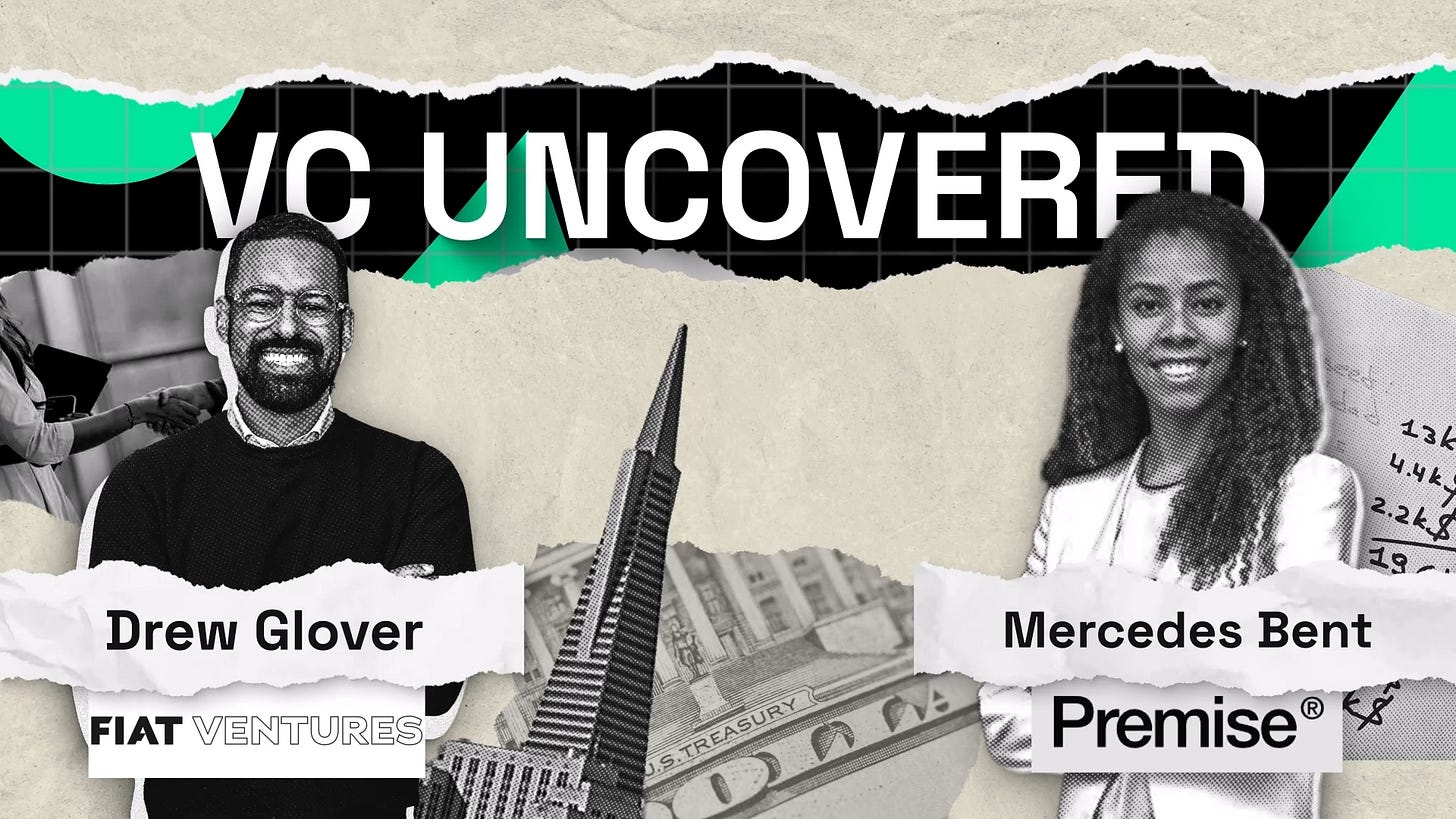
There is a version of venture capital that is driven by algorithm. An investor sees someone flip their LinkedIn profile to “stealth mode,” and within hours, an automated outreach tool has offered a term sheet to the top 25% of them. Mercedes Bent has watched this play out and decided to build something that looks almost nothing like it.
“We have become an index play […] and I’m basically doing the anti of that.”
That tension between venture as a relationship craft and venture as an asset-allocation game sits at the center of everything Mercedes is building at Premise, the early-stage firm she co-founded with Vanessa Larco. And the way she is building it is less about a contrarian thesis than a studied conviction that the fundamentals of the job got buried under a decade of hype.
Meet Mercedes, Meet Premise
Mercedes came to venture through a longer and more varied path than most. She worked at the Federal Reserve and Goldman Sachs during the 2008 financial crisis. She founded her own startup. She helped scale other people’s companies from early single-digit teams to organizations of 100 or more. She spent six years as a partner at Lightspeed Venture Partners, where she focused on early-stage investing and ran a scout fund starting in 2020. She also organized some of the first Ruby on Rails meetups in New York back in 2013. All of that shaped what Premise became.
“The last 15 years experience working in tech and in finance and venture capital,” she said. “I feel like it’s all accumulated and driven me to this point where I’m trying to create the VC firm of the future and really the VC firm I wish I had had access to back when I was a startup operator and founder.”
Premise focuses on pre-seed and seed investing, with a particular emphasis on founders in the AI ecosystem. The firm is small by design and deliberate by strategy.
The AI Cycle, Seen Clearly
Mercedes is not a short seller. She said so plainly and more than once. But she is also clear-eyed about what happens when a market gets ahead of itself, and she thinks the current AI moment is doing exactly that.
“The time to push in all of your chips on the table is when you see a huge new unlock for a technology start to happen,” she said. “We’re in a hypey moment of AI, but in the grand scheme of things, this is such early innings. More akin to when mobile was coming out than it is to the end of the mobile cycle, which was like 2021.”
Her concern is not that AI is overstated as a long-term technology. It is that the inflated valuations and accelerated capital deployment of this moment are creating a distorted picture of what these businesses actually look like. She pointed to the potential IPOs of OpenAI and Anthropic as the likely moment of correction. Once lockup periods expire, typically six months after an IPO, public market investors start applying fundamentals-based scrutiny that private market investors have not been required to apply.
“Public market investors are not VCs,” she said. “And they’re just gonna keep looking and saying, so this thing loses how much money for every dollar of revenue it makes.”
She outlined several other potential triggers beyond an IPO correction: large-scale enterprise security incidents, political backlash tied to job displacement, and shifts in public sentiment if unemployment spikes in ways that become visible and politicized. She noted that the U.S. has a presidential election in 2028 and that job loss related to AI automation could become a defining campaign issue if the effects reach beyond the tech sector.
Her read on what early-stage investors should do in this environment is simple: resist the pull to underwrite the exception.
And Drew adds: “A lot of investors have been underwriting the anomaly instead of underwriting the median,” citing cases where investors price companies based on the assumption they will reach $100 million in revenue in seven months.
The discipline is to return to realistic unit economics and to stop letting hype set your expectations.
Building a Deal Flow Engine That Does Not Look Like One
At the center of Premise’s sourcing strategy is Surreal, a community Mercedes started as a monthly dinner series for engineers and AI researchers. The first gathering happened in her living room. It has since moved to art galleries, where attendees sit among large paintings and sculptures and talk about the latest developments in AI research, agent deployment, and model efficiency.

The community now has over 5,200 applicants in the past year, with hundreds of regular attendees. Most of them, Mercedes said, do not know there is a VC behind it. That is the point.
“The minute you’re saying, hey, here’s office hours for VCs, come and talk about your idea, now people are posturing,” she said. “I wanna get to know the real you, who is real-time working out in their head as they’re sitting there, a software engineer at Vercel thinking I might go start a startup one day.”
She thinks about the community through the lens of product design, specifically the sequence of “magic moments” that keep people engaged. The first happens when someone shows up at a dinner, sits down next to a person with remarkably similar interests, and spends two hours in conversation that produces a potential hire, a potential co-founder, and a possible customer. The second hits when they join the Surreal WhatsApp group and discover that 10 people they already know are in it. The third arrives when they post a problem at 11:59 p.m. and someone answers it immediately.
“I want to draw out the magic experience for you to just keep coming back and feeling like it’s amazing,” she said.
The tool running much of the back-end logistics is Luma, which Mercedes described as far better suited for business-oriented community management than the alternatives.
The Behavioral Economics of Good Judgment
Mercedes applies behavioral economics as both a diligence lens and a personal operating discipline. On the diligence side, she looks for founders who understand the emotional architecture of their product.
“The founders who are most in tune with behavioral economics actually build the most magical products.”
If a founder can explain what the user will feel when they sign up, how that cascades through the experience, and how it translates to key performance indicators, that is a signal worth paying attention to.
On the personal side, she uses it to manage her own decision-making. The biggest risk she flags is getting emotionally captured by one part of a deal, usually the founder, and letting that excitement override judgment about everything else.
“I get so excited about founders sometimes on the very first meeting with them and I think it through and I’m like, well, it’s a terrible deal,” she said. “Maybe they’re just good at talking.”
The training is to make sure the founder, the product, the market opportunity, and the deal terms all earn conviction independently. When one of them is missing, the discipline has to override the enthusiasm.
She also flagged the opposite failure mode: letting a deal that worked despite its flaws become a template for future decisions. Chasing an outlier as though it represents a repeatable pattern is, she noted, its own form of cognitive error.
The Long Game, Played Up Close
Mercedes is building Premise for a version of the market that requires patience, presence, and a willingness to know founders long before they are ready to take a meeting with a VC. Her bet is that the firms built on relationship density rather than deal volume will survive cycles better, and will earn the trust of the founders worth backing.
“I wanna see that whole journey with you,” she said. “And have you naturally come to it.”
In a market where capital flows fast and algorithms optimize for reach, that kind of long-horizon, in-person relationship work is genuinely rare. Whether the AI bubble deflates through an IPO correction, a political shift, or something else entirely, Mercedes is positioning Premise to be one of the firms still standing when the next real cycle begins.
This season is supported by SVB. Silicon Valley Bank, a division of First Citizens Bank. Member FDIC. SVB is a trusted collaborator for the founders pushing boundaries and the investors who back them. We’re proud to have them as our sponsor.
Please note, this podcast is for informational purposes and is not investment, financial, or legal advice. The views expressed are those of the speakers and do not necessarily reflect the position of SVB.
More from Uncovered Media





Read the full transcript
0:00 The time to push in all of your chips on the table is when you see a huge new unlock for a technology start to happen and you know I get that we're actually in a hypey moment of AI but with like in the grand scheme of things this is such early innings more
0:17 akin to when mobile was coming out my sense is as soon as there's lockups end after the six months people sell and they kind of go into just like regular public markets scrutiny then that's when I think like a little bit of the music stops because the investors public market investors
0:37 are not VCs and they're just going to keep looking at saying like so this thing loses how much money for every dollar revenue it makes. Welcome to VC Untovered the series where we highlight the next generation of investors who move faster take bigger risks and build shoulder to shoulder
0:53 with founders. I'm your host Drew Glover co-founder of fiat growth and general partner at fiat ventures. Mercedes-Vit so happy to have you here on VC Uncovered. Huge fan of you have been throughout your career I think I was able to be on a panel with you a couple
1:10 years ago with Steve McLaughlin over at FT Partners and you were sharing some of your insights and was so impressed and but you got to reconnect recently at an event and I was lucky enough to convince you to join the VC Uncovered podcast and newsletter but I want to make sure the world gets to know more about you
1:25 so I would love to just kick things off by you telling us a little bit more about you and what you're building. Yeah no I'm so glad we got to reconnect and god that was so long ago that feels like another lifetime. What have I been up to since then well I started a
1:41 new VC firm my new VC firm premise co-founded with Vanessa Larko is kind of the brainchild of our dreams like the last 15 years experience working in tech and in finance and venture capital
1:57 I feel like it's all accumulated and driving me to this point where I'm trying to create the VC firm of the future and really the VC firm I wish I had had access to back when I was a startup operator and founder and so it's been really the work of kind of like our blood, sweat and tears and
2:17 we're so glad to be getting it off the ground and investing and having great founders be part of our network now and yeah prior to this I spent six years at Lightspeed venture capital venture partners where I was a partner doing a lot of investing in early stage and before that I used to be an
2:35 operator I helped girl other people's startups from you know one to two to a hundred from zero to 25 I was also the founder of my own startup and before that I used to work in financial services so I worked at the Federal Reserve and Goldman Sachs during the last crisis and it was fun to like
2:53 kind of live those many different lives I feel like we're now on another bull market cycle which is so fascinating to me to see but it's like the first time I've been a professional with a lot with it and with enough
3:08 experience to do something like push forward a strategy that you really believe in during a market cycle and so I'm pretty excited about it I love it I love it and you know obviously you've had enough experience in your career and enough time throughout your career to
3:26 one experience what works and what doesn't work within like a really good venture ecosystem but two been in it enough time to be able to see a couple different cycles so I'm curious as you talk about like building the firm of your dreams how are you kind of how have you kind of
3:43 curated and are currently building that keeping in mind of you know now that you have a full kind of first first party exposure to what cycles look like and also what works and what doesn't work in some of these different kind of venture ecosystems yeah I think that well the on the cycle
4:01 one of the things I've learned is like the time to push in all of your chips on the table is when you see a huge new unlock for a technology start to happen and you know I get that we're actually in a hypey moment of AI
4:17 but with like in the grand scheme of things this is such early innings more akin to when mobile was coming out than it is to like you know the end of the mobile cycle which was like 2021 and so I feel like that is really important to have your own checkbook and be
4:32 able to do it how you want I think in terms of like what I think needs to be done a little bit differently I also think the last cycle created venture capital as a household name in the US like back in the mid
4:47 2000s Vc was still kind of under the radar there hadn't been the top of the S&P 500 totally taken over by formerly Vc backed tech companies and back in the mid 2000s before the mobile cycle
5:02 finance was still kind of I would say like the peak economy in the US and we had just gone through the dot-com crash everyone thought like tech was dead like it was kind of like the early innings of the internet and most of America's mind but then now fast forward like 15 20 years
5:18 later we have this point where we're at the part where everyone in the US recognizes okay Vc is a big thing and what's that led to is like tons and tons of tourists coming into the venture capital world but also people not I feel like the discipline of what venture
5:35 used to be which which used to be a very hand-to-hand combat like unearthing rare gems lots of like on the ground sourcing field turned into almost like an asset management game that crossover
5:52 private equity hedge funds they were all like oh this is the hot asset class like I can do that too and like we kind of saw that they like tried to do it a little bit we remember we're like what tiger was doing and co-to and everybody like a lot of the crossovers but
6:07 that's just to me like a completely different base adventure that was exasperated by how hypey our field got and so my view of like the future fair me the future is like return to the basics like
6:22 we need to focus on precedency ground game understanding what qualities make incredible founders in the future and how to systematically source them via relationship driven investing not via
6:37 like oh I saw someone switch to their profile to stealth I crossover like fund have written this great algorithm that's going to like automatically reach out to all of them and offer like the top 25 percent of check you know and I feel like we had become an index play and I'm basically anti
6:56 doing I'm doing the anti of that I absolutely love that and I know we've spoken about this but you know even if the adventures we are huge just community believers and like tripling down on that as a strategy one thing that we talked about especially as we were we were you know learning more
7:13 so we can write the newsletter piece of this is you know what you've done is you've really been focusing on building community as this deal flow engine but you're not building a scout network you know you're not you know you're not just looking to again like you said just take a ton of
7:30 folks out to breakfast or coffee over some algorithm but you really focus on like engineers and researchers through I believe your platforms called surreal where you actually are using them to find the next generation of really incredible founders would love to dive in a little bit
7:47 deeper to that yeah and surreal is one of the communities we run it's the largest and definitely the one that we like prototyping guinea pig the most I think that that what surreal is is surreal is it started is at monthly dinner series for a top engineers and researchers actually the
8:04 very first one was not even like full dinner but it was at my house in my living room and then we transitioned it to art galleries now it's exclusively in art galleries surreal is a space for us for engineers and technical talent to discuss the latest developments in AI and the latest
8:20 research how it's impacting how we build how we think about deploying agents how we think about making more efficient models and I thought that was a really important space that needed like in-person community because and the thing I was hearing from everybody is like everything's changing so
8:37 fast on twitter you're constantly reading the news and being like oh my god another person beat the benchmark this happened this happened and you feel a bit behind and so when you're also when you're starting up you're supposed to be heads down you're supposed to be focused on your customers like how do you get that outlet to have people who can help you be up to speed
8:54 with what's going on in a real trusted manner without feeling like doom scrolling on x is the only way that you're knowing you're behind and so I thought of all of these various things I've also run a bunch of technical communities in my past I ran the first Ruby on Rails meet up in New
9:10 York back in 2013 I ran the scout fund which was another version of a community tech tech community but investor focused I was at light speed in 2020 and then now I'm running surreal in sci-fi tech club and so to me it was kind of like okay know how to do it it's something that
9:27 like comes like the back of my hand for me and it's really important and needed in this moment so that was like the impetus and then in terms of like how does it fit into that like big strategy that we were talking about I think because of that cycle effect everyone's gotten very lazy we have
9:42 a ton of AI generated sloppy outbound going to founders and the antithesis to that is real in-person community things they wanted to go to of their own volition they they don't think is it all
9:57 like being put on because a VC is trying to recruit them we have you know had 5 200 people apply to surreal in the past year and hundreds and hundreds of 10 um I most of
10:13 them don't even realize there's a VC behind it which is kind of great and it's like you could argue to me oh then that's just wasted resources but I don't think so because we're trying to build our truly authentic interest-based community we don't want to be too on the nose the
10:29 minute you're like saying hey here's office hours for VCs come and talk about your idea it's like now people are posturing now they're putting up a facade I want to get to know the real you who is real- time working out in their head as they're sitting there a suffer engineer at Vercel thinking I
10:47 might go start a startup one day I want to see that whole journey with you and have you naturally come to it because you heard from your friends that they were getting a lot of value out of it and you saw there was an event that a speaker you wanted to meet was speaking at like that should be
11:04 the draw in never the VC and then later on if you engage and you like the community and you're in our WhatsApp and you're reading all of the AMAs and you're you know consuming all of the content every day and you're like wow this is great I'm like meeting so many cool people then you find out
11:20 who then you might think who is this person for Sadie's who keeps messaging me and then at that point I'm happy to engage with you if you want to talk about any startup stuff but that's really how we've thought about it and how it fits into our broader vision of the VC firm of the future.
11:36 I love that and VCs have been talking a lot about what what what moats still exist today and you know I think this goes along with brand but community is a huge moat that is nothing that is that is an unpromptable thing you know you can't recreate it on AI like that
11:55 is an in-person experience one where you have to build and nurture serious relationships and I think what I love most about it is you don't have a goal to find a founder by going to a dinner you have a goal of
12:11 getting a slew of meaningful touches over months or even years so when they come when they when they stumble upon what they want to do next you're already top of mind I'm curious like what is that
12:26 what is that community magic that you've been able to learn by creating multiple multiple communities where you said when you started premise we have to do this I can run this playbook in my sleep and I know it's going to work because it's worked before. Yeah um and I I appreciate that you say you think communities are special like
12:46 I sometimes have a uh like negative reaction when people even like because community is the right word but I almost have a negative reaction to that word because I think a lot of people think of it as like soft like touchy feely not like value and to me it's like it's a valuable
13:08 network but you've got to treat it like a community and so I don't know it's I think though um when I think about like why like it's kind of like anytime you're building a new company and I tell this to founders all the time you have to think about like what skills are you best in the world at and
13:24 how do you turn that into an economic engine and anything you love to do that just comes naturally is probably the place to start and so you know I kind of just started doing it I didn't really know
13:40 if this was going to be a thing or what it was going to become but I know that I like convening people I know I can do it super high volume I know I can get the magic as you said to be felt um I think the the magic
13:56 itself is like because I always think about it from like a product positioning perspective like when does someone hit the magic moment in our product yeah there's two times they might hit the magic moment like the first time is when they show up at that first dinner and
14:12 they realize they're in an art gallery with incredible artwork on the wall and we're literally sitting underneath these massive paintings and sculptures and there's candles on the table and their meat they sit down
14:28 next to someone and they realize that they have very similar interest and they seem like oh and the other person on the other side of me also had really similar interest that 's that first magic moment when they hear the speaker the dinner speaker talk and then when they go up to them afterward and tell them a little bit about what they're working on and thinking
14:45 about and get real feedback that's the second magic moment and then there's really latent magic moments that happen later too but when they walk away from that first dinner totally buzzed and realize like I got a couple of customers I have a potential person I could hire a potential co
15:02 -founder those are the like magic moments I think of they all can happen in a span of two hours yeah and then they continue to get doubly doubly down once they get in the whatsapp they join it and they realize 10 people they
15:18 already know are in it that weren't at that dinner but they had come to her previous dinner and they go oh my god you guys went to that's like a fourth magic moment and then when the conversation is going in the whatsapp and they're real time saying oh my god that's the problem I'm dealing with right now at 11.59 at night and someone was able to answer it like that's
15:38 a fifth magic moment so I think of building a really special community is like a series of magic moments you need some to hit people immediately like if they're not very impressed when they first get there and it takes too long if it took all the way to the whatsapp to get
15:54 to your magic moment like I'm gonna lose you because that's way too much time but I also don't only want one at the beginning because I don't want like shock and all I want to like draw out the magic experience for you to just like keep coming back and feeling like it's amazing I love
16:11 absolutely love that quick quick speed question like what's what's one community or network hack that like you can't live without right now Luma yeah I think you have it has to be Luma shout out to Luma um
16:27 we're big big Luma fans over here as well you guys do you sim a lot we use yes we use Luma we only use Luma and um I forget what the other one is but I sometimes get invited yeah part of full um I feel like there's everyone using part of full is probably a VC then
16:43 invested in part of full but like Luma to me is just one that it gets me also it got me first so you know I'm locked in Luma has way more business oriented features party full is really social in my mind in terms of a lot of this stuff if you want to manage like back end is just way
17:00 better on Luma yeah you know I love it and um and just also I just believe that the future of VC is not just capital you know capital is a commodity at the end of the day here if you don't have capital plus other things then like you are very much behind the ball um unless you're just
17:17 one of the really big ones that just just have the ability to you know write hundred million dollar techs in the seed round which brings me to my next point that I want to touch on is something that I've heard you talk about is is like your hope and your wish that the AI bubble popsuit as
17:32 an early stage investor similar to you I think I understand that but like tell me a little bit more about like where you sit in this kind of AI craze and this as you said earlier this hype cycle that we're sitting in the middle of yeah well look I'm no short seller I don't have like
17:47 any you know position like we're economically hoping that you know that everything but like I do think like on the one hand yeah of course I'm glad that AI is doing well but I think over hype creates like a um
18:02 a artificial on like I think of 2021 it creates creates an artificial sense of reality around what valuations are what round sizes are and it increases the velocity at which investable capital
18:17 gets lost and so like as someone running a fund like I just don't that's not always the best I mean there's also ways you can benefit from it of course I can invest in something that gets marked up super fast to a billion and that can be a great outcome for me because other folks are happy I think we are already starting to see a little bit of this way in at the
18:34 earliest stages like I think VCs are already feeling kneel lab fatigue but at the same time I don't think the broader market has fully priced in like later stage anything it's just still like straight hype
18:49 and so when I think it's gonna happen actually there's a couple things I think there's like five things that could happen but increasingly as it's reported that opening eye and entropic might go public in the next like six to twelve months my sense is as soon as there's lockups end after the
19:05 six months people sell and they kind of go into just like regular public markets scrutiny then that's when I think like a little bit of the music stops because the investors public market investors are not VCs and they're just gonna keep looking at saying like so
19:22 this thing loses how much money for every dollar revenue it makes and we don't have an answer to more efficient models so yeah I think it's like a if not like not an if just like a win and I don't know I'd
19:37 love your take I'm like when you think it is coming soon I have a very similar belief and I was I was I was you know doing my my normal you know Twitter Instagram business surfing and you know Chamaath has a lot lots of different thoughts but he had a really good point where he
19:54 was talking about how there's going to be these IPOs but very soon after whatever it is cloud you know cursor you know some of these really big these ones that are like almost valued at a trillion dollars there's just
20:09 not enough money in the space to prop these things up once they go public so there might be one or two that go public over the next 12 months and sure like we'll see them like remain but there's not room for six different trillion dollar companies to come into the
20:25 market and there's not enough money in the market for it to prop them up and keep that hype going I think you're right some of these these public investors are going to see what the balance sheet looks like and then they're going to keep looking and realizing that a lot of the story that's
20:40 being told is around the hype and a promise of what could be but what could be I think is still much further off than most people think because these private these private stories in the private markets that are being told they're getting grander and grander and grander you know the more time goes by
20:57 without them going public there's a couple interesting ones like I think like a stripe versus an open AI or two very different stories but as we sit here in this AI word like it's it's a AI native companies that are that are raising $30 billion rounds it's just not scalable and so you know I
21:14 get excited about you know what AI is going to do but I am as an early stage investor as I keep saying we've been a lot of investors best investors that have a lot of money have been under writing the anomaly instead of underwriting the median meaning they're underwriting businesses
21:30 based on them getting to a hundred million dollars in revenue like a gamma did in like seven months instead of underwriting it as a business it's going to maybe you know get five million dollars in revenue over the next year I still think it's going to push the the the speed
21:46 that people can get revenue but it's just not going to be this anomaly that everyone's chasing right now I completely agree and so we'll see like how much time that ends up taking but I also think there's a couple of other horsemen like in addition to the whole public post
22:03 public markets crash I think there could also be these huge security incidents we keep hearing about yeah there isn't being like a massive security outage that affects like huge enterprise companies tons tens of millions hundreds of millions of customers in the US I think you also
22:18 start to see a lot of pressure if we ever get to this whole like the you know feared words bailout that we're being used by some of the largest labs like if that ever starts to be a real going concern in government I think that's also something that will have a huge political backlash I think
22:35 that there's also like, this one's more latent. And I think it'll stay mostly under the radar, but the whole element of like, if somehow public like sentiment was to totally flip that just like it's stealing all of our jobs. There's really like high
22:52 unemployment rate that suddenly, you know, spikes on a level of like COVID in a specific really critical area. I think those are all openings that can be manifested and captured by a savvy political operator that could cause trouble for the
23:07 industry. I agree. And I think the same thing goes for the energy crisis that we're under right now as well. Like there, there's a lot of like macro political moves that could be made if it were to like spread like wildfire that quickly shift public sentiment. And I think because we're living in
23:22 such a retail investing world right now, you know, with with Robin Hood and like all these like, like, like public sentiment is not big hedge funds anymore. It is equal parts, individuals that are investing $10,000 that are just like,
23:37 moving social social commentary and social sentiment. So super fascinating. I think that we're definitely, you know, moving very close to a bubble. It's just like, like, is the balloon gonna pop or is air just going to like slowly leave it? I don't
23:53 I have no idea. Yeah, totally. And we have an election in 2028, like that rhetoric around like what they think their voters care most about if it's income lost due to AI, like that'll be a major going concern. Yeah, yeah, and no doubt. I mean, jobs are obviously being left
24:10 for we're feeling it the most right now in tech jobs. So like, you know, the 80% of the US that's like truly at risk, they're just not feeling it as much yet. But I mean, it's coming. I've I've walked through some shops where they're showing technologies that plan on replacing hundreds of thousands of jobs across the
24:28 grouping of individuals that need jobs the most. Yep, totally. Um, all right, like we are we we dug into that. Yeah, there's the whole like we could go all the way down that path of the jobs front if we talk want to talk about like entry level of roles
24:45 and how that's yeah, let's do that. Yeah, tell me what do you're like, what are you what are your general thoughts about like what the future of work looks like? I spend a lot of my time thinking about that. And I know there was one interesting so we were thinking about partnering with this this company
25:00 that's doing a lot of work across different campuses and against call across college campuses to help promote entrepreneurship. And one thing that we learned was is like even freshmen and sophomores now are just like just trying to create their own businesses. Partly because the cost of building is zero now
25:18 that's in many different fronts, but also because they were openly saying this, they're just afraid that there's not a job waiting for them when they graduate. Yep. So I feel like this shift is going to be massive. We're almost at an all time peak again for the number of some of
25:35 businesses that are created in a single month. We're almost at an all time peak right now. The last time we were at that was back in COVID. And so I do really think like this is a phenomenon where people are increasingly starting their own company in order to counteract against some of this. I think
25:51 the biggest question is just that like what AI does is essentially serves as a low as an entry level role and accounting, coding, engineering. And so the question becomes like, well, if that's been automated away, like what do new first time job entrance to the job market do? And increasingly,
26:10 I think they either have to like to your point like do the I'm going to start a business or I'm going to build like I'm actually just going to learn how to manage a ton of AI. And so that's mostly the advice I give to most young folks. Like, I think the economy almost always works itself out. The only constant
26:27 that we see over time is that the introduction of more technology actually makes us work more. And it's like classic capitalism. If an economist were to say to you like, how do you think it unfolds if one person has a robot that makes them 5x more productive? Do they just do that and stop working? Or do
26:45 they actually build five robots and make sure they're like getting even more money? You know, like people try to profit maximize. And so I think increasingly, like, that's what capitalism is going to do. It's going to work itself out. It is
27:00 going to mean more haves and have nots. And the only thing that you can do to kind of like save yourself as a new market job entrance is to figure out how to work with the new technology and how to manage it. Yeah. Yeah. And I guess another thread to that is I actually believe that it's going to force people to have multiple full
27:17 and part time jobs that create their own full time salary. And and I think it's going to it's going to shift what a worker looks like. I think we're probably like from a macro standpoint, going to have to shift how 1099s are dealing with
27:33 taxes, dealing with benefits. Like, I think that entire infrastructure is going to have to be rethought because the W2 worker is going to shift. There's going to be a lot less of them. I think people are going to have, you know, maybe three or four different jobs that are going to create their full time salary. And I think it's going to be really
27:48 exciting from like an entrepreneurial standpoint. But the current infrastructure benefits the W2 employee on a level that like really no other type of worker gets benefited. My wife's a hairstylist. And, you know, she's thinking about different things she can start doing on top of doing hair and like me just sitting down with her thinking
28:05 about what that means from like a household perspective, from a tax perspective, from, you know, making sure that she can optimize in the most effective way. It is crazy complicated. And so yeah, I think it's just interesting that that whole
28:21 future piece and again, the employee benefits, health care, all these different things that go along with it. You know, kind of a messy space that that are that someone that the right founder is going to have to make sense of it pretty soon here. Yep, totally. Yeah. Well, that's cool that your wife's
28:37 doing that and also picking up some other stuff. Yeah, you know, well, it's fun. When I can sit at the computer at 10 at night while she's watching the show, I'm like, Oh, you want to do that? And then I just start tinkering around and I just show
28:53 her a fully built website with like a slacker or a stripe integration. She's like, Oh, like, all of a sudden I'm getting really creative here. What else can we do? So it's it's a fun time to play and test for sure. Yeah, I love that. Yeah. Um, jumping to like the last topic here, you know, you really
29:11 talk about, you know, the behavioral economics of the investor bias. And it was a it was a really meaty topic that we kind of like dove into during the newsletter. And I would love for you to share your general outlook on your perspective
29:27 there. Yeah, I love behavioral economics because it explains the irrationality in everyday economic and financial decisions. And as someone as people who work in the field,
29:42 like we just know how emotional investing can be. And like cognitive science is the study of how our brain makes decisions and processes, all the inputs and information that we're receiving in the world. And that layer on top of economics
30:00 is really useful because when something happens that causes my brain chemistry to go awry and start feeling panicked and and kind of activates like my fight or flight feeling when I see like a number falling. Oh, it turns out that's called like
30:17 loss aversion and I need to be really conscientious of it. And so I've always used it for investing as a way to both identify founders who understand those emotional triggers and polls, because actually the same things are present in
30:33 value prop creation. I find the founders who are most in tune with behavioral economics actually build the most magical products. So it's a great filtering criteria for being able to understand what people will build. And I probably pressure tested in terms of thinking through like,
30:50 do they understand what the user is going to feel when they sign up and like why like the things we started out talking about like, what is that magic moment? Are there multiple of them? How did they cascade? How does that turn into KPIs? Like you should be able to follow the follow the follow the
31:06 line all the way through. So that's like one way I use it is diligence. And then another way is in obviously just like managing the entire fund and thinking through different decisions I have to make, managing my own conviction,
31:21 managing my ability to hold my ground when I think an investment is good that the market hasn't, you know, really felt a reason really landed on my opportunity yet. And how do you still just have that kind of like unnerving faith in people, as well as like when to know when to take things off
31:38 the table, and do so systematically, I think like these are the hard parts like all of investing can be boiled down to like, buy low sell high. And yeah, strangely, the inputs to those are hard. And the emotional decisions of when to do so
31:55 are hard. But if you like really find quality that you can buy low, and then have discipline, both discipline to buy it low, and the discipline to sell it, that's like where I can take a lot of my venture capital, behavioral economics, feeling.
32:11 Yeah, I think that's so important. And I think commercially anyone that's not a VC or anyone that's getting started as VC, I'm sure is, is thinking, Oh, like, these are people that, you know, the best VCs are the ones that can just follow their instinct. And then, you know, instinct is an emotional thing.
32:27 It can be trained to be to be less emotional, but it's like, you know, a lot of it's very emotional. So I am curious, what are your thoughts around, like, when to follow that like emotional instinct versus when to bring in that more like
32:43 analytical approach? Like, is there any moments where you're like, when I get that feeling, that emotional feeling, I know it's like, it is the magic. Or you always throttling that back whenever you feel it kind of like thinking that it's more of a it's more of something that you need to like, it's a more
33:01 rewarding sign than anything else. I think it's it's not enough on its own. Like a lot of times, you need to love the founder, you need to love the product, you need to love the business, even if the market opportunity isn't huge today, you see a business opportunity to a
33:17 large market, and you also need to love the deal. And so, sometimes you can get really emotionally hijacked around one element, say the founder or the vision, but the rest of it doesn't all line up. And that's when actually the training and
33:33 the discipline to counteract some of the parts you are excited about, but to rationalize over like, this isn't everything I'm excited about really has to kick in. And I find that is where I use that training a lot. Because I get so excited about
33:50 founders sometimes on the very first meeting with them, I'm like, oh my god, it's so great. And I think it threw it and I'm like, well, it's a terrible deal. And maybe they're just going to talking and like, there's there's always a little bit more pressure testing you could do. Yeah, no, I love that. The discipline of making sure all the boxes that matter most you are
34:06 checked versus letting one or two blinds you from the rest, which I know we we've all been in the middle of and be like, oh, well, they have that and they'll figure everything else out. When we all know, like, that is that's an emotional mistake that can get in the way of a lot of, you know, of your biggest
34:24 mistakes or, you know, occasionally one of your biggest wins, but even another part of discipline is not letting, you know, a mistake that you made that turned into a win become an outlier that you're like, oh, like, I need to start chasing that for some weird reason, which we've all been a part of as well. Yeah, totally. Love it. All right, I want to
34:42 round this out with a couple of speed questions that I typically ended with. Feel free to answer these with, like, one word or a full sentence, but they're meant to be quick. The first one being if you could be the CEO of any Fortune 500 or Fortune 50
34:57 company that's not in Fintech, what would it be? Oh, that's so hard. Apple, it is, it's not in Fintech, exactly. I mean, they have Apple Pay, but yeah, I love that. I mean, talk about a company
35:16 that gets to, like, decide last and always wins. Yeah, I mean, Tim Cook's leaving. So, you know, our boy, Turnis, we'll see. Maybe you can, maybe you can take his job if it doesn't work out for sure. Love that. What is one, what's your biggest AI hack
35:33 that you're like obsessed with today? I love using Willow voice, which is one of the voice dictation tools, and I am an investor in it, so I do have to give that caveat, but I absolutely love it. Like, I use it so many times every day to speed up my
35:51 writing to the point that my fingers are actually, like, the muscles in my wrist and forearm are atrophying because of how much I now talk to my computer. Voice is good for my favorite AI invention. Yeah, have you played with Whisper at all? At least in
36:08 the diligence? A little bit. Yeah, I think Willow has some cool differentiated features around, like, what you say, the intent, instead of just, like, dictating exactly what you did say, it understands what you wanted it to write. Yep, love. What is the
36:28 first kind of, like, business thing that you do every morning? Like, when you open your computer, open your phone, like, what's the first thing you're doing? I normally am in bed, and I check all my, like, core apps, which is, like, email, text message,
36:44 iMessage, WhatsApp, LinkedIn. Those are the first four. Check it out. Check it out. I got another hat question for you. Top wellness hat. I think, like, guys, and just, like, think. You
37:02 take pills? You got pills? Or I'll zinc. Like, I have incredibly bad allergies, and I'm always sick, or I used to always be sick growing up, because, like, when you have a, like, a moist, like, like, when you have a lot of allergies, and it's always kind of
37:17 wet in your nasal passages, you're more actually likely to get sick. And so, I just have a weak immune system, too. Zinc is the only thing that speeds up the production of your white blood cells, and actively shortens the length of a cold, or like,
37:32 coming cold. And so, I take it any time. I feel like this light is hint of a scratchy throw, and that's how I basically survive not being, like, a bumbling, you know, constantly mucus-y mess. Oh, dude, I gotta, I gotta go get a little, uh, a little bit of that
37:48 zinc. I'll go get it whole foods next time I get there. I go there. I have to take it on a full stomach. That's the big, big caveat, because if you're going to take this 50 milligram, it's intense. You will know if you do it on, like, a banana. You take it every day? No, just what I'm feeling sick.
38:04 Okay, okay, good. Okay, this is good for anyone listening. Okay. Last question, if you had to invest in one vertical that you don't currently invest in, well, say you had a $50 million fund, you had to invest in, like, that pre-seat
38:19 seed, what is that vertical you didn't, you'd invest in, you don't currently invest in? 50 million, because that's a good question. I was going to say space tech, but I'd want a bigger than a 50 million fund for that. Probably, like, cyber security.
38:41 I don't invest in cyber security. I don't really understand it. I wish I did, because that sector has, like, the greatest e-brought and revenue multiples of any category. My God, like, those companies, if you get to 100 million and, like, ARR,
38:56 you're, like, your second life, you know? It's sticky. People stay on there for 20 years. Like, if you catch one of those, like, pain waves and cyber security, you're, you're riding a good wave. You are riding a good way, versus other sectors that I invest in, you get to 100 million and you're like, "Great, I still need to get to 500
39:14 million to be, like, a really, really valuable company." Oh, yeah. Well, you know, the fun spaces we lean into. Mercedes, this has been amazing. Thank you so much for joining VC Uncovered. Thank you for the great conversation. And, of course, I'll continue to be your
39:30 biggest fan as you continue to make premise special and keep building your incredible networking community. Thank you. This was so fun. Thank you for having me on. Thank you. This season is supported by Silicon Valley Bank. For decades, Silicon Valley Bank has been a true partner to the innovation
39:46 economy, helping both founders and funders grow. Silicon Valley Bank, a division of First Citizens Bank, member FDIC. Please note, this podcast is for informational purposes and not investment, financial, or legal advice. The views expressed are those of the
40:04 speakers and do not necessarily reflect the position of Silicon Valley Bank. [BLANK_AUDIO]
Transcript generated automatically; it may contain errors.
Originally published on VC Uncovered · By Drew Glover