Xan Wood
Canvas Prime
The Art of “Long-Term Greed”: From Student Boxing Matches to the Mosaic Theory of VC.
The short version
Xan Wood, an investor at Canvas Prime, discusses his philosophy of being "long-term greedy"-providing value to founders and other investors without expecting immediate returns, letting goodwill compound over a fund's ten-year life. He explains Canvas Prime's approach of investing $5-20 million at Series A/B in fintech, digital health and AI, avoiding overbid power-law deals and instead targeting companies at their go-to-market inflection point. He also describes his "mosaic theory" of piecing together incomplete information to reach an investment decision, and shares how he built a weekly newsletter tracking Berkeley-founder fundraises to stay top of mind in his network.
- Xan Wood, investor at Canvas Prime, describes being "long-term greedy": giving value to founders and other investors without expecting anything back, which compounds into goodwill over time.
- Canvas Prime invests $5-20 million at Series A and B in fintech, digital health and AI, out of a $350 million fund targeting around 20 concentrated deals with typical ownership of 10-20%.
- Wood says the market has bifurcated: capital-intensive, perceived power-law AI companies get bid up to very high valuations, while solid but slower-growing companies face a harder time raising Series A/B.
- His "mosaic theory" of due diligence means piecing together conflicting or incomplete information from customers, founders and references to form a full picture of a company before investing.
- Wood runs a weekly newsletter tracking fundraises by Berkeley-affiliated founders, which has about 5,000 subscribers and a 65% open rate, and uses it to stay top of mind and source deal flow.
- Before venture capital, Wood ran student club nights and a boxing promotion business in Edinburgh, partnering with a former football-hooligan gang leader turned boxing coach who was later killed.
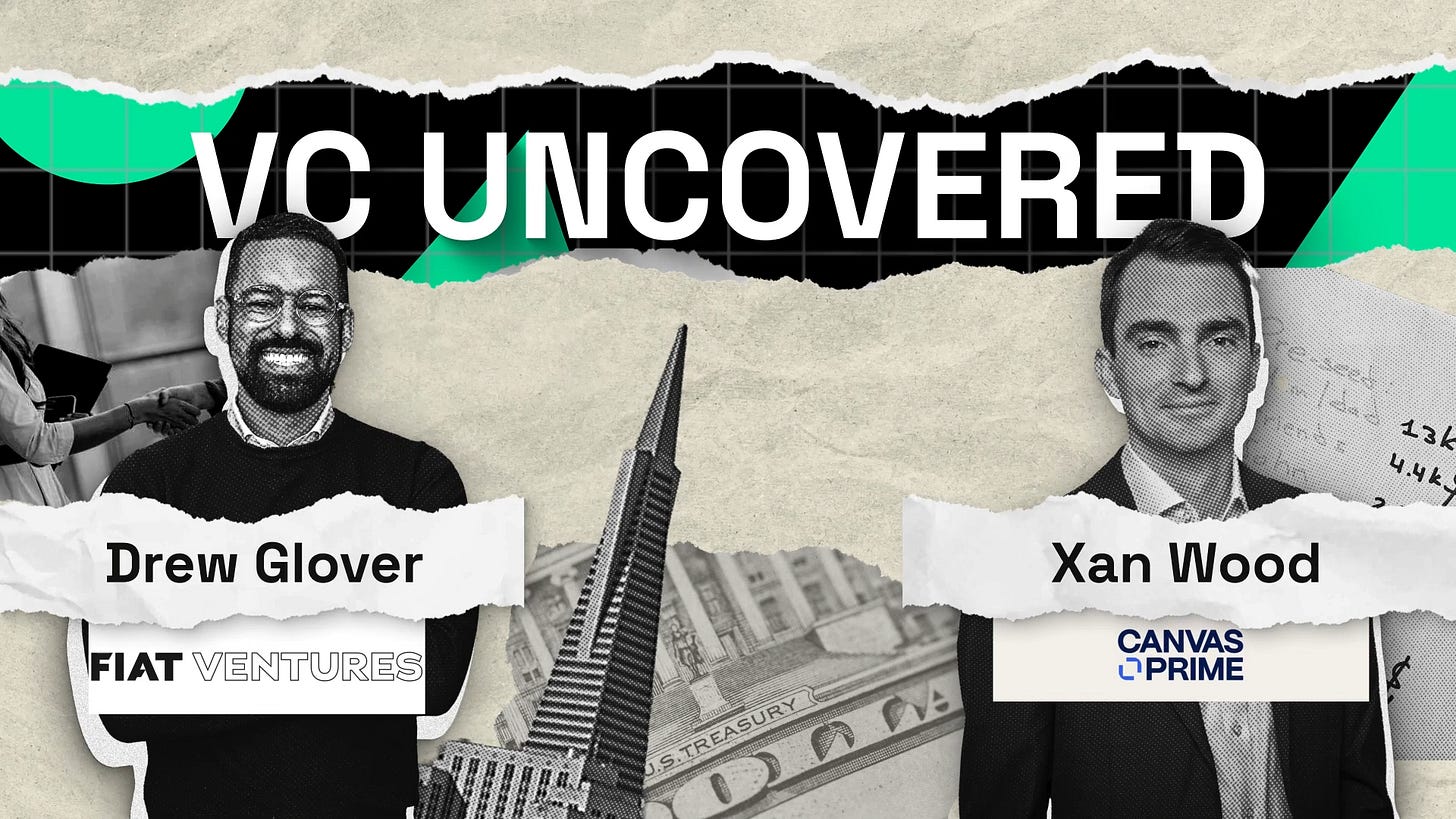
Xan Wood - Canvas Prime
Read his VC Uncovered profile here:
https://www.vcuncovered.com/p/xan-wood-canvas-prime
In This Episode
Drew Glover talks to Xan Wood from Canvas Prime on the art of being "long-term greedy." Xan breaks down his core investment philosophy, which treats providing value as a compounding function. He explains how consistently helping people and sharing deal flow without expecting an immediate return builds invaluable goodwill and opportunity over a decade-long fund cycle. He also shares how he finds diamonds in the rough by avoiding the hyper-competitive "power law" deals and instead focusing on businesses at their go-to-market inflection point.
The conversation takes a fascinating turn when Xan recounts one of his first entrepreneurial ventures: launching a wildly successful boxing gig as a student. This story offers a raw look at his early hustle and his knack for finding unlikely partners in chaotic environments. He also explains his "Mosaic Theory" for due diligence, a framework for piecing together an investment thesis from incomplete, and sometimes conflicting, information to see the full picture of a company's potential.
This season is supported by SVB. Silicon Valley Bank, a division of First Citizens Bank. Member FDIC.
SVB is a trusted collaborator for the founders pushing boundaries and the investors who back them. We're proud to have them as our sponsor.
Please note, this podcast is for informational purposes and is not investment, financial, or legal advice. The views expressed are those of the speakers and do not necessarily reflect the position of SVB.
More from Uncovered Media


Read the full transcript
0:00 When you talk to other investors, you've got to always be on top of people. You can't just assume that like, we did this deal together. So they're always going to think of me every time. Because they're talking to like 50 other people. And so you've always got to be top of mind. And you've always got to be like cycling in of like how to be, how to be top of mind.
0:15 Welcome to VC Untuber, the series where we highlight the next generation of investors who move faster, take bigger risks and build shoulder to shoulder with founders . I'm your host, Drew Glover, co-founder of Theot Growth and general partner at
0:32 Theot Ventures. Today I'm sitting down with Sam Wood, investor at Canvas Prime, a firm helping early stage companies in Fintech, digital health and AI push through the critical series A and B milestones. Sam, thank you so much for coming. Thanks for having me.
0:47 I'm so glad you're here. I feel like I've known you in the space for a long time and get to see you at different events, get to see you work in the room. You're one of the consummate like networkers, like truly like putting yourself out there. So super thrilled to have you. I just say yes to everything you asked me to do. I mean, you know, at this point when people started saying yes, I started
1:05 asking them more and more and more. So I'm just waiting for them to say no. So I appreciate you not breaking the trend so far. Nice. Cool. During the newsletter process and kind of just really unearthing a lot of the things that you touch on and lean into when it comes to venture, one of the topics that I
1:22 thought was most fascinating was your idea of being long term greedy. And as an investor myself, when I hear that, I think, yes, yes, yes, I haven't said it in my brain before, but I think yes, yes, yes, but I'm so curious. How do you think about that?
1:37 Can you break that concept down a little bit, a little bit more for founders out there, other VCs out there that are just trying to learn? Yeah, I think the kind of one of the ways I think about it is like doing things without
1:52 expecting stuff in return in a way can be like a selfish thing because like you keep on, so like when I first got to the US, I raised like a small fund, like a million dollars and I was finding deal flow and I was sending them to like seed investors.
2:08 And like, obviously when you're a million dollar fund, no one sends you deals. But I was sending them out and like you send deals out to everyone. And then I was kind of thinking like, if you provide enough value for people, eventually they're going to be like, oh wow, like that guy's given me a lot of stuff over
2:24 time. And so like I kind of owe him now. And so like in a way, it's like a long term thing, you know, where it's like instead of being transactional, you're like you're giving, you're just like being like, you're, and I think Silicon Valley is like a perfect place for this where like everyone is
2:39 giving stuff and not really expecting things in return. And then over time, you're in the ecosystem for however many years. And suddenly like you're in the ecosystem even more, you're kind of connected to all these different nodes and people are like, oh, that person did a nice thing for
2:54 me. And so then you're like, they'll be willing to do a nice thing back for you. And so that's a one way of thinking about it, where like you're just like, okay , I'm going to be like, I'm always going to say yes and try to be helpful to people and not really expect anything back. And I think over the long term that hopefully compounds basically, I think long
3:11 term greedy is basically a compounding function, where if you let things compound over a very long period of time, you know, I think it's Warren Buffett, so it's like the eighth wonder of the world is compounding. And if you get that, you're going to end up hopefully in a good place. No, yeah, I love that. And I think one thing a lot of people don't really realize people aren't in the
3:28 venture space is that all like a traditional venture fund is a 10 year fund. So the quicker you accept this kind of long term greedy concept and match that up to the fact that you've got to be in this thing for 10 years regardless, you have to
3:44 be thinking 10 years out. You've got to be thinking 15 years out in some of these different markets where it just takes a little bit longer to get accompanied some type of liquidity event. But especially in this early stage space, like you need to share, right? And you need to be able to think about sharing without expecting anything back,
4:01 which for a lot of people is the hardest thing on earth, you know, exactly. I've been passing you. I've been like, please, where's my, where's my thing back? Yeah. And it's the same with like an early stage founder, like, you know, we see a ton of companies we can't invest in. Yes. But I was, you also know a ton of people who might be able to invest in said,
4:17 like just being like, Hey, as long as like, I'm like, Hey, Fiat does a lot of stuff in FinTech, a lot of go to market stuff. Maybe they'll find this interesting, as long as it's like direction interesting , I talk to a founder, I'd be like, Hey, you should talk to the Fiat guys. Yes. And that way, like that founder's business might not be a fit, but then the
4:35 next business or the next business might be a fit and maybe they remember you. No doubt in my mind that since you raising that, that $1 million fund, your network has just continued to compound. And it's much larger now. This might be getting in the nitty gritty a bit, but how are you organizing
4:53 your network? So when you are sending these intros to a Fiat or to these other emerging managers or even like some of the later stage funds, how are you managing that process to make it so the output is as valuable as possible? What's interesting is like, you know, if someone like posts something on
5:10 LinkedIn or something, then you're like, then they, then they remind you top of mind. So then you, I think that's the other thing is like, how do you be top of mind? But then I have like an air table where I kind of put the funds, what kind of companies I send them, and then like how, you know, successful that is.
5:26 Yeah. Like, so that's one thing, but I think it's really hard to keep track of this stuff. And so like for you as like an investor staying top of mind is like the most important thing because you've got to, it's like when you talk to other investors, you've got
5:41 to always be on top of people. You can't just assume that like we did this deal together. So they're always going to think of me every time because they're talking to like 50 other people. And so you've always got to be top of mind and you've always got to be like cycling in of like how to be, how to be top of mind, you've got to be top of mind and it's funny, like we're, we're keeping score, but not expecting anything in return of what
6:00 we send them. But they're also keeping score of what you've sent them. And if what you're sending them isn't great, then they're like, I'm not responding. Exactly. So it's like a ballad. Yeah, it's a balance and, and it's funny because you have to be a VC and invest
6:16 in the right companies, but you have to have to be a VC with other VCs and make sure that you're providing value to them. So super fascinating. And then as you think about, as you think about just like what VC is today, I
6:31 like, I inherently believe that there's like a shift happening right now of like you can't just be capital. You have to be so much more than capital, both to other VCs, but also to founders. In this world of AI right now, in terms of where everything is headed and things are changing so quickly, we have some VC funds that are just built on the backs of
6:49 AI. We have other VC funds that are more traditional that are just optimizing for AI, but I'm feeling a shift in terms of even how some of these companies are going out and fundraising, some companies that five years ago would have been, Hey, I'm going to raise $10 million around or saying no, we're going to bootstrap this thing or we're not going to raise
7:06 until we get here. But as you look at the space from a macro perspective, are you feeling any shifts right now? I think there's like a massive shift in like one is obviously the size of the funds have got a lot bigger. And then like, I think everyone is kind of internalized that it's a power law
7:24 business, which obviously it has been. And so what that means is any company that people think is a power law company will get bid up crazy. Yes. You know, like sub 10 million, run rate, 500 million valuation where like
7:39 everything's got to go right for it. And then there will be some of these will be power law companies, obviously sub won't be. And that creates one side of the market, which is like the big boys game, or like you've got the very capital intensive companies, like an open AR and Antropic, which again, it's like a big boys game. You need to be multi-billion dollar AUM.
7:56 And then you've got like the other side of the market where like, you know, it 's one of the hardest times to raise a series A or series B because if you're not going from like, you know, like a top desktop, top quartile AI companies going from zero to five million in like under 12 months, where like a top quartile SaaS company in the last
8:13 year was zero to one million in 12 months. And so like, if you're not in that, you're kind of in like a bit of a death valley because everyone's willing to like pay up for these expensive companies. But for the like slower growth, like still very good growth companies, people are, you know, at some point, they're becomes like a great like value in these companies
8:32 because you can have a view that like maybe, you know, workflow software with a bit of AI is still very valuable. You know what I mean? And you can build these like very good venture scale businesses at like a lower entry price. Yes. And so I think there's definitely a bifurcation, you know, a lot of capital is
8:49 going to the big funds. There's a lot less like series A, series B rounds getting done, even though the ones that you're getting done are getting done at a much higher price. But like, who knows where it turns out? That's why it's fun because it's always changing. I know. I know. So what stages do you invest?
9:04 So we at Canvas Prime, we do series A, series B kind of we invest five to 20 million dollars, mainly digital health, fintech, with a kind of broad overlay of AI. And I think we're really trying to invest in the companies at the inflection
9:19 point of the go to market where like, hey, the product is working because product can always get better about it. There's not like a problem. There's always a product can get better, but it's like, how do we really accelerate the go to market? And you know, like it's like the series A series B is super interesting time
9:35 because there are a ton of seed companies. So many seed rounds have been done, so you see a lot of companies and then like we last play in these like crazy rounds because like unless you really believe it's like a generational founder, generational business, then you should pay up.
9:50 But like, I think there's a few which probably get done which might not be that . And like, so we're a little bit more in like this kind of traditional venture. And then we do very concentrated portfolios. So we're investing out of a 350 million fund at the moment where we're trying to do like 20 deals.
10:05 So, you know, very concentrated, you know, founders. And do you guys have ownership percentage? You're trying to. Oh, really? Like actually, what if I'm funny is the ownership point because like ownership is just another way of saying valuation, isn't it? But like, everyone talks about ownership percentages, but really what people
10:20 care about is the value of it. It's like a nice way of saying it, but no, typically it's like 10 to 20 percent really. It's like, yeah. It's what we're going for. Well, of course. Yeah. When we were talking to a founder, it's more of a negotiation topic. Exactly. So how do we, how do we bring this valuation down?
10:35 I typically just say as much as possible. Yeah. Totally. But it's interesting because like where you guys are investing and call it like we're like Fiat Ventures invest, you know, we are a precedent seed seed fund and we 're looking to get nine to 10 percent ownership, eight to 10 percent ownership.
10:51 But we're also on our second fund and we have a lot of LPs where we're still kind of building our state to do ratio, right? We say we can get eight to 10 percent. So we have to do that. And I sometimes get jealous of funds like your self where it's a little bit more in the growth stage where you have the ability of moving that pendulum.
11:08 And you guys have been in the game a little bit longer and been able to invest a little bit longer and have a different track record where you can say, hey, if there's an outlier, like we're in, technically we can do that. But the, the, the pressure on our shoulders, you know, of course, it's actually
11:24 , we brew, we brew is a little bit more than you. So that's, that's super interesting. And then it, it, as it pertains to some of the businesses that you guys are investing in, at least what it sounds like are not the ones that are these 500 million
11:41 dollar rounds. You're looking for the, the diamonds, you know, maybe in like, in, in kind of rougher terrain. How are you unrooving those opportunities today? So I think it's like a, like, like, how do like your networking and how does
11:58 that work? I think definitely, you know, when you talk to people, like at other funds, spending time looking at their portfolio to like start a conversation because like a seed fund might invest in like 200 companies, but you need to have a view of like, cut up that
12:14 portfolio, filter it and be like, okay, 100 of these companies have raised less than $15 million. Maybe they're interesting for us, then you can be like, they're in the US, they 've, they've not, they've raised in the last four years, like they haven't raised. And then you can kind of pull down a 200 portfolio to maybe like 30 or 40.
12:31 You then talk to someone and you'd be like, Hey, is this company interesting? And then it just starts like a conversation directionally, because if you ask someone, like, Lord, it's your best company, no one really knows that a seed fund because they're in so many companies. I think, I think that's like one, one way. And I think founders as well are always willing, you know, if you found us in
12:49 our companies, always willing to kind of send companies, they come across. I run a weekly newsletter, which is focused more on buckly network, which has quite a lot of subscribers. And so I get quite a lot of companies kind of through that network in Berkeley. And so go bare and by the way, exactly, go bare and then, yeah, so it's just
13:08 different. And it's just like anywhere. I mean, you got to be everywhere and like, you know, there's always like, I think when you say like, there's like, there's so many reasons why a company can struggle to fundraise. It can be like the partner they worked with that a fund is moved on.
13:25 It can be like the sector, you know, FinTech last year was like hard to fundra ise. And now, you know, FinTech is very hot again. Everyone's doing deals that. So maybe it's just like a sector thing. Maybe it's just like someone's not that well connected in the ecosystem.
13:41 So it's just like how there were so many reasons and then sort of key is like, not why maybe the fundraisers and it's like, why is the founder and the team and the business the right place to invest. So I'm going to go back for a second and just talk a little bit more about the newsletter you've done. No.
13:56 Because one thing that I've seen, I'd say over the last couple of years here is a lot of VCs kind of building their own social presence, content strategy, and it really being individual base but giving you a leg up in terms of being able to network in terms of
14:13 being able to, I think really organize your general network really well. But also at the same time, you get to say stop top of people's inbox. And I think that's really, really important in where we kind of sit today of
14:28 being more than just you and an email account constantly trying to like text and email people. So how is that added value to you as an individual being able to have that community and scale it? So I think like the first off the format of the newsletter is basically every
14:47 week, which again is a labor of love to do these things. Oh, it's a grind. So you have all companies with a Berkeley founder are like they announced their rounds are announced. So it's like, and what's amazing is each week out of Berkeley, it's like 100 to a billion dollars is raised, pretty standard.
15:03 And that is like the, that's like the typical content. And then I put, you see every week every week, every week, every week, every week, it's like a, it's like a, and so like I started this about a year and a half ago, and it 's something like 80 billion has been raised by Berkeley founders, which is in, which is, Go Bears,
15:18 Go Bears, which is insane. And then I, so there's that. And then like initially I just did that. And then I was like, okay, maybe I should like start doing some content. And so then I put, I just put like my thought of the week. And so like this week, I spoke about like what I think is happening in pricing
15:33 in like certain like AI magic features, and then it's just like a tiny little blurb. And like every time I see someone who's like, I'm going to use that, like, that 's quite a night, like, and it's like, that, that, that, that takes a little bit of time, but it's like, again, it's staying top of mind. And then it's like, you know, if there's like a Berkeley founder, I can be like
15:49 , at talk to them and be like the, do you know what I mean? It's like, it's like a way to get it, it's organic, and it's a way to get in. So that, that's great. It's like a, and it, you know, it's like a, it's like a very niche newsletter. So, but like, it's like a niche newsletter in like a target rich environment,
16:04 but out of canvas, we, we back to ton of Berkeley founders. And so it's like a very good, you know, co, yeah, and it's like a unique way of a being top of mind be getting, getting, getting deals, maybe winning deals and all that stuff. So that's all, all helpful.
16:20 I love that. I'm super bullish on niche communities. Like, even what we do with VC uncovered, like it's very niche, it's a very specific type of VC. And we want to make sure we get the operators that are also investing and, and, but the thing is, is a lot of folks, I think with newsletters are saying, how do I get
16:36 200,000, 300,000, 400,000 followers? I would argue that having, you know, anywhere from 500 to a couple thousand of like the best of the best, tried so much more long term value in, in terms of the community that
16:51 you're building. Yeah. And so like for that, I need to say, we've got 5,000 subscribers. That's great. And it's like a 65% open rate, which is like high for this industry. Huge. And so like that is, because everyone is like, you know, they're like very target rich. I'm like, maybe we can get the whole 200,000 Berkeley alumni, but that would be
17:07 , that would be nice one day. That's awesome. Yeah. Yeah. It's such a high open rate. And do you have any like cool stories of like what has come organically from the newsletter to date? I think I, I get like, you just get a lot of nice people reach out to chat.
17:22 Yeah. Do you know what I mean? Where a lot of people will just like send, like nice messages and, and all this stuff and like companies get through, I like, I actually had my first event where I was media last week, you know, and then again, it's like exposure.
17:37 I did a post which I kind of copied from the newsletter and like 200,000 people see it on LinkedIn because it's like, you know, the chance that is sharing and all this stuff. And so, you know, all of that is just nice. You know what I mean? And so again, it's long time. It's like, and it's painful because it's like every week you do it. Oh, of course.
17:52 Yeah. We kind of like, if I do it, if you keep on doing it for like even five, 10 years, it's like an institution. Yeah. That's right. And then everyone is like that. You know what I mean? You have to like, like underwrite your time a bit. Like, okay, if I went to go spend four hours at two market to, to industry events or four
18:07 hours, just slaving away at this thing that hundreds of thousands of people might see. It's pretty obvious. It's a pretty good trade-off. Yeah. Yeah. The trade-off's pretty obvious. I'm going to go back to you started your career in the, in the PE space and you
18:22 transitioned over to VC. How has that transition been? I'm curious. What? Tell me a little bit about what you were focused on in the PE space, but also what you brought over to the VC space with you. Yeah, so I started my career in Asia out in Hong Kong in product tea.
18:38 And like what we were doing in that stage was like emerging market. And so we, it was a mixture of buying businesses. So we bought like a logistics business up in Mongolia or starting businesses. So we started what became like the largest motorcycle leasing business in Myanmar.
18:53 And like emerging market investing, I would say is a lot more similar to like venture capital in the US. But like initially when I came to US, I was like, I'll get into private equity. It'll be like kind of what I did in Asia. But actually getting like private equity in the US is much more like financial
19:10 engineering, spreadsheet driven, like it, great business can be a lot of fun. But then I realized like actually like private equity in Asia is like way more. It's the people, you know, where every business is the people, but like it's obviously more weighted to the people.
19:25 Yes. You know, I like to think things are always going wrong in emerging markets. Things are always going wrong in early stage companies. It's a different problem. Do you know what I mean? Like in like America, it could be the big customer who was a pilot decided not to do
19:40 it. In like Asia, it'll be like the Dalai Lama has visited Mongolia, China is shut the border. Do you know? It's like a different problem, but it's like, but you still got to work through the problem. So it's like, it's just like a problem solving thing.
19:55 Yes. And I mean, the third thing, which is there's like an asymmetric information part where, you know, in VC, in early stage, you never get a complete information picture on a company. You know, it's like the, like you need to reference the founder.
20:12 You need to understand like the quality of the revenue, but it's not like an audited statement, which like, it's like, how do you pick different mosaic of a business to kind of come to a conclusion on it, which is the same in the emerging markets as well, where like, you're never getting a full transparent information profile on a company.
20:31 You could have got to like really dig down. And so that's kind of what got me excited for the VC in America. And I hear you keep using the word mosaic and I know you have a mosaic theory that you really lean into as you just think about the space. Can you explain that?
20:46 So like if you, I think if you talk to enough people about a company, you're going to hear a lot of stuff, some of it good, some of it bad, some of it like unsaid. And so you need to be like, why, like, if you're talking to a potential
21:03 customer, maybe they're like, oh, I don't need this product now. But then you're like, okay, but then they kind of told me that they've got this issue. And so they might not know they need the product yet. And then you're trying to like decipher all the different things and like put them back together, and then like overlay on the investment and be like, does that all
21:20 make sense? It's like a very which is, which is hard, but that's the fun part. Yeah. That's really the fun part. You're putting it. You're putting it to the puzzle. Exactly. You have a million different pieces. I always think of that show Homeland where Claire Danes, I'm just going off off
21:35 script now. But Claire Danes is, is she is a genius investigator working for the CIA. But when she gets, when she gets enough information that she just starts putting it all on that thing and then just turning it all together. That would be nice to be happy. Oh, yeah.
21:50 I mean, yeah, I mean, she had some other challenges in the show. Really good show if you haven't seen Homeland, but, but that's really cool. And I 100% agree because especially when you get really excited about a company , especially in my stage, right, where it's, it's seed, you got a little bit of information,
22:05 but not all the information. The only thing about where I sit versus where you sit is at a certain point, we need to feel comfortable with what we don't know. Where you guys probably still run into that sometimes. But a little bit less. - A little bit less. - And that just goes back to that power law thing
22:23 is what makes me a little crazy is what I don't know. I have to attach back, but do I believe that they can hit this multi-billion dollar vision? - But it's so easy, the thing in venture is it's like, it's so easy to say no. - So easy.
22:38 - And it's like so easy to get like, what's it called? Like, not jaded. You talk to like 20 companies and you're like, "You keep on saying no." And then it's like, how do you keep the excitement? And you must get this law. Like, how do you keep the excitement, keep on going? Which is, Dan, you've got to love that.
22:53 I think to love it, to love venture. - There's a lot of things that I was, I have not been good at in my life that I'm still not good at. But there's one thing that I've learned to be so good at now that I got through venture,
23:08 which is saying no. And, you know, I'd say at Fiat, you know, because we're doing like 50 events a year, we're doing so many different things from a community building standpoint. We're saying no, 3000, sometimes 4000 times a year. And sometimes that's just based on looking at like,
23:24 the deck in a couple of seconds. And sometimes that's after two months of deep diligence. But I can only imagine it's very similar. How big is the team over it? I can't. - So we have four investors on the team. - Okay. - And then you have about 850 million of assets and four investors. They're quite a small team.
23:39 But yeah, it's the same thing where you like, it's just easy to say no. And like, but also you're saying no to people who've like, put a lot of, like a lot of that through into the business. So you've just got to be, say no friendly. - And people that you want to maintain a relationship with,
23:54 that you hope when they land on that thing that you do want to lean in with, that they're coming back to you for it. Or at least giving you a look at it. So one part of the newsletter, the VC Uncovered newsletter, there was a one story in there about you partnering with a boxing promoter that I really want you
24:10 to talk more about. - Because it was one of your parades into the space that we're in today. - So I think that I'll kind of start at the beginning there. So I went to university in Edinburgh in Scotland. And like university in the UK,
24:26 I think is a little different to here. People in the US, everyone's like focused on getting like internships and getting on the chain. In the UK, it's a lot more like partying. Everyone's having a good time. - Are you, where are you originally from? - From the UK from the UK from London. And so there was this event every Monday.
24:43 Everyone would go to the club. It was like a great party. And it was like, it was one of those events where people didn't want to go to, but everyone went because everyone went. For some reason I got kicked out of the event. Like I was still blurry on why. And so like I started a rival club night on that Monday.
24:59 And that kind of like kicked off. And then so we were doing events like kind of a few weekly events for like a thousand people. We're doing these one-off events for like 5,000 people. We had like KIGO come to play. - Oh cool.
25:14 - And it was like an amazing business model because effectively you were getting the club for free because it was midweek where only students would go. You were then getting your kind of promoters would get one pound for every Drew they'd gone in. And then you, I would, so let's say it's dollars.
25:30 So let's say $10 for every Drew. - Yeah. - Drew, because they say Drew on the door, they pay eight. They pay eight, $9 instead of 10. You get one and I get eight. And that was basically the business model. And so that kind of like became pretty big. And then I was looking at like other things to do
25:45 within like kind of events. And I saw it in another university, someone put on this boxing event where effectively they get students, they train them. And then they put them through like an event. And obviously if you have like 20 students, everyone has at least 20 friends.
26:01 You know, you're easily gonna get like 400 to 600 people. You can charge a lot more. And so I was like, cool, I'll go out and do this. I then went out, found a boxing gym. And like was like getting them to agree to kind of to do the coaching.
26:16 And then I got a call from this guy, a guy called Bradley Walsh. And like, it's pretty aggressive to cool. And he was like, what are you doing? Like you're, you're doing like a boxing event in like my territory and all this stuff. And like, so I googled him. And he'd been on something called Danny Dyer's "Deadliest Men",
26:32 which is like this show in the UK of like people. So he'd been the head of, in the UK they're called The Firm. And that's like a football hooligan club. - Cool name. - And they go, like they go and like beat each other. Like they're gonna happen so much anymore. So he'd gone to jail for quite a few years.
26:49 And so I was like, wow, this is pretty scary. And I was like, well I might as well, 'cause I was like, I really wanna do this event. I might as well go meet this guy. And I met him and actually like it transpired that he was like a pretty changed individual where he now ran a boxing gym to get like people off the street to go box
27:06 and like, you know, try and change their lives around. - Yeah. - And so like managed to come to a deal with him where he was like the trainer of these students and I kind of put on the event. And so we were kind of partners in this. And what's amazing is like that was like a partnership which, so the events business,
27:21 like the kind of club nights I sold was at left university. And I kind of kept on doing just the boxing. - Yeah. - Because it was really easy. It was just like, I'd find the people, they would all go to his gym. - And these were students you were finding. - Students who wanna box each other like friends.
27:36 So it's like you. - And were you building a story around like their hatred for each other and you're like, okay, so it's called Lord of the Rings. - Love it. - It was a good name. And like, and honestly it would sell out like tickets would be like $100 and would sell out like 500 tickets
27:52 in like two minutes. It was like an amazing thing. And it just kept on going because it was like a partnership or this like very unlikely partnership of like, you know, me like 18 years old, this guy who'd been to jail and was like pretty, you know, it had a bit of a checkered past.
28:08 And so, and he was just like a larger than life character. And then what's even more crazy is, you know, kind of five years or so after I left Edinburgh, like I started getting a few messages and he'd been like gangland executed
28:24 outside his house in Edinburgh. Which in Edinburgh is like crazy. It's not like, it's like a very, they've been shot on his doorstep. And like it seems that what happened was like, he was just like one of his characters who was just like, always like very chatty, always like,
28:41 and I think he'd been like shot as like a message to some other gang guy. And it was like a pretty crazy story where this guy had like kind of reformed his life. - Yeah. - And then he'd still like, there were still some people from his previous life, I think, who were like after him.
28:56 And I think it's seen him having some kind of success. - Yeah, of course. - And then he got taken down. So that was like a bit, obviously a big shock. But yeah, it was a pretty lasting, you know, partnership of like, you know, I think it's like, there's a lot of lessons there. It's like, don't judge a book by its cover. - Yeah.
29:11 - You know what I mean? - Tell me the lessons, keep going. - Don't judge a book by its cover. Obviously like a lot of the time, you need to partner with someone who's very good at a specific thing, you know, very good at train. Like I'm never gonna be able to train these people. - Right. - And so it's really like, you know,
29:26 I think I do think the best partnerships can just be out of these like, you know, people you wouldn't really expect to partner with, but you can really build super strong partnerships. So that was an interesting one. But like a great, and again, like, you know,
29:41 you're kind of running around like young guy, not really knowing anything and all this happens. And so yeah, it was a fun one. - Dude, yeah, what a fun, intense story with a ton of turns. - Yeah, exactly. - I mean, it sounds like you had
29:56 that entrepreneur DNA early in your career. And you were just like generally willing to, or a better yet, you found comfort in just kind of making sense of chaos. You know, I mean, I know this event world is nuts. Like make money on it, don't lose money on it,
30:13 get everybody in place. So you're working on it versus in it, and then finding the right partners and-- - And you need a thick skin because I've done some events where like you put on an event and like one person turns up and you're like, oh my God, this is like the worst thing ever. That's really better because the worst is you can like 50 people.
30:30 - Of course, of course. - It's like you wanted 500, but that's so-- - And so what, at what point in post 18 year old you, were you saying I'd rather invest in businesses versus build money? - Yeah, I think like obviously with the events is like you get to like 23 or whatever,
30:46 you're 23, the people of the events are still 18. You just like, you start to get older. - Oh yeah, for sure. - Yeah, it's like a young man's game. And up to us, I've always loved investing. And so like always really wanted to be in investing.
31:02 And so like the events was amazing, like very profitable. It meant they're like, you know, you were able to do like crazy things in summer. Like one summer I got with some friends, we drove London to Mongolia in like a $1,000 car because you were doing these like fun events.
31:18 - Yeah. - So like the cash flow from that. But like you always wanted to do, you know, I think on the building of business side, you've all like anything, it's always like the, let's take the newsletter which is like a very simple thing. I was like, something needs to be done here.
31:33 You know, and like you keep on talking about it. And if no one's gonna do it, you kind of have to do it eventually. - Of course. - And like, and it's the same with like, you know, when I first arrived at Berkeley, myself and a couple of others, we raised this fund with like a million dollars where like, oh, you know, someone like we know people want
31:51 that like want to do this, but like, you know, want to invest in something to invest back in Berkeley. Like if you don't do it, someone's not gonna, you don't even. - Of course. - And that's like the entrepreneurial stuff. And I think like that is also helpful to like founders we invest in is like, 'cause like entrepreneurism in a way,
32:06 a lot of it is just hustle. - Yes. - It's just like trying to like always help people, always like you see an opportunity like that works for this guy. How can I like help them and like connect them? And so I think that's like, I think like entrepreneurialism is for like - Yeah, well, there's a lot of entrepreneur,
32:22 a lot of entrepreneur energy and everything you're talking about. How curious, if you feel comfortable sharing, how much money did you make from all those events that you did in university? - Well, it's a good amount, but it was like, not like, not like massive founder exit stuff, for like a very positive outcomes.
32:37 - Good, all right, all right. Yeah, it's, when you were starting sharing the numbers, I was like, damn dude, that probably turned out to be something pretty lucrative. You're, you must have been the guy. - You were the guy at university. (laughing) - And that's, it is like, it was fun, it was funny because like, you know, you meet sometimes,
32:54 like you meet people who are like a couple of years below at the university, like in other stuff. And they're like, oh wow, you were like the events guy. - You were the guy. (laughing) - I know when you're 23 and you're like, well when you're 18, you're like, dude, latte. So cool, you know, as we kind of,
33:10 as we come to the end here, I do have a couple of just like rapid fire ones for you. The first one is if you could only invest in one industry, what industry would you invest in? - Mm, but I think, you know, we've made you financial size digital health and so like anything, I think those are the two.
33:27 - We only move it this way. An industry that you aren't currently investing in. - Oh, interesting. I think like, I really do think that's like this, let's say with the AI, it's gonna make software become like easier to build, easier to like make.
33:43 So I think things, which is like an intersection of like, maybe off the shelf hardware with an AI on top of it. Because I think like, you know, that creates a nice switching cost, but you don't have the complication of like building the hardware. - Yes. - So I think that's super interesting. And that, but that's not like,
33:58 maybe I'm copying out because that's not one industry. Do you know what I mean? - Oh yeah. - But that's like an error. - It's a con, it's a format though. - It's like, you know, where it's like, software meets off the shelf hardware. - Yeah, yeah. - Because like, you know, if you've got a camera in a room, maybe it's easy to replace the camera, but like, if it's got the software and all that,
34:14 it's the switching, it becomes a little bit more of a switching cost than anything else. And so I think like, I've always thought that's just super interesting where I think a lot of the technology of the hardware is just got better and better, where you kind of know the initial cost, you know the bomb's gonna come down.
34:29 And then if you can put a great software solution on top of that, you can build like super interesting businesses. - Yeah, I love that. Us accepting the fact that it's gonna keep moving at the pace that it is, do you think they will ultimately help or hurt the VC industry, the investment VC industry? - So like, I think there's two thoughts
34:44 you want to have in your head. It's like, if you get AGI, like, no one's really doing it. Like, what does anyone even do it? Do you know what I mean? - Yeah. - So you kind of got to invest, assuming that's not gonna happen. - Yes. - And so like, I think definitely there'll be the idea where you can build like companies bigger
34:59 with less people, it's already happening. So I think that's gonna happen. But like, again, if you invest, but then if everyone's doing that, at some point you probably need more people to make something happen. And so like, there's like a lot of things which I think remain to be seen.
35:14 - Yes. - You know, where like, there's this idea, like maybe you can build these like very, which I call velociraptors. These like very fast growing companies of very few people. - I love that. - But like, if you, you know, at some point, maybe you need to add more people in because like everyone else, like, like how do you get,
35:30 how do you get above the AR? - Yeah. - You know what I mean? - Exactly. - It's true. - But it might be like, it's good enough that you don't need the people. - Well, that's right. We'll keep infiltrating like lesser sexy industries. 'Cause obviously that the really sexy ones, the AI agents, the different like chat bots,
35:48 conversational AI, like I get it. But like, we're going to HVAC systems now. We're going to like, yeah, back of the kitchen technology for chefs, whatever it is. If you have-- - So we've seen the new, my favorite thing is the hoovers.
36:05 There's like a new, there's like a new robot hoover out there. - Like an iRobot kind of thing? - Yeah, but the kind of doesn't even better, like AI one, which I would love to try. - I'm in market. Yeah, okay, I'm gonna look that up. If you had a ticket to go anywhere in the world,
36:20 you and your family go, you have nannies, you have all expenses paid for, and you're at the airport right now, what ticket are you getting, where are you going? - Japan, it's like the food, the food, the culture. - I agree.
36:35 Like everything, I just like, every meal you have there, whether it's like a 7-Eleven in the train station is tasty, everything is tasty there. - Yep. - I like the way, yeah, it's just such a nice place to present like a place to visit, I think. - Yeah, no, it's amazing.
36:50 I'm actually going for my 40th birthday next year. Very excited. - Where do you go? - Just being my wife. - Tokyo or just everywhere around? - We'll go to, the majority will be Tokyo, and then we'll typically map out like four or five different places right outside of that. - Last question, if you could take one of your superpowers
37:07 and gift it to the rest of your other investors on your team, what superpower would that be and why? - I think our team is great, but I think what happens in the industry, which doesn't, which I think people are like, I'm just not a big fan of this ghost thing, which happens in the industry. I think it's-- - You talked about that.
37:22 - I think it's just mean. Like a mean thing. And I think it's just mean on people to like, obviously there's stuff that's going to slip through the cracks. There's going to be some kind of ghost thing, but like, I kind of understand why people ghost, 'cause they always want to have the optionality-- - Of course. - Of like, be in the door open.
37:37 - But I kind of think you can, and there's been times where I've like passed on a company and then thought about it for a little bit, and then reached out and been like, hey, this is like, I'm still thinking about you and I'd love to chat. And I think Canada is going to be like, that's quite nice, do you know what I mean? - That kind of transparency is-- - Yeah, I think it's better.
37:53 So I try, I think, you know, you get a lot of ghost thing. I think the other thing, which has happened, not always, but can happen is you can put people into like a, into a company and like, get an introduction. - Yes. - Then you see they invest in it,
38:08 but they don't say anything to you. Like, it's just nice to get an email being like, thanks. - Come on, it's a circle of life. - It's a bad advice. - It's a circle of life. - That would be nice. - Bring it back, bring it back. - I think that would be, that's just like common politeness, I think, but-- - Love it, love it. - Those would be, those would be the things.
38:23 - Awesome, well, Zann, what? Thank you so much for your time. Always a pleasure hanging out with you. Thanks for being so transparent and candid here on this and I appreciate you, man. - Thanks, Zann, thank you, thank you. - This season is supported by Silicon Valley Bank.
38:38 For decades, Silicon Valley Bank has been a true partner to the innovation economy, helping both founders and funders grow. Silicon Valley Bank, a division of First Citizens Bank, member FDIC. Please note, this podcast is for informational purposes
38:54 and not investment, financial or legal advice. The Views Express are those of the speakers and do not necessarily reflect the position of Silicon Valley Bank. (upbeat music)
Transcript generated automatically; it may contain errors.
Questions this answers
What is Xan Wood's "long-term greedy" investment philosophy?
Xan Wood, an investor at Canvas Prime, describes it as consistently helping founders and other investors without expecting immediate returns, treating goodwill as a compounding function that pays off over a fund's roughly ten-year life.
What stages and sectors does Canvas Prime invest in?
Canvas Prime invests $5-20 million at Series A and Series B, mainly in fintech and digital health with a broad AI overlay, out of a $350 million fund aiming for about 20 concentrated deals with typical ownership of 10-20%.
What is the mosaic theory of venture due diligence that Xan Wood describes?
It is the practice of talking to enough people about a company to gather conflicting or incomplete information, then piecing those pieces together like a puzzle to reach a conclusion on whether to invest.
How does Xan Wood find deals outside the most competitive power-law rounds?
He looks for companies at the inflection point of their go-to-market motion rather than bidding on companies everyone assumes are power-law winners, and he mines other funds' portfolios and founder referrals to find less-crowded opportunities.
What is Xan Wood's Berkeley newsletter and why does he run it?
It is a weekly newsletter tracking fundraising rounds by Berkeley-affiliated founders, with about 5,000 subscribers and a 65% open rate, which he uses to stay top of mind, build relationships, and source deal flow.
Originally published on VC Uncovered · By Drew Glover